Global Leaders Warn Artificial Intelligence Threatens Young Workers Entering the Job Market
Washington, Monday, 12 October 2026.
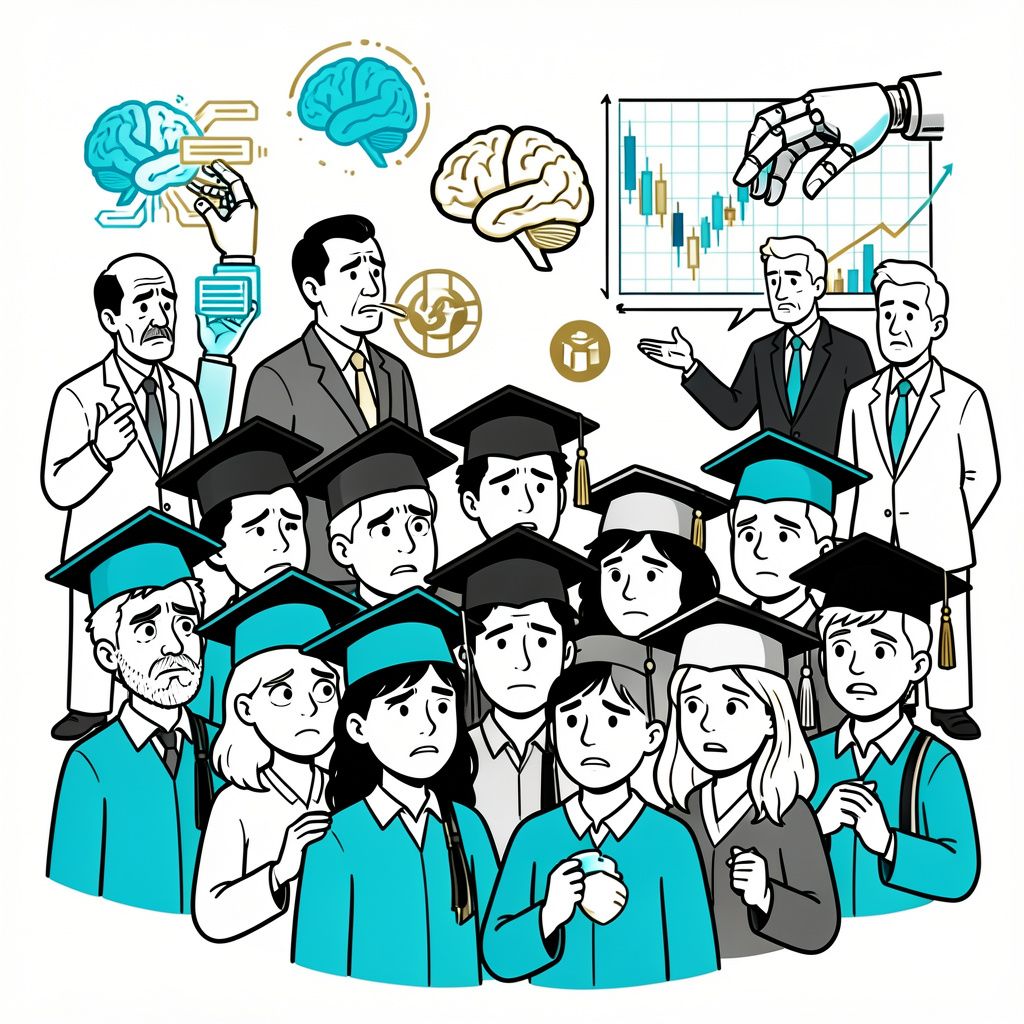
Artificial intelligence threatens up to 60% of jobs in advanced economies, hitting young graduates hardest as financial leaders at the IMF and World Bank call for urgent employment support.
IMF Chief Warns of Labor Market Tsunami
On Monday, 12 October 2026, International Monetary Fund Managing Director Kristalina Georgieva issued a stark warning regarding the impact of artificial intelligence on the global labor market. Speaking at the IMF and World Bank annual meetings in Bangkok, Thailand, Georgieva described the technological disruption as a “slow-moving tsunami” that is already reshaping employment landscapes [1][2][3]. The IMF estimates that approximately 40% of jobs worldwide will eventually be affected by AI, with exposure levels reaching 60% in advanced economies [2][4]. This transformation is not merely theoretical; Georgieva noted that AI is already hollowing out demand for human workers by taking over routine, repetitive tasks [3]. The urgency of the situation is underscored by the timing, as policymakers convene to address economic stability amidst rapid technological change [1][6].
Young Workers Face Highest Displacement Risk
The demographic most vulnerable to these shifts comprises young graduates entering the job market for the first time. Georgieva highlighted that entry-level workers face the highest risk of displacement because AI capabilities now cover the routine tasks traditionally used as training grounds for career advancement [2][4]. Singapore President Tharman Shanmugaratnam, co-chair of the World Bank Jobs Council, supported this assessment, stating that the first rung in employment is now seeing less demand [4]. Instead of career-launching roles, there is an increase in low-paying jobs in sectors like construction, a trend Georgieva remarked is “not a story to celebrate” [1][3]. Research indicates that without intervention, young people may find themselves confined to service roles rather than progressing up professional ladders [2].
Policy Responses and Economic Implications
In response to these challenges, the World Bank jobs council has called on governments worldwide to implement crisis-era employment support measures [1][4]. President Tharman urged making such support permanent to incentivize firms to hire young graduates [1]. World Bank President Ajay Banga emphasized that private capital creates jobs, noting that 1.2 billion young people will turn 18 over the next 15 years, requiring significant workforce absorption [4]. Despite the risks, the IMF projects AI adoption could add up to a percentage point to growth in advanced Asian economies [3]. However, this growth comes with fiscal risks, as the economy may tilt toward capital and away from labor, potentially straining government revenues traditionally sourced from labor taxes [3]. The World Bank is also exploring “small AI” tools to help drive more and better jobs [6].
Sources
- www.cnbc.com
- www.linkedin.com
- www.irishtimes.com
- www.techechelon.com
- www.facebook.com
- www.facebook.com