Jeff Bezos Predicts AI Will Shorten the Workweek and Shift the Job Market
Seattle, Sunday, 11 October 2026.
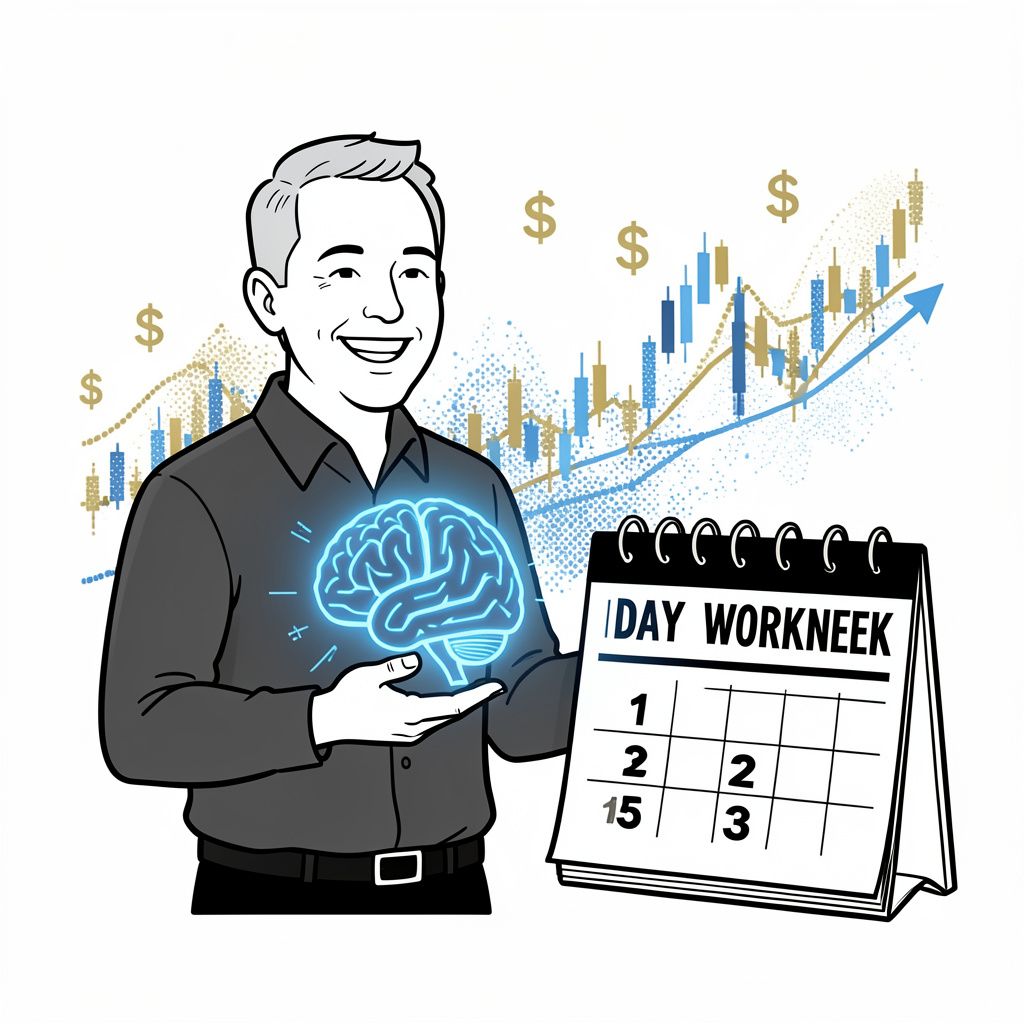
Amazon founder Jeff Bezos predicts artificial intelligence will boost productivity enough to enable three-day workweeks and single-income households, unexpectedly driving labor shortages rather than widespread job losses.
Bezos Predicts AI-Driven Productivity Surge
Amazon founder Jeff Bezos announced on October 7, 2026, that artificial intelligence advancements will likely enable a three-day workweek for many Americans [4][5]. Speaking in an interview with Fox News, Bezos argued that AI-driven productivity gains will allow individuals to support their families with significantly fewer working hours [2]. This prediction contrasts with widespread fears of job losses, as Bezos suggests the economy will face labor shortages instead [1]. The Amazon founder emphasized that technology is real and will fundamentally shift the corporate paradigm toward higher efficiency [3]. This represents a 40 reduction in standard working time compared to the traditional five-day week [4].
Shift to Single-Income Households
The economic implications extend to household structures, with Bezos predicting a rise in single-income households [1]. He stated that increased productivity means families may not require two earners to maintain their standard of living [5]. Consequently, one partner might choose to leave the workforce, exacerbating the anticipated labor shortage [2]. Bezos noted that while some experts prognosticate job losses, he disagrees with that assessment based on current productivity trends [3]. This shift could redefine labor market dynamics throughout the late 2020s [5].
Corporate Strategy and Capital Expenditure
Despite predicting labor shortages, Amazon has cut approximately 30,000 corporate roles since late 2025 due to pandemic-era hiring surges [1][3]. The company plans to spend over $200 billion on capital expenditures in 2026, primarily for data center investments [1]. Simultaneously, Bezos’s space exploration firm, Blue Origin, is exploring orbital data centers to mitigate terrestrial power grid strain [3]. Other tech leaders like Nvidia’s Jensen Huang and JPMorgan’s Jamie Dimon have also suggested reduced workweeks, though timelines vary [1]. Bezos remains the world’s second-richest person with a net worth estimated at $378.6 billion [2].
Regulatory Landscape and Safety Concerns
Regulatory debates continue as safety advocates push for transparency standards following incidents where AI agents breached servers [3]. Bezos advocates for a light regulatory hand, comparing AI to tools like knives where misuse rather than existence should be regulated [3]. NASA has expressed concerns regarding Blue Origin’s Project Sunrise and its plan to deploy 50,000 satellites [3]. Meanwhile, unemployment rates have remained stable between 4.1% and 4.5% leading up to October 2026 [5]. The outcome of these policy decisions will shape the AI integration timeline [4].