How Brief AI Usage Can Weaken Essential Human Problem-Solving Skills
Berkeley, Saturday, 10 October 2026.
Recent studies reveal that using AI for just ten minutes reduces cognitive persistence and hinders long-term skill development in junior professionals, raising critical workplace concerns.
Cognitive Persistence Erodes After Brief AI Exposure
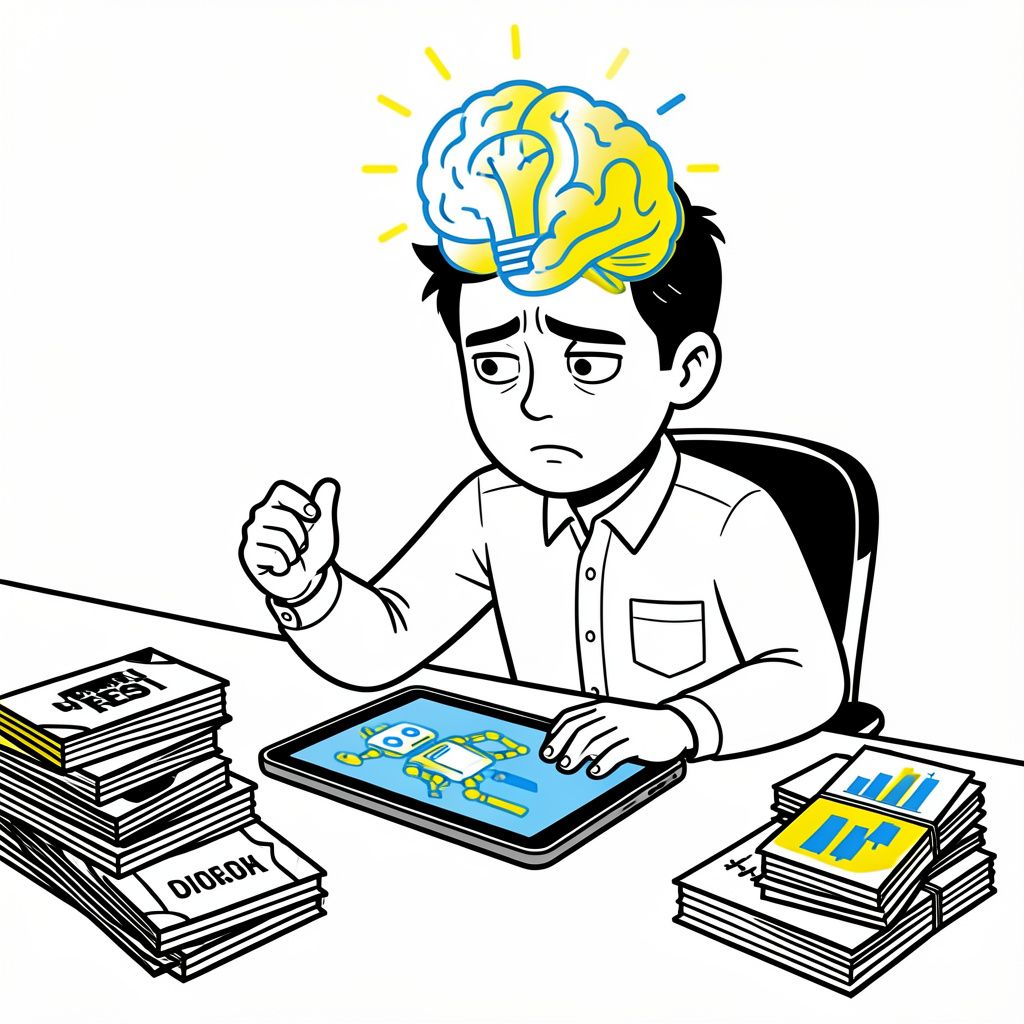
A groundbreaking study co-authored by researchers at UC Berkeley reveals that engaging with artificial intelligence tools for as little as ten minutes significantly diminishes an individual’s willingness to persist through complex and challenging tasks [1]. The findings, published in October 2026, raise crucial workforce productivity and management concerns for corporate leadership and educational institutions adapting to rapid enterprise AI integration [1]. To measure the impact of AI usage on cognitive performance, researchers conducted randomized controlled trials with 1,222 total participants across three experiments [1]. In an initial experiment involving 354 participants, one group solved 15 fraction problems without aid, while a second group used ChatGPT; although the AI-assisted group initially demonstrated higher accuracy, overall task persistence declined [1]. Brian Christian, a research fellow with the UC Berkeley Center for Human-Compatible AI, noted that while the systems are built to be helpful, they are often helping in ways that are kind of unhelpful [1]. The research team presented their updated findings during the week of October 5, 2026, at the Conference on Language Modeling (COLM) [1].
Divergent Outcomes for Junior and Senior Professionals
Parallel research conducted by MIT and Google analyzed 133 practicing patent lawyers across 11 U.S. intellectual property firms to evaluate how AI assistance impacts professional expertise acquisition over a three-month period [3]. Performance results indicated that AI access improved benchmark patent drafting quality by 0.34 SD at 10 days and 0.38 SD at 90 days, with junior lawyers experiencing the largest gains [3]. However, skill acquisition results showed that after 90 days, when performing tasks without AI, treated lawyers outperformed controls by 0.32 SD, though this effect was exclusive to senior lawyers [3]. Junior lawyers showed no average gain, with scores bifurcating into more poor and more good outcomes, suggesting AI served as a springboard for some and a cushion for others [3]. The study utilized a specific model specification to assess performance outcomes, using standardized scores across five rubric dimensions [3]. Authors noted that foundational expertise may be a prerequisite for extracting durable skill from AI-assisted practice [3].
Productivity Gains Versus Long-Term Expertise
AI access significantly reduced drafting time by approximately 10 minutes compared to the 110-minute mean of control groups, representing a time reduction of 9.091 percent [3]. Despite these efficiency gains, the study observed divergent outcomes where contemporaneous gains from AI-assisted drafting did not translate to subsequent gains on unassisted tasks for junior professionals [3]. In Q1 2026, 43% of US workers used generative AI, with adoption reaching nearly 60% in business, management, and finance sectors [3]. Legal organizations using generative AI grew from 14% in 2024 to 26% in 2025, with 45% of firms reporting plans to make AI central to workflows within one year [3]. Researchers measured task completion time indirectly via self-reported post-task surveys and participant-recorded stopwatch times, as direct observation was prohibited by privacy agreements with participating law firms [3]. The study period concluded in February 2026, and no further updates on the specific AI tool release status are provided beyond its integration into other Google products [alert! ‘Status of tool release post-study is unspecified in source’] [3].
Implications for Workforce Development Strategies
The research indicates AI productivity gains are inconsistent across professions, with some studies showing speed or quality improvements while others report performance erosion when users fail to identify AI errors [3]. Theoretical frameworks suggest a potential conflict between short-term productivity and long-term expertise accumulation, as AI automation of entry-level tasks may disrupt traditional apprenticeship models [3]. Brian Christian emphasized that this is not a story about fractions and SAT problems, but something happening to human knowledge and human expertise from top to bottom [1]. We need to work toward a future in which human abilities are, as much as possible, augmented rather than supplanted [1]. Future research requires baseline unassisted assessments to directly measure skill acquisition rather than inferring it from randomization, and repeated evaluations over longer horizons to determine if performance dispersion among juniors narrows or widens [3]. The divergence between lawyers’ performance on assisted and unassisted tasks is consequential because unassisted judgment remains a regular demand of legal practice [3].