Why Artificial Intelligence Threatens Office Jobs While Protecting Skilled Trades
Dearborn, Friday, 2 October 2026.
Ford CEO Jim Farley warns AI will eliminate white-collar spreadsheet jobs while serving as a helpful companion for skilled trades facing a 1.7 million annual labor shortage.
Divergent Paths for Artificial Intelligence in the Workforce
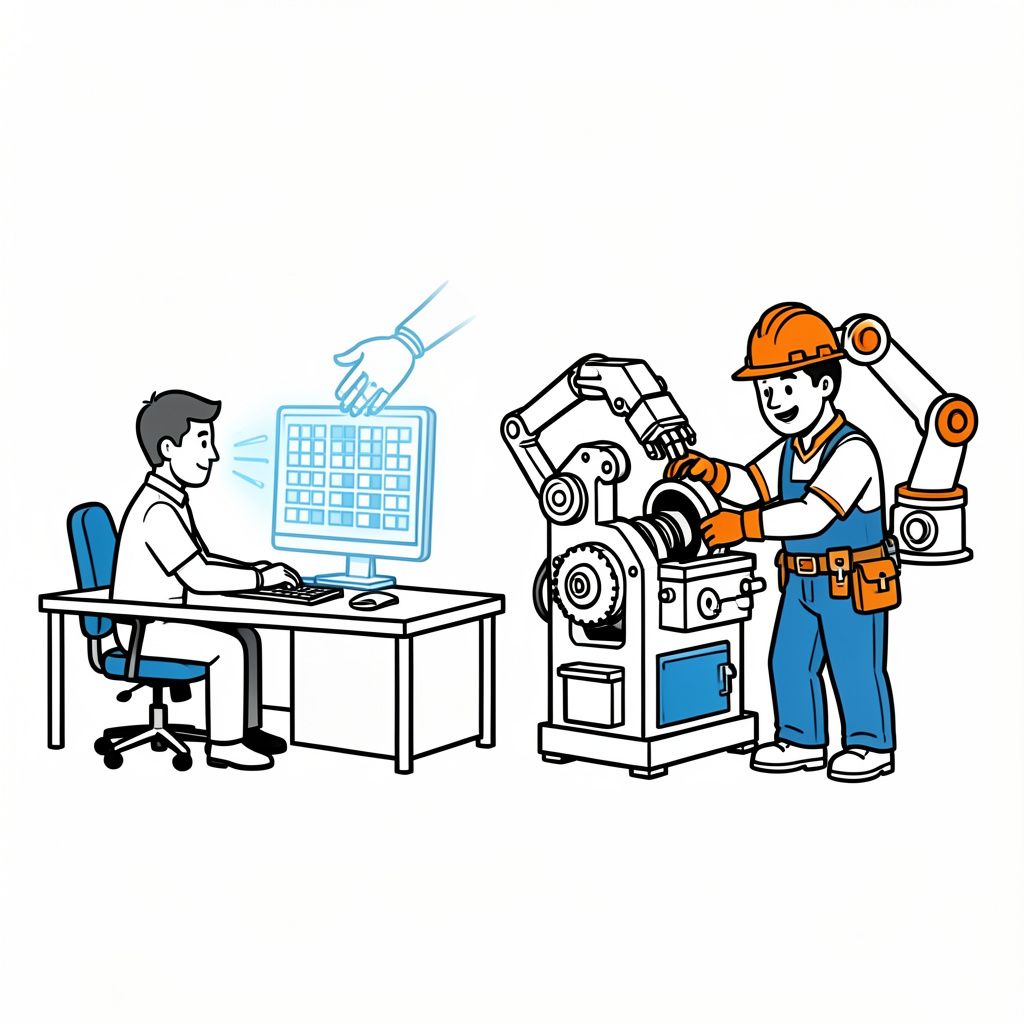
Ford Motor Company (NYSE: F) Chief Executive Officer Jim Farley stated during a recent industry event that artificial intelligence will act as a supportive companion for skilled blue-collar workers while posing a direct threat to white-collar jobs [1]. Speaking on September 30, 2026, at the “Accelerate the Essential Economy” conference in Detroit, Farley emphasized that AI is being deployed in Ford Pro to assist dealer technicians through complex repairs rather than replacing them [1]. In contrast, office-based roles focused on spreadsheets and data processing face significant risk of elimination [4]. Farley noted that if an employee works in finance doing spreadsheets, or in a call center, those jobs are definitely going to be changed or eliminated with at least this first inning of AI [4]. This distinction highlights a shifting labor dynamic where modern AI systems require skilled workers to both operate and repair the machinery they interact with [1].
Ford’s Workforce Composition and AI Integration
Ford employs approximately 56,000 UAW workers in the US, of which over 10,000, or roughly 20%, are skilled-trades personnel [4]. These skilled tradespeople repair robots, maintain automated machinery, and work with software, roles that Farley identifies as more insulated from AI displacement [1]. Ford Pro is currently utilizing AI and augmented reality to guide mechanics through complex repairs, such as engine removal on a Ford Super Duty truck, which traditionally requires two days of labor [4]. The company is using AI to instruct mechanics on specific steps, acknowledging that while they are good mechanics, they may not have performed specific rare tasks before [4]. However, adoption remains contingent on worker trust, specifically regarding fears that data could be used against them [1].
The Skilled Trades Labor Shortage Crisis
The remarks coincide with a new report highlighting that 1.7 million skilled trade positions will open annually through 2035, driven in part by infrastructure demands from the expanding AI buildout [1]. The Alliance for America’s Skilled Trades, cofounded by Ford, BlackRock, Google, and Carhartt, released a report stating the US needs to fill approximately 1.7 million skilled-trade positions [1]. However, current formal training pipelines only yield 55 workers per 100 required [2]. Data indicates a significant retention issue in skilled-trade training, with only 48 out of every 100 apprenticeship starters completing their programs due to obstacles such as childcare, transportation, and income pressures [1]. Furthermore, high-quality apprenticeship programs with added support achieve a completion rate of over 90%, compared to approximately 50% for traditional training methods [2].
Demographic Challenges and Economic Implications
Demographic challenges persist, as nearly 25% of the 124 skilled trade job titles analyzed are held by workers 55 or older, while workers under 25 represent only 11% of the workforce [3]. An Ad Council Research Institute survey conducted between June 2026 and July 2026 found that only 9% of teens consider skilled trades for post-graduate careers, compared to 56% considering college [3]. On the economic front, Ford Motor Co. stock closed at 12.27 on September 29, 2026, reflecting a 1.74% increase [6]. Farley stated at the company’s Accelerate event in Detroit that the U.S. is falling behind global competitors like Germany, China, and South Korea due to underinvestment in the essential economy [6]. Over $1 billion has been invested in skilled job training by attendees of the event, including a $5 million joint investment by Ford and Bloomberg Philanthropies to modernize auto technician programs at two Detroit schools [2].
Sources
- www.businessinsider.com
- www.repairerdrivennews.com
- www.cnbc.com
- fortune.com
- www.facebook.com
- www.foxbusiness.com
- www.facebook.com
- www.facebook.com