Artificial Intelligence Data Centers Set to Consume One Percent of Global Electricity by 2030
New York, Monday, 28 September 2026.
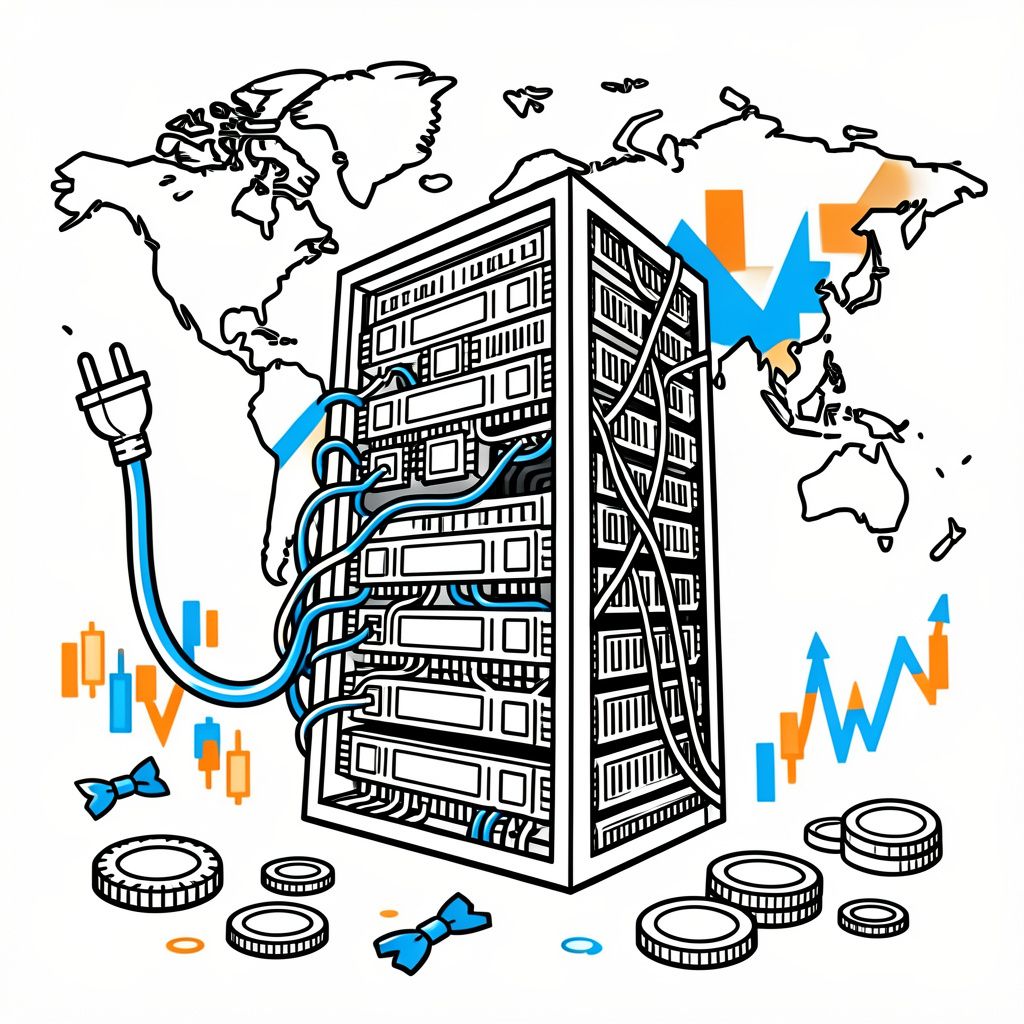
Driven by high-power hardware drawing six times more energy than traditional racks, artificial intelligence data centers are projected to devour one percent of global electricity by 2030.
Surging Energy Demand Projections
Artificial intelligence data centers are projected to consume between 239 and 295 terawatt-hours of electricity by 2030, representing approximately one percent of total global power demand [1]. This rapid surge stems from a baseline of about 118 terawatt-hours in 2024, indicating a 102.542 increase in energy consumption over the six-year period [1]. The International Energy Agency projects total data-center electricity consumption will rise from 485 terawatt-hours in 2025 to 950 terawatt-hours by 2030, with AI-focused demand expected to triple in that same period [3]. Such growth threatens to strain existing utility grids and disrupt corporate decarbonization goals globally [1].
Corporate Concentration and Revenue
Six major technology firms, including Amazon, Microsoft, and Google, account for approximately 70–75% of global hyperscale and cloud-linked data-center electricity demand [1]. Bain & Company’s Global Technology Report 2025 forecasts that AI infrastructure growth could generate nearly US$2 trillion in annual revenues by 2030, a figure comparable to the combined GDP of the world’s ten largest emerging economies [1]. GPU-based computation used in AI facilities consumes up to six times more power than conventional data center racks, leading to increased cooling intensity and peak-load requirements [1]. This concentration of demand among a few operators highlights the structural shift in power-system dynamics driven by AI infrastructure [1].
Regional Grid Strain and Stability
Power demand is expected to be heavily concentrated in North America, Western Europe, and the Asia-Pacific region, which together account for more than 90% of projected computing capacity [1]. Goldman Sachs reported in May 2026 that U.S. data center power demand is projected to reach 66 gigawatts by 2027, more than double 2025 levels [2]. One analysis estimates U.S. data-center power demand could rise from approximately 219 gigawatts to 659 gigawatts by 2030, representing roughly a threefold increase [4]. Regions such as Oregon, Ireland, and Iowa face greater pressure from concentrated data-center loads, whereas larger systems such as Texas can absorb new demand more effectively [1].
Infrastructure Constraints and Delays
Since January 2024, community opposition and regulatory hurdles have resulted in $170 billion of AI data center capacity being blocked, withdrawn, or stalled, according to Relae data released in June 2026 [2]. Goldman Sachs estimates that only approximately 50% of data center capacity scheduled for 2027–2028 will successfully come online on schedule due to ongoing construction delays and equipment supply issues [2]. Texas has paused new data center interconnections pending an audit of its 474-gigawatt queue, signaling heightened scrutiny on grid reliability [2]. Utilities and regulators are implementing large-load tariffs requiring minimum contract durations and upfront payments to mitigate risks from speculative data center project requests [2].
Environmental Impact and Emissions
A 2024 study indicates that over 50% of United States data centers are powered by fossil fuels, resulting in emissions exceeding 105 million tons of CO2 [5]. To meet data center demand, US utilities delayed the retirement of 15 coal-fired plants in 2023, which collectively emitted nearly 65 million tons of greenhouse gases that year [5]. If data centers were a country, they would rank as the 11th largest electricity consumer globally, according to the United Nations University [5]. In Frankfurt, Germany, data centers consume approximately 41% of the city’s electricity, while in Dublin, Ireland, consumption is double that rate [5].
Market Growth Versus Reality
MarkNtel Advisors’ February 2026 research projects the Green Data Centers Market will grow from $52.76 billion in 2026 to $235.4 billion by 2032, reflecting a 28.31% compound annual growth rate [3]. Despite this optimism, the Electric Power Research Institute projected in February 2026 that data centers will account for 9% to 17% of total U.S. electricity demand by 2030 [2]. The rapid expansion necessitates a shift in research modeling to capture the heterogeneous, rapidly evolving workloads of AI computing [1]. Ensuring that the rapid expansion of AI infrastructure evolves in tandem with the development of adequate and reliable electricity systems remains a strategic priority [1].