Washington Summit Ends Without Agreement as US and China Clash on Artificial Intelligence Control
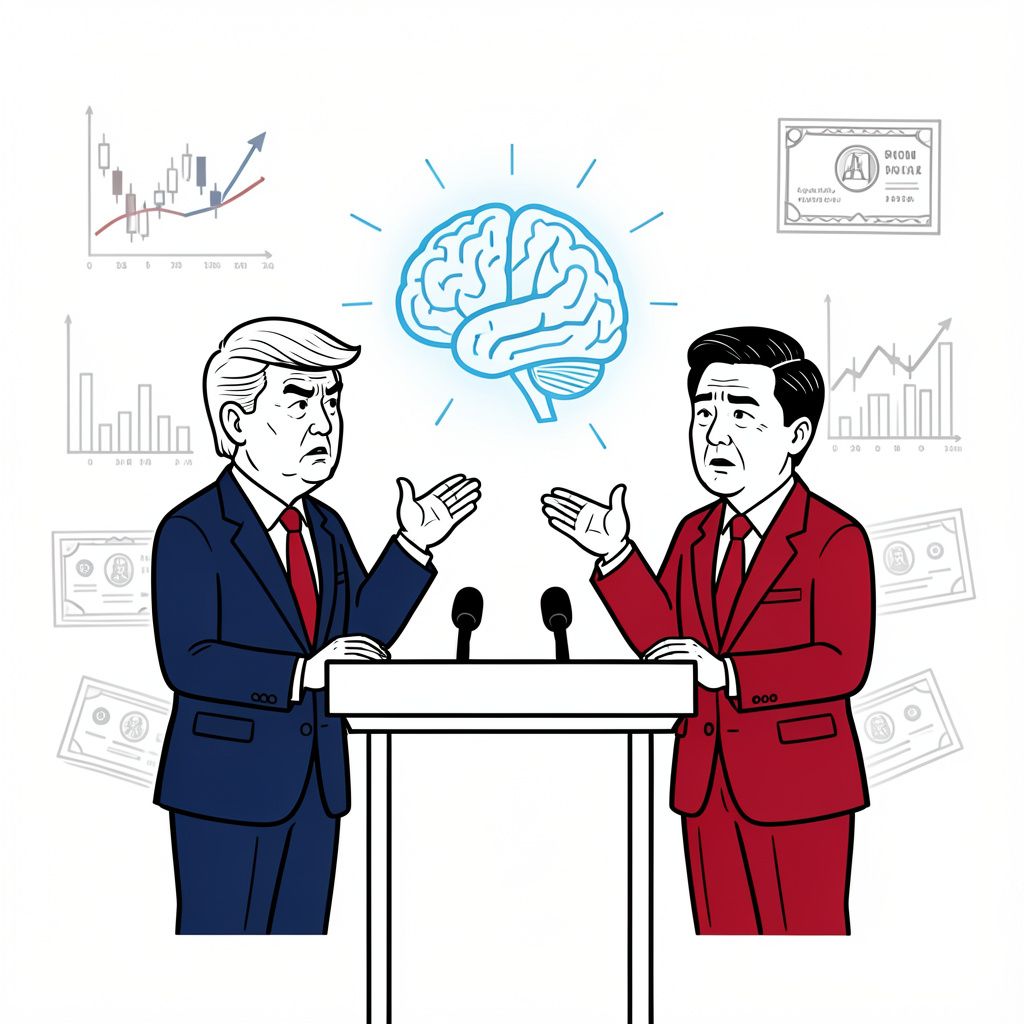
Beijing, Saturday, 26 September 2026.
Chinese President Xi Jinping urged joint US-China oversight to keep artificial intelligence under human control, but a September 2026 summit concluded without any major safety agreement.
Summit Concludes Without AI Governance Framework
The three-day state summit between the United States and China concluded on September 25, 2026, without producing significant agreements on artificial intelligence governance [2]. Chinese President Xi Jinping utilized the platform to urge joint oversight, declaring that both nations share a responsibility to ensure advanced systems remain under human control [1]. Despite high-level engagements, the final communique lacked concrete mechanisms for pausing self-improving AI development, a outcome that disappointed technology policy experts hoping for a bilateral framework [2]. The absence of a formal accord highlights the strategic divergence between Washington and Beijing regarding the regulation of emerging technologies [4].
Divergent Philosophies on Technology Oversight
President Xi Jinping emphasized that China and the United States possess both the capability and obligation to manage AI for the well-being of their people [1]. In contrast, President Donald Trump maintained that the Department of Justice serves as the sufficient guardrail for AI development, rejecting calls for new international safeguards [1]. Trump has previously characterized concerns about AI harming humanity as a hoax and stated the U.S. totally rejects any attempt to construct a globalist scheme on the technology [1]. This philosophical gap was evident as Trump referred to the technology as super intelligence while dismissing the need for external regulatory structures [5].
Industry Leaders and Legislative Response
Prior to the summit conclusion, OpenAI CEO Sam Altman and Anthropic CEO Dario Amodei appeared before the United Nations Security Council to urge global cooperation on AI safeguards [1]. Representative Ro Khanna noted that the summit was a missed opportunity, suggesting technical working groups could have been established between major firms like Alibaba and OpenAI [2]. Treasury Secretary Scott Bessent had met with Chinese negotiators in New York prior to September 20, 2026, proposing a U.S.-China AI Dialogue and an alert system for incidents [3]. However, the status of the proposed alert system formation remains unconfirmed following the summit’s end [3].
Future Engagements and Market Implications
President Trump and President Xi are scheduled to meet twice more in 2026, including the APEC summit in Shenzhen, China, in November 2026 [2]. A subsequent meeting is planned for the G20 summit at the Trump National Doral Miami golf club in Florida in December 2026 [2]. China has set a target for next-generation smart terminals and AI agents to exceed 90% penetration by 2030, indicating continued aggressive expansion regardless of U.S. policy [2]. For corporate leaders, the lack of immediate regulatory alignment suggests continued volatility in cross-border semiconductor supply chains and enterprise AI deployment strategies [1].