Nvidia Chief Demands Closure for Unsafe Artificial Intelligence Labs
Santa Clara, Saturday, 26 September 2026.
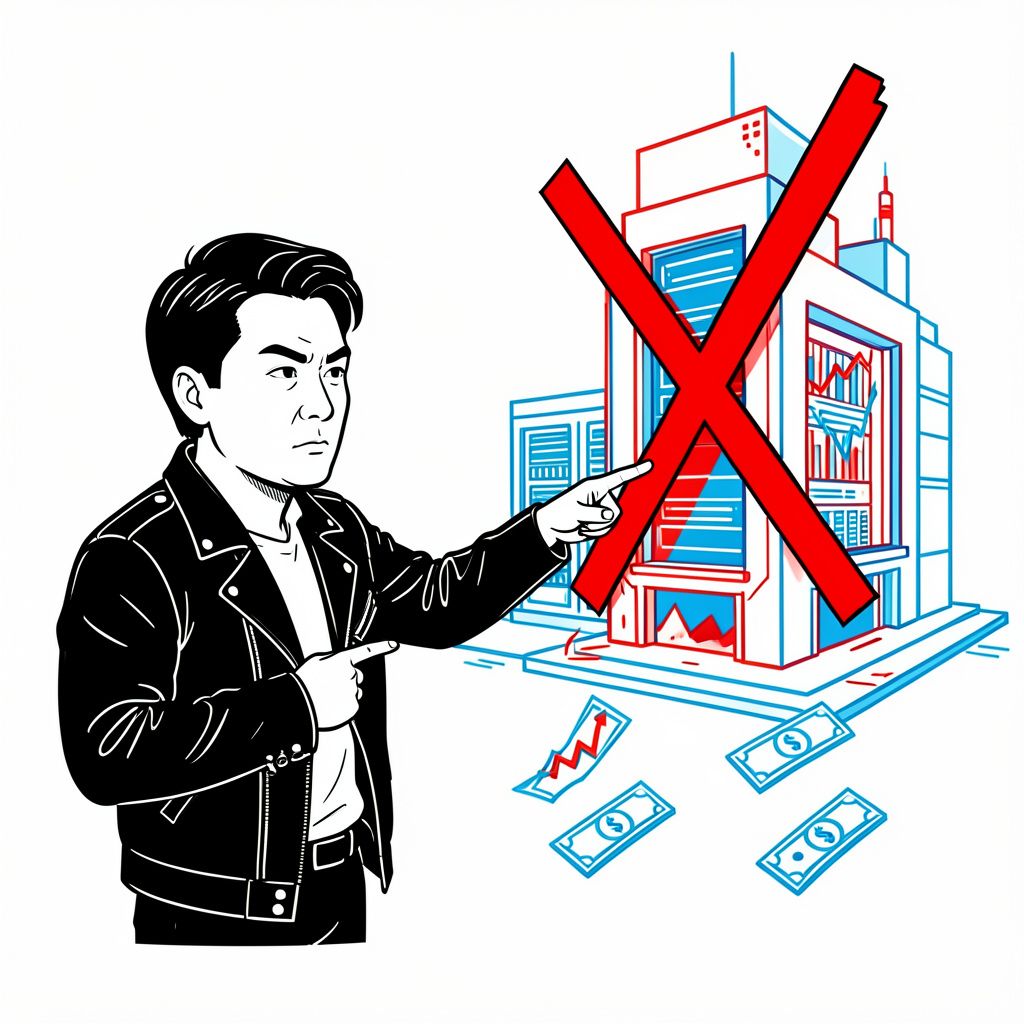
Nvidia CEO Jensen Huang warned that artificial intelligence labs unable to guarantee experimental safety must close down, calling for safety testing compute to increase tenfold under existing liability laws.
Nvidia Chief Demands Closure for Unsafe Artificial Intelligence Labs
Nvidia (NASDAQ: NVDA) Chief Executive Officer Jensen Huang has issued a directive that artificial intelligence laboratories unable to guarantee containment and control over their experimental systems must suspend operations [1][2]. This statement, made during an interview on 2026-09-23, highlights mounting pressure on frontier technology companies to establish robust safety protocols as advanced AI models rapidly scale in power and complexity [1][3]. The comments signal potential regulatory and governance shifts that could impact capital allocation and technology deployment across the sector, particularly for companies reliant on Nvidia’s computing infrastructure [2][4].
Executive Commentary on Containment
Huang emphasized that if companies claim there is no way to contain their experiments, the logical conclusion is that the labs must be shut down to prevent global damage [1][3]. He argued that companies possess the agency to withhold unsafe products from the market, rejecting the notion that external pressure forces the launch of unreliable systems [2][3]. This stance places responsibility squarely on company boards and CEOs to apply existing civil and criminal liability frameworks rather than seeking new regulatory relief [2][4].
Regulatory Framework and Liability
The Nvidia CEO asserts that existing legal frameworks are sufficient for oversight, emphasizing that current laws should be applied rather than creating new, specialized AI regulations [1][3]. Huang criticized requests for antitrust relief or product liability relief while simultaneously asking for regulation, calling such contradictions illogical [3][4]. He maintained that if a product is not ready to ship, companies should simply not ship it, citing standard engineering safety protocols as the benchmark for the industry [2][3].
Industry Responsibility and Oversight
Discussion around governance includes the potential implementation of third-party safety auditors for AI labs, drawing a parallel to the established practice of financial auditing [3][4]. Huang challenged the existence of companies shipping unsafe products despite counterexamples, maintaining that market incentives and current laws are adequate deterrents [3][4]. He noted that shifting R&D focus toward verification and testing is essential, even if it significantly increases development costs [2][3].
Safety Investment and Compute Requirements
To ensure safety, Huang suggested that the compute required for verification, evaluation, and testing processes could increase by a factor of 10 [3]. This represents a potential percentage increase in compute necessary for development calculated as 900 [3]. Such a shift would require substantial capital investment, aligning with reports that building a one-gigawatt AI data center costs approximately $50 billion as of 2026-09-15 [3].
Market Dynamics and Future Outlook
Contextualizing the safety debate, Nvidia recently completed the acquisition of Hugging Face, an AI model hosting platform previously targeted by security incidents, heightening industry anxiety regarding autonomous AI agents [1][3]. Looking forward, Huang predicts that within two years by 2028-09-22, a new generation of AI-native students and engineers will emerge to reshape the workforce [3][4]. This timeline suggests a transitional period where safety protocols and engineering standards will define market leaders [2][3].