Mexico Steps In to Host Iran's 2026 World Cup Camp Amid US Refusal
Mexico City, Tuesday, 26 May 2026.
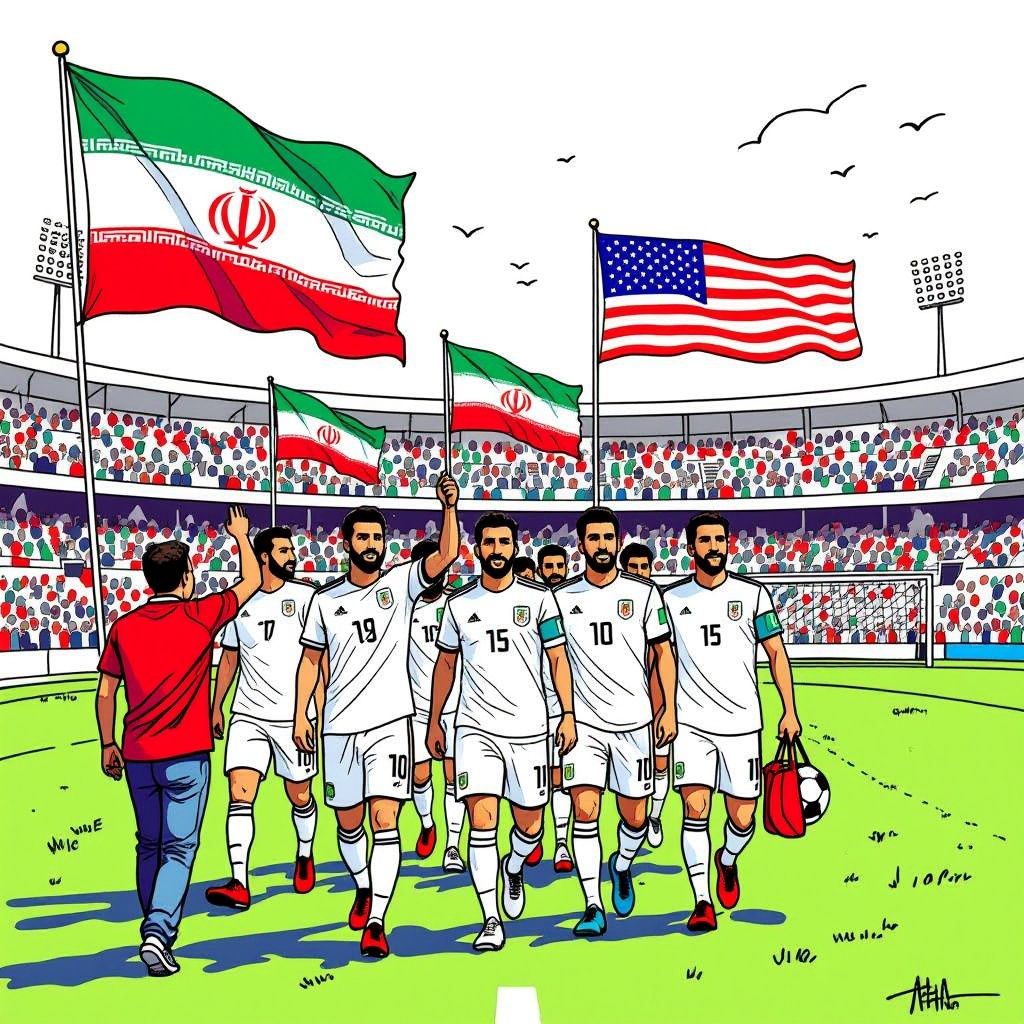
Denied US lodging amid geopolitical tensions, Iran’s 2026 World Cup team will base in Mexico, commuting to US matches—a stark reminder of diplomacy’s impact on global sports.
The Geopolitical Reality of a Joint Tournament
As North American businesses finalize their strategies to capture the historic economic windfall of the expanded 48-team 2026 World Cup (as detailed in our previous report at https://wsnext.com/3eaefff-Economic-impact-Tourism/), the logistical reality of a tri-nation tournament is colliding with international diplomacy [1]. Mexican President Claudia Sheinbaum announced on Monday, May 25, 2026, that Mexico will officially host the Iranian national football team after the United States declined to provide accommodations [2][3]. The decision underscores how global sporting events remain deeply intertwined with complex geopolitical landscapes [GPT].
Border Commutes and Security Protocols
The Iranian squad was originally slated to base its operations in Tucson, Arizona [2][4]. However, severe geopolitical escalations—specifically the military strikes launched by the US and Israel on Iran on February 28, 2026—threw their participation into jeopardy [3]. Following a tenuous ceasefire in early April, the US State Department under President Donald Trump welcomed Iran’s participation but notably omitted any provisions for lodging [5]. Consequently, the team’s base will be relocated to the Centro Xoloitzcuintle in Tijuana, Mexico [2][5]. Mehdi Taj, head of the Iranian football federation, confirmed this pivot helps the delegation bypass stringent US visa complications, allowing the team to fly directly into Mexico via Iran Air [3][6]. From Tijuana, the team will commute across the border for their Group G fixtures, playing New Zealand on June 15 and Belgium on June 21 in Inglewood, California, before facing Egypt on June 26 in Seattle [2][5]. This requires Iran to manage cross-border logistics for their US-based matches over a span of 11 days.
Navigating Complex Cross-Border Logistics
Sheinbaum addressed the situation pragmatically during her daily press conference, stating that the US “does not want the Iranian team to stay overnight” despite hosting their three group matches [2][6]. “We have no reason to deny them the possibility of staying in Mexico,” she added, confirming that FIFA formally approached her government to mediate the standoff [2][3]. FIFA has officially corroborated the relocation [alert! ‘Conflicting dates exist regarding the exact day of FIFA’s official announcement; BBC suggests Monday, May 25, while Telemundo cites May 20’] [2][5]. Iran, currently holding training sessions in Antalya, Turkey, is entering its fourth consecutive World Cup and seventh overall [2][5]. This means 3 of their historical tournament appearances occurred prior to their current consecutive streak, though they have historically never advanced past the first round [5].
Broader Operational Precedents
The Iranian accommodation pivot is not the only intricate cross-border arrangement testing the 2026 tournament’s infrastructure. In a reverse scenario, the Democratic Republic of Congo will base its operations in Houston, Texas, but must travel to Guadalajara, Mexico, for a June 23 match against Colombia [5]. Mexican authorities have already noted that specific bilateral health and sanitary measures are being coordinated with the African nation’s origin country to facilitate this movement [5]. These cascading logistical pivots highlight the operational intricacies for policymakers and business leaders, proving that international mega-events require agile management of both economic ambitions and strict diplomatic mandates [GPT].