Cuba Braces for Conflict as U.S. Deploys Carrier and Indicts Raúl Castro
Havana, Saturday, 23 May 2026.
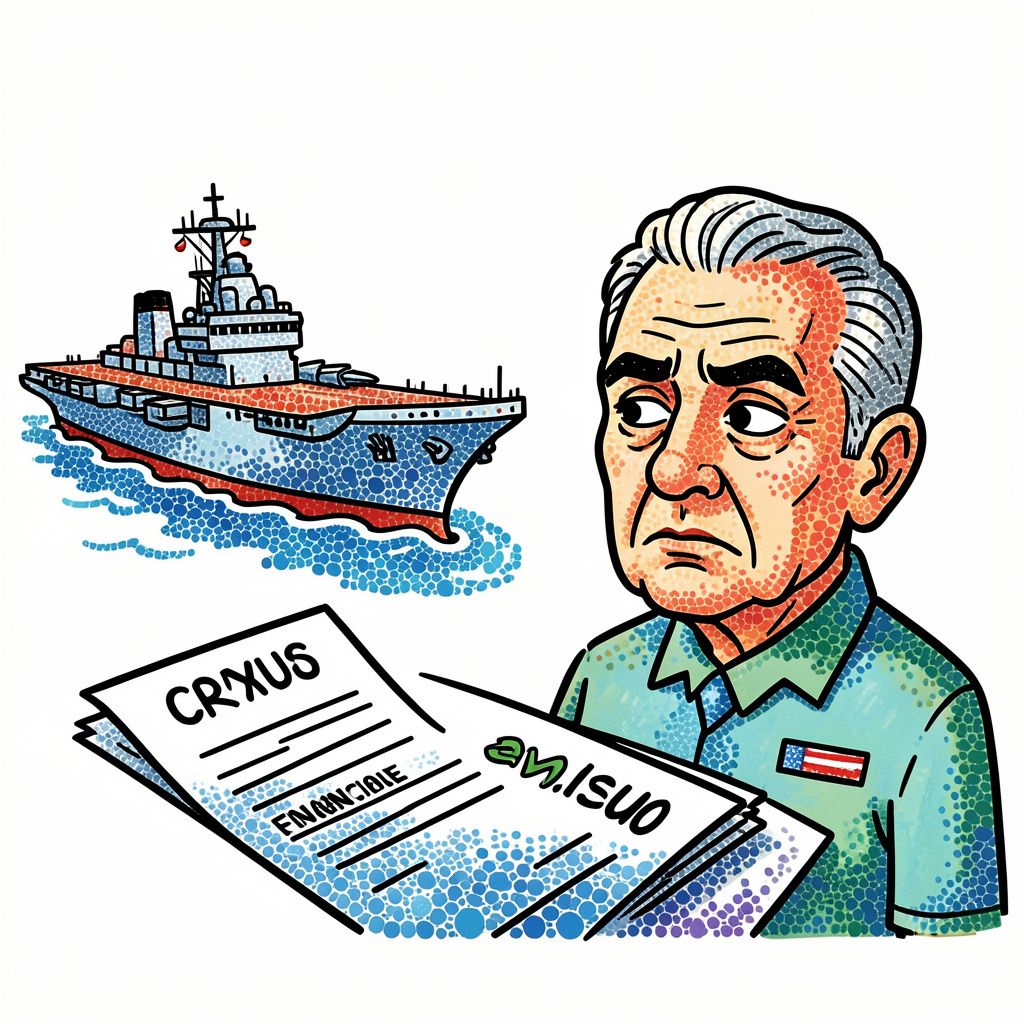
Following a U.S. murder indictment against Raúl Castro and the deployment of an aircraft carrier, Cuba is instructing citizens to prepare for military conflict, signaling severe geopolitical volatility.
A Region on the Brink of Conflict
The deployment of the USS Nimitz to the Caribbean has triggered alarms in Havana and across global markets [1][5]. While President Donald Trump stated on May 20 that the carrier’s presence was not intended to intimidate but rather to assist a “failed country” for “humanitarian reasons,” his earlier remarks on May 16 suggested a willingness to intervene militarily, noting he “would be happy to do it” [1][4]. This rhetoric, coupled with the recent U.S. military operation that captured Venezuelan President Nicolás Maduro in January 2026, has fueled market speculation that Washington may be establishing a pretext for direct military action [1][5].
Economic Warfare and Market Implications
The military posturing is running parallel to an intensified economic blockade that is suffocating the island’s already fragile economy [2]. On May 18, 2026, the U.S. State Department imposed crippling new sanctions on key Cuban government entities, including the Interior Ministry, the National Police, and the Intelligence Directorate [2][3]. Compounding the financial squeeze, the U.S. Supreme Court ruled on May 21, 2026, in favor of a U.S. port business seeking compensation for dock property seized during the 1960s revolution [4]. This legal precedent opens the door for a wave of corporate litigation that could further isolate Cuba from international investment [GPT].
The Collapse of Diplomatic Channels
Hopes for a diplomatic off-ramp appear increasingly bleak. Despite back-channel meetings earlier in May—including a May 14 session in Havana between CIA Director John Ratcliffe and Cuban officials to discuss economic stability and intelligence cooperation—public posturing has hardened [2][3]. U.S. Secretary of State Marco Rubio explicitly told reporters on May 16 that the likelihood of a negotiated, peaceful agreement with Cuba’s communist government is “not high” [1][4]. Furthermore, hawkish lawmakers such as Senator Rick Scott (R-Fla.) have publicly suggested that Castro should face the same fate as Venezuela’s Maduro, insisting that no options should be taken off the table [5].
Sources
- www.latimes.com
- apnews.com
- www.pbs.org
- www.forbes.com
- thehill.com
- www.justice.gov
- www.bbc.com
- www.instagram.com