North American Businesses Prepare for a Historic Economic Windfall Ahead of the 2026 World Cup
New York, Monday, 25 May 2026.
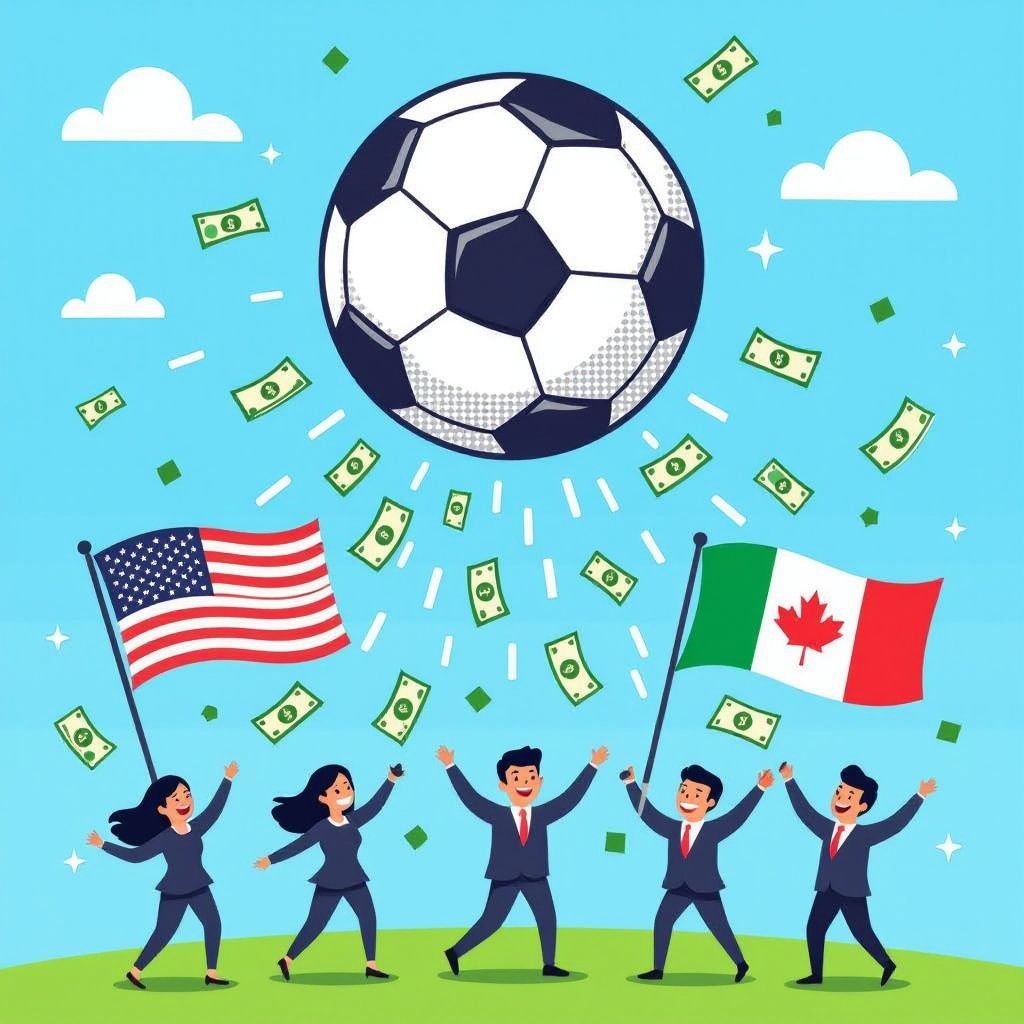
The unprecedented 48-team tournament expansion is driving hospitality and retail sectors across three nations to finalize strategies, anticipating millions of international visitors and massive revenue growth.
A Historic Expansion Drives Market Optimism
With the 23rd FIFA World Cup scheduled to run from June 11 to July 19, 2026, the economic machinery across North America is shifting into high gear [1]. For the first time in the tournament’s history, the event will be jointly hosted by three nations, spreading the economic benefits across sixteen cities: eleven in the United States, three in Mexico, and two in Canada [1]. A major driver of the anticipated financial windfall is the tournament’s structural expansion, which has grown from 32 to 48 participating teams [1]. This represents a 50 percent increase in the number of competing nations [1], significantly broadening the international consumer base expected to flood local hospitality and retail markets [GPT].
Corporate Sponsorships and Localized Catalysts
Major financial institutions and corporate sponsors are already activating their localized marketing campaigns to capitalize on the impending influx of consumers [GPT]. On May 23, 2026, the United States Men’s National Team (USMNT) highlighted its readiness across the eleven U.S. host cities in a promotional campaign tied to Bank of America, signaling the deep integration of corporate sponsors in the tournament’s buildup [2]. Local economies in cities like Toronto, Houston, and Monterrey are bracing for immediate impacts as early as June 20, 2026, when they will host matches featuring major international draws like Germany, the Netherlands, and Japan [1].
Viral Marketing and the Global Entertainment Machine
Beyond the direct stadium revenues, the broader commercial ecosystem surrounding the World Cup is being fueled by global entertainment tie-ins [GPT]. On May 21, 2026, international pop star Shakira released the official music video for “Dai Dai,” one of the primary anthems for the 2026 tournament [3]. The marketing push heavily leveraged the star power of the sport’s most marketable athletes, featuring appearances by Lionel Messi, Kylian Mbappé, Vinícius Jr., Christian Pulisic, and Harry Kane, all repeating the campaign’s central slogan: “We are ready” [3][4].