U.S. Sidelines Israel in Iran Negotiations: Implications for Global Energy Markets
Washington, D.C., Saturday, 23 May 2026.
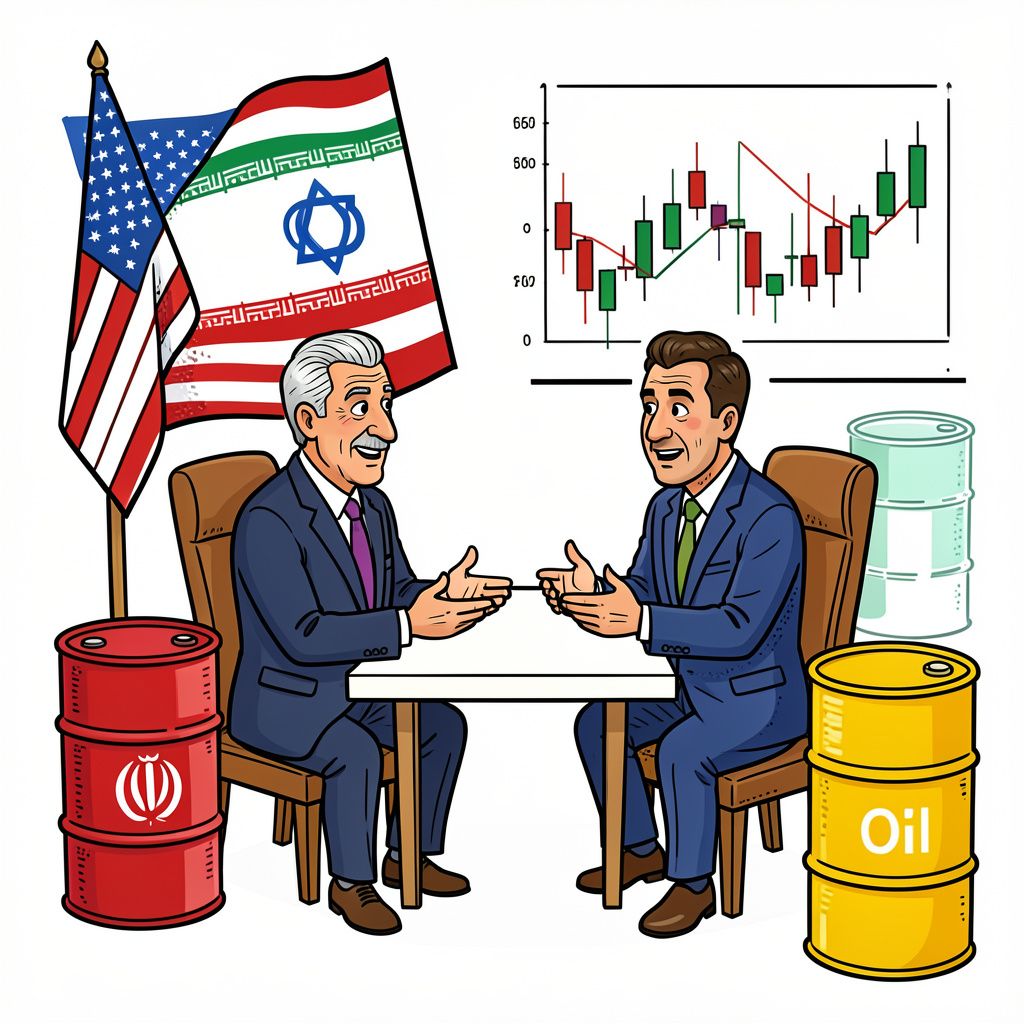
Washington has reportedly excluded Israel from ongoing Iran negotiations. This diplomatic pivot forces global markets to reassess Middle Eastern security dynamics and potential shifts in oil risk premiums.
A Strategic Rift and Diplomatic Reshuffling
According to Israeli defense officials, Israel has been completely sidelined from discussions leading up to the current ceasefire, relying instead on regional diplomatic contacts and surveillance to monitor the ongoing talks between the United States and Tehran [1]. This marks a stark departure from earlier this year, when Prime Minister Benjamin Netanyahu closely coordinated with US President Donald Trump, even leading Situation Room discussions in Washington that predicted the collapse of the Iranian regime [1]. Tensions reportedly boiled over during a “dramatic” phone call between Trump and Netanyahu on May 20, 2026, highlighting Israel’s deep frustration with Washington’s unilateral push for a diplomatic resolution [3].
Economic Ripples and the Energy Chokepoint
The ongoing conflict, which began with US and Israeli strikes on February 28, 2026, has severely disrupted global energy arteries [4]. The Strait of Hormuz, a critical chokepoint for global oil supplies [GPT], has seen commercial traffic evaporate. Before the war, the strait facilitated 125 to 140 daily vessel passages; however, in a 24-hour period between May 20 and May 21, only 35 vessels traversed the waterway with permission from Iran’s Revolutionary Guards Navy [4]. This represents a staggering decline in daily maritime traffic of up to -75 percent [4]. Furthermore, since mid-April, the United States has redirected 94 commercial vessels and disabled four others originating from Iranian ports [3].
The Terms on the Table and Internal Shifts
The framework currently under discussion is a nine-point draft agreement mediated by Pakistan, which includes provisions for a ceasefire, freedom of navigation in the Arabian Gulf, and the gradual lifting of US sanctions [4]. However, significant hurdles remain. On May 20, Tehran submitted a counteroffer reiterating demands previously rejected by the US, including total control over the Strait of Hormuz, war reparations, and the withdrawal of American troops [4]. Meanwhile, the US and Israel maintain their core objectives: dismantling Iran’s nuclear program, curbing its proxy networks, and destroying its missile capabilities [4]. US Secretary of State Marco Rubio noted today, May 23, that while there has been “slight progress,” the two sides are “not there yet” [3][5].
Regional Contagion and Future Outlook
The geopolitical fallout extends far beyond the US-Iran bilateral relationship, dragging neighboring states into the fray. Saudi Arabia and the United Arab Emirates have independently launched multiple strikes against Iran and Iranian-backed Shiite militias in Iraq [3]. Simultaneously, the conflict’s northern front continues to exact a heavy humanitarian toll; since March 2, Israeli military operations in Lebanon have resulted in at least 3,123 fatalities and 9,506 injuries [2].
Sources
- www.timesofisrael.com
- www.aljazeera.com
- www.pbs.org
- www.timesofisrael.com
- www.nytimes.com
- www.nytimes.com