Beijing's Intelligence Think Tank Outlines a Blueprint to Avert US Conflict
Beijing, Saturday, 23 May 2026.
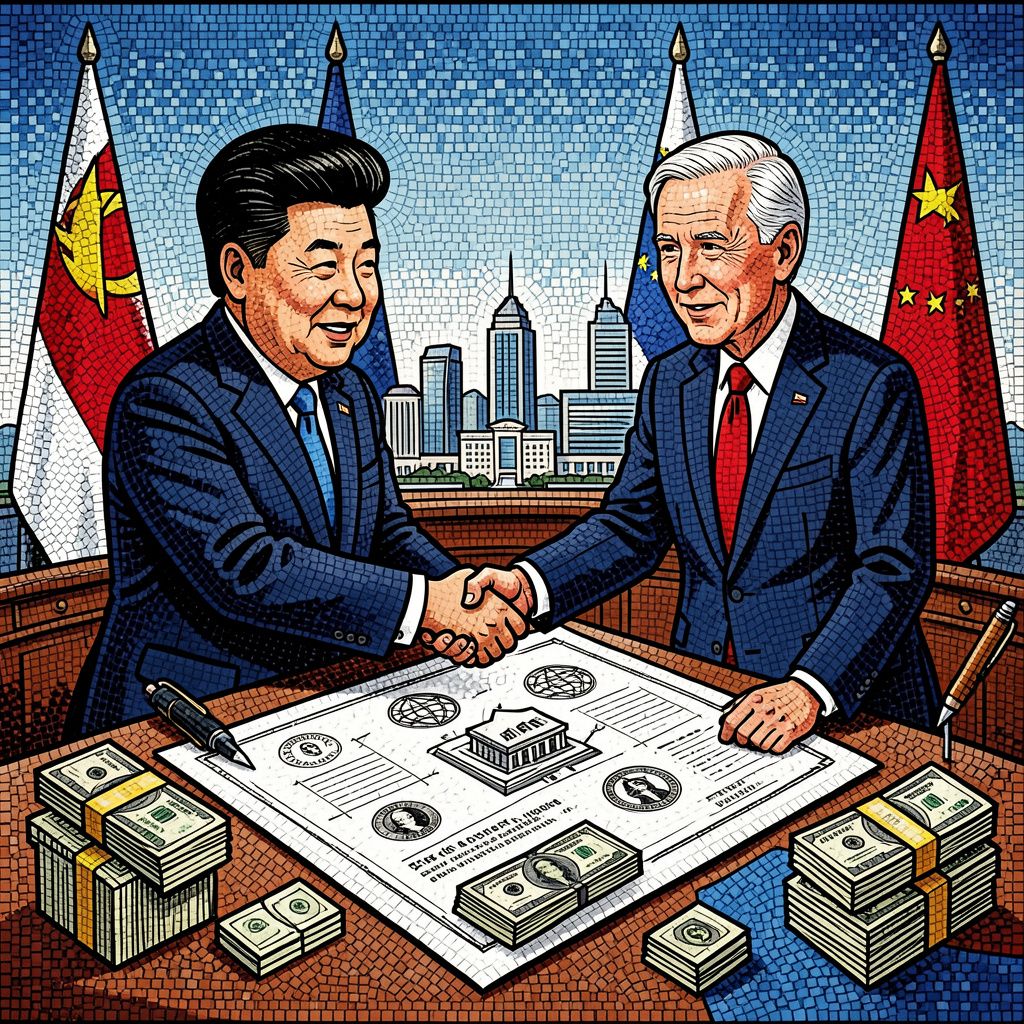
Coinciding with the May 2026 Beijing summit, China’s state security think tank released a pragmatic blueprint detailing how both nations can avoid conflict and stabilize their intertwined economies.
Defining ‘Constructive Strategic Stability’
On May 13, 2026, the exact day United States President Donald Trump arrived in Beijing for a highly anticipated diplomatic visit, the China Institutes of Contemporary International Relations (CICIR) published a seminal policy paper [1]. The research institute, which operates under the umbrella of China’s Ministry of State Security—an agency described as effectively combining the intelligence and enforcement functions of the CIA and FBI—released the document under the title “The Great Global Transformation and the Path to U.S.–China Coexistence” [5]. The publication was jointly hosted on a platform run by the research institute of China’s Ministry of Foreign Affairs, underscoring its status as an authoritative reflection of Beijing’s strategic posture [5].
A Pragmatic Pivot Amidst Staggering Economic Realities
The urgency of this stabilized framework is underscored by stark economic data. In 2025, bilateral trade volume between the United States and China experienced its sharpest decline since 1979 [3]. Trade tensions were further exacerbated earlier this year when “Liberation Day” tariffs spiked to 145% on April 10, 2026, before reportedly being dialed back to roughly 47% [3] [alert! ‘status of the tariff reduction remains unconfirmed in current official reporting’]. Despite these severe economic headwinds, the May 14 summit concluded with a notably restrained and cordial tone [2][4].
The Shifting Balance of Power and Technological Dominance
China approaches this new era of “constructive strategic stability” from a significantly strengthened position compared to Trump’s 2017 visit. At that time, China still largely categorized itself as a developing nation playing catch-up [3]. Today, the Chinese gross domestic product is 54% larger than it was in 2017 [3]. This economic expansion has funded a rapid military modernization; the Chinese navy now boasts 370 battle force ships compared to the United States’ 296, representing a numerical advantage of 74 vessels [3]. Between 2015 and 2023 alone, China added 78 warships to its fleet, whereas the United States added just 20, a stark indicator of shifting maritime capabilities [3].
Forging a Path Forward Through Selective Interdependence
For the United States, managing this relationship requires securing market access for American firms while navigating an increasingly capable competitor [4]. Underscoring the commercial stakes, a delegation of high-profile American business executives—including Apple’s Tim Cook, Tesla’s Elon Musk, Boeing’s Kelly Ortberg, Cargill’s Brian Sikes, and Nvidia’s Jensen Huang—accompanied President Trump to Beijing on May 11, 2026, to lobby for agricultural and aviation purchases [3]. While China holds vast manufacturing leverage, the U.S. remains the world’s leading center of innovation and entrepreneurship [4]. As billionaire investor Warren Buffett has famously noted, “no one has ever been a success betting against America since 1776” [4].
Sources
- www.scmp.com
- www.project-syndicate.org
- medium.com
- www.thejakartapost.com
- arnaudbertrand.substack.com
- www.facebook.com