Trump Pauses Military Action on Iran Amid Tense Peace Talks with Israel
Washington, Wednesday, 20 May 2026.
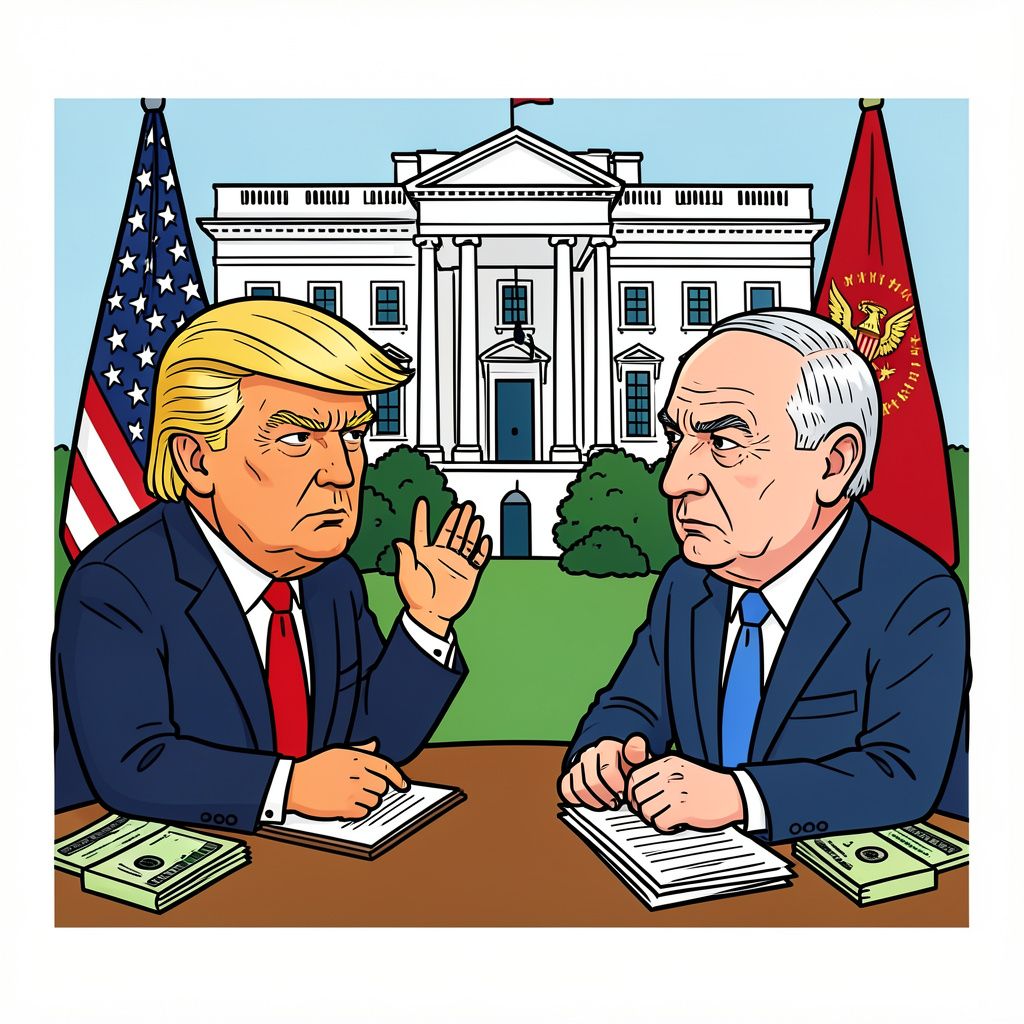
President Trump halted military strikes on Iran just one hour before execution to pursue a fragile peace proposal, sparking intense friction with Israeli Prime Minister Netanyahu over regional strategy.
A Dramatic Reversal and Diplomatic Friction
On May 19, 2026, President Donald Trump revealed that he was merely “an hour away” from launching a renewed wave of military strikes against Iran before abruptly aborting the operation [3][5][6]. The cancellation, which the U.S. president stated was at the behest of Gulf allies including Qatar, Saudi Arabia, and the United Arab Emirates, caught the Israeli military off guard [alert! ‘Source indicates Tuesday as May 18, but May 18, 2026 is a Monday. Dates surrounding the strike cancellation vary slightly across reports’] [3][6]. Following this pivot, Trump engaged in a reportedly “difficult” telephone conversation with Israeli Prime Minister Benjamin Netanyahu [2][4]. During the exchange, which focused on a new 30-day negotiation period and a drafted “letter of intent,” a U.S. source noted that Netanyahu’s “hair was on fire,” underscoring the Israeli leader’s preference to resume military operations to degrade the Iranian regime’s military capabilities [2][4].
Demands on the Table and Regional Mediation
The diplomatic framework currently under discussion involves a complex web of regional mediators, prominently featuring Pakistan, Qatar, Saudi Arabia, Turkey, and Egypt [2]. Pakistani Interior Minister Syed Mohsin Reza Naqvi has visited Tehran twice within the past week to help broker a peace deal and bridge gaps between the conflicting parties [3][4]. According to Iran’s foreign ministry as of May 20, negotiations are proceeding based on a 14-point proposal [2]. This framework reportedly demands the cessation of all hostilities, the withdrawal of U.S. forces from the immediate region, the lifting of economic sanctions, and the release of frozen Iranian assets [5][6]. Furthermore, Tehran is seeking reparations for damages incurred during the nearly three-month U.S.-Israeli military campaign, which has resulted in thousands of casualties [5][6].
Geopolitical and Economic Ripple Effects
The economic imperatives driving the U.S. toward a negotiated settlement are significant, particularly concerning global energy markets [GPT]. Domestic pressure is mounting on the Trump administration to resolve the conflict due to rising energy prices exacerbated by the closure of the Strait of Hormuz, a critical maritime chokepoint [6]. In a potential sign of easing tensions, a South Korean oil tanker carrying two million barrels of crude oil successfully navigated the Strait on Wednesday, marking the first such transit since the war commenced [3]. This development follows a prior incident on May 4, 2026, when a South Korean-operated vessel, the HMM Namu, was struck by unidentified aircraft in the same vicinity [3]. Meanwhile, the U.S. continues to enforce economic pressures, evidenced by the May 19 seizure of the sanctioned, Iran-linked oil tanker Skywave in the Indian Ocean [5].