Federal Reserve Chief Warns Boom in Artificial Intelligence Is Driving Up Prices
Washington, Saturday, 17 October 2026.
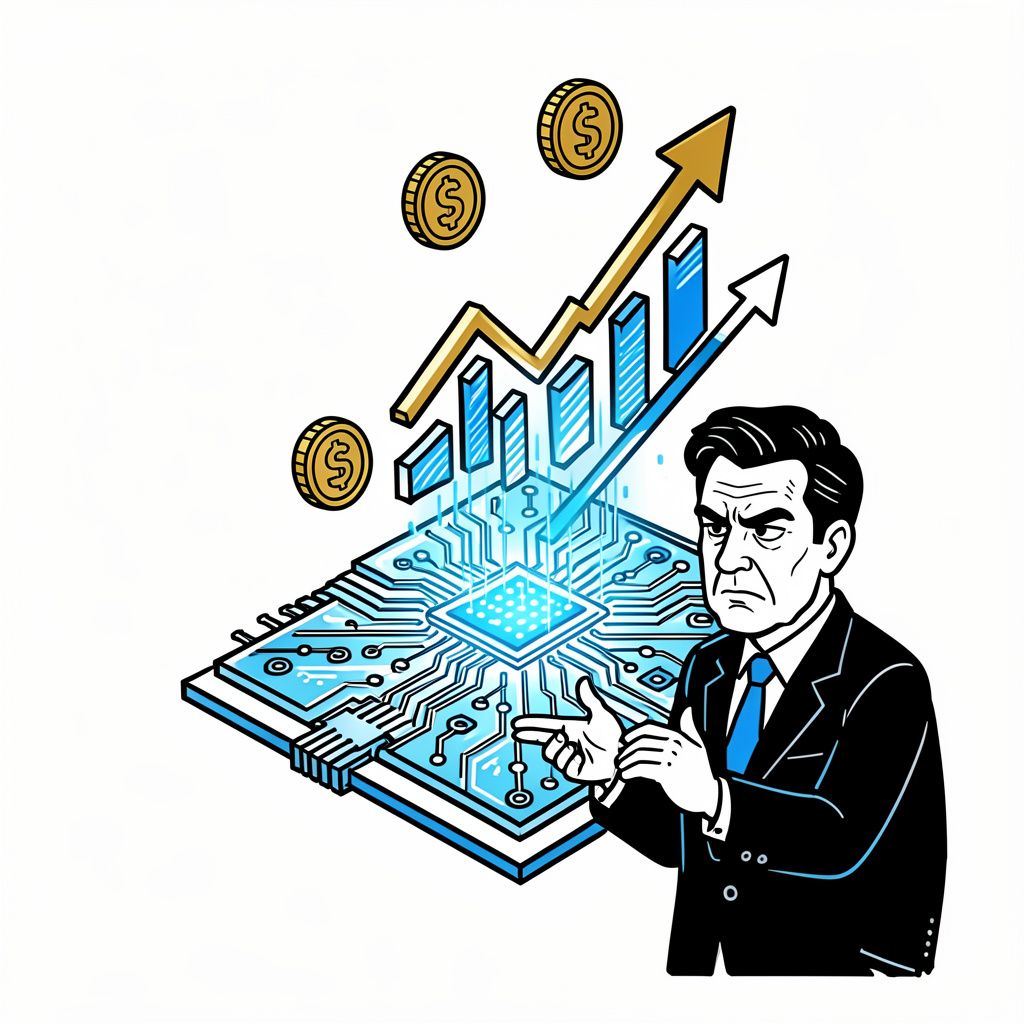
Federal Reserve Chair Kevin Warsh warned that massive investment in artificial intelligence is creating a demand shock, pushing up prices before promised economic productivity gains can take effect.
Demand Shock and Inflationary Pressures
Federal Reserve Chair Kevin Warsh warned on Friday, 16 October 2026, at an IMF conference in Bangkok, Thailand, that aggressive artificial intelligence spending is creating a macroeconomic shock by hitting the demand side of the economy before the supply side [1][2]. Warsh stated that while AI will ultimately generate wealth, the transition path is likely to be very bumpy, presenting risks to financial stability if productivity gains do not materialize quickly enough [1][5]. This warning comes as central bank officials evaluate how massive enterprise expenditures influence long-term inflation dynamics and labor market demand [1].
Monetary Policy Response
In response to rising prices, the Federal Reserve raised interest rates by 0.25 percentage points in September 2026, the first such increase since 2023 [1]. The U.S. Bureau of Labor Statistics reported that September 2026 inflation hit a 4-month high of 3.7%, exceeding the Fed’s 2% target by 1.7 percentage points [1][2]. Current inflation exceeds the Federal Reserve’s target rate by more than one percentage point, driven partly by gasoline price increases resulting from geopolitical tensions [1][2]. Warsh emphasized that he would not prejudge meetings, noting that stubbornly elevated inflation will likely lead to further rate hikes in coming months to slow spending [2][5].
Investment Scale and Financial Stability Risks
U.S. AI investment is projected to total $10.3 trillion between 2025 and 2032, averaging 3.63% of annual GDP, according to Columbia University’s Stijn Van Nieuwerburgh [3]. However, on 14 October 2026, Gartner reported that over $3.5 trillion of AI infrastructure spending could be exposed to impairment by the end of 2030 if current spending levels persist [3]. IMF Managing Director Kristalina Georgieva warned that big revenue or earnings disappointments by AI developers could undermine expectations of future profitability, dealing a hit to equity prices [3]. Since mid-September 2026, increased borrowing by tech hyperscalers to fund AI infrastructure has pushed the 10-year Treasury note yield above 5%, raising borrowing costs for consumers and businesses [3].
Future Policy and Regulatory Outlook
The next Federal Reserve policy meeting is scheduled for 28 October 2026, where officials will continue to assess economic data [1]. Additionally, the Fed’s task force on issues related to AI will meet on 16 November 2026 to analyze the technology’s impact on the economy [2]. Warsh noted that unlike military conflict and other shocks driving prices higher, he believes AI will bring huge benefit to the world economy in time, though the market structure of these new technologies remains uncertain [2][4]. Market sentiment via CME Group’s FedWatch Tool placed the probability of the Fed maintaining current interest rates at 86% by the morning of 16 October 2026 [1].