President Trump Suspends New Russia Sanctions to Buy Fuel
Washington, Saturday, 17 October 2026.
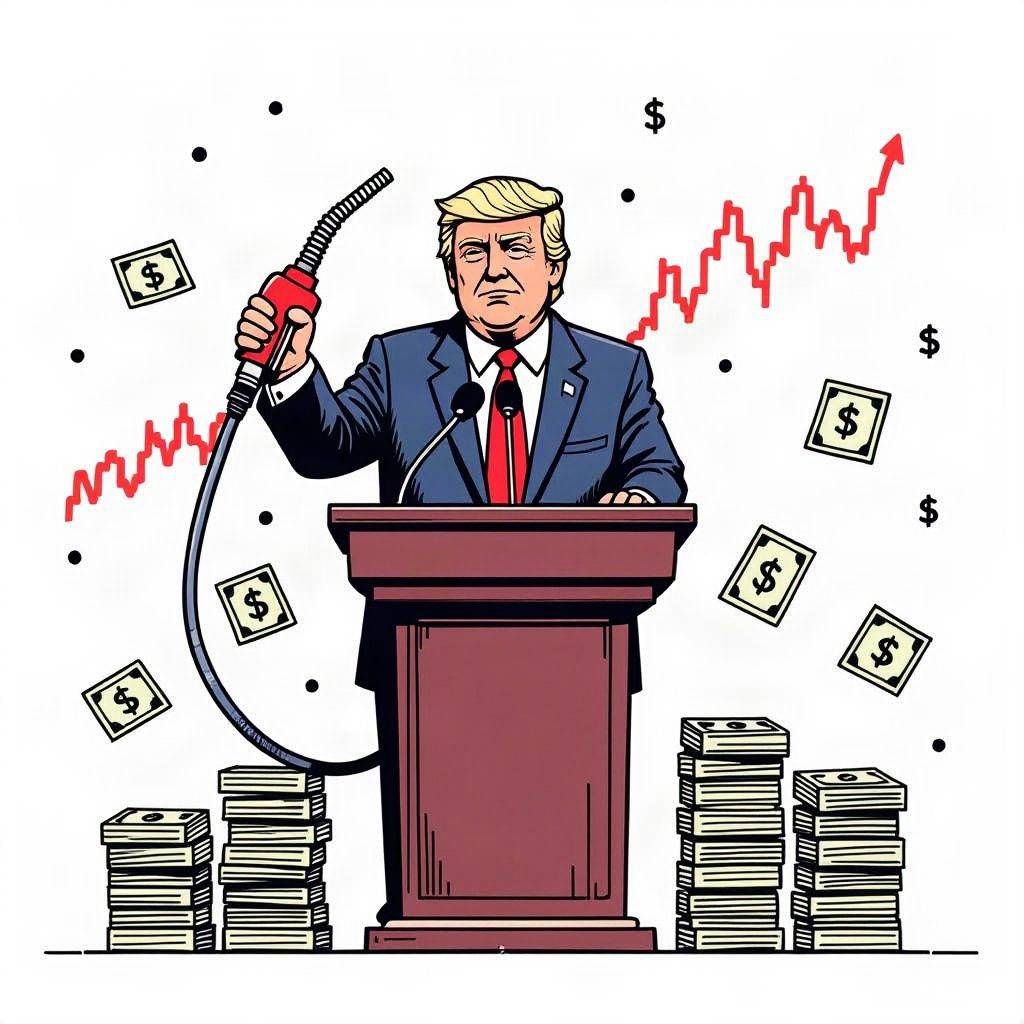
President Trump suspended newly passed Russian sanctions on October 16, 2026, prioritizing a deal to import millions of tons of Russian diesel to lower domestic energy costs.
Executive Authority and Waiver Mechanism
On October 16, 2026, President Donald Trump signed an executive order invoking waiver authority under Section 115 of the Lindsey O. Graham Sanctioning Russia and Iran Act of 2026 [4][7]. This legislative act, originally signed into law on September 18, 2026, mandated strict sanctions on the Russian economy to restrict financial resources funding the war in Ukraine [4][7]. By issuing a certification to Congress, the President declared that suspending these penalties was necessary to protect the national interests of the United States [1][4]. The order effectively pauses the enforcement of sanctions, restrictions, and duties that were scheduled to take effect, including a 500% ad valorem duty increase on goods from the Russian Federation [4].
The waiver authority allows the administration to bypass specific sections of the Graham Act, including Sections 102 through 110, which target foreign persons and entities involved in Russian energy transactions [4]. The Office of the United States Trade Representative has been tasked with monitoring Russian oil and gas import activities to recommend further action, though the current waivers remain in effect indefinitely until revoked [4]. This executive action follows a pattern of utilizing waiver provisions to adjust foreign policy tools without repealing the underlying legislation passed by Congress [7]. The White House submitted a report to Congress explaining the rationale, though the specific contents remain undisclosed to the public as of October 17, 2026 [7].
Diesel Agreement Specifics
The suspension of sanctions facilitates a controversial agreement announced on October 9, 2026, to import Russian diesel fuel into the United States [6][8]. Under the terms disclosed, Russia agreed to supply an initial 300,000 tons of diesel immediately, with an additional 500,000 tons scheduled for delivery in November 2026 [1][6]. Subsequent phases include one million tons immediately thereafter, with a potential release of three million tons pending refinery capacity, totaling approximately 4.8 million tons [6][8]. To enable these transactions, the Treasury Department’s Office of Foreign Assets Control issued General License No. 135, suspending sanctions on Russian diesel deliveries until April 2027 [6][8].
Market data indicates that diesel prices in the U.S. averaged $6.18 per gallon as of October 12, 2026, a significant increase from $3.48 at the start of the year [6]. The percentage increase in diesel prices since the start of the year is calculated as 77.586 [6]. Administration officials argue this supply influx is critical to lowering domestic fuel costs, while critics note the deal satisfies only approximately 2% of U.S. demand [8]. The Treasury Department’s temporary license specifically exempts transactions related to the sale and importation of Russian diesel from sanctions codified at 31 C.F.R. parts 587 and 589 [8].
Legislative and Political Reaction
Congressional response has been sharply critical, with bipartisan efforts emerging to block the diesel deal and enforce the original sanctions [2][3]. On October 16, 2026, Representative Gregory W. Meeks, Ranking Member of the House Foreign Affairs Committee, introduced the Prohibit Corrupt Russia Oil Deals Act to nullify the general licenses issued by the Treasury Department [2]. The legislation aims to prohibit the U.S. International Development Finance Corporation from investing in Russian energy and mandates the imposition of sanctions on Russian energy sectors [2]. Cosponsors include representatives from both parties, reflecting widespread concern that the deal undermines pressure on the Kremlin [2].
In the Senate, appointed Senator Darline Graham, who is running for a permanent seat against Democratic nominee Annie Andrews, defended the President’s use of waiver tools during a debate in Columbia on October 11, 2026 [1][7]. Senator Graham stated that the legislation gives the president tools to end the war through economic sanctions if he chooses, linking the policy to eventual gas price reductions [1][7]. However, on October 13, 2026, a bipartisan group of twelve senators on the Foreign Relations Committee urged the reversal of the deal, arguing the United States should not provide Putin with a financial lifeline [6]. President Trump and Senator Graham are expected to campaign together in South Carolina during the week of October 18, 2026, amid this controversy [1][7].
Economic Context and Election Timing
The timing of the executive order and diesel agreement coincides closely with the upcoming midterm elections scheduled for November 3, 2026 [1][6]. An AP-NORC poll published on October 1, 2026, indicated low presidential approval ratings regarding economic management and the war in Iran, adding pressure to address fuel costs before voters head to the polls [1][7]. Experts suggest the diesel deal is driven by high prices at the pump rather than a shared transatlantic strategy, noting the irony of the U.S. easing sanctions it previously advocated for Europe to maintain [6].
Additionally, the administration’s “energy ceasefire” declaration over the weekend of October 10 to October 11, 2026, pressured Ukraine to cease strikes on Russian petroleum infrastructure [8]. While Ukraine reportedly resumed strikes on October 15, 2026, the initial pause highlighted the tension between military strategy and domestic energy prices [8]. European leaders, including EU high representative Kaja Kallas, emphasized that putting pressure on Russia remains the only way to end the war, contrasting with the U.S. pivot [6]. The 100% ad valorem duty increase on goods from the top five importers of Russian crude oil is scheduled to trigger on October 18, 2026, subject to the newly issued waivers [4].
Sources
- apnews.com
- democrats-foreignaffairs.house.gov
- www.politico.com
- www.whitehouse.gov
- www.facebook.com
- www.cfr.org
- www.yahoo.com
- www.lawfaremedia.org