Federal Action Opens Cheaper Farm Fuel to Highway Drivers to Ease Energy Costs
Washington, Tuesday, 6 October 2026.
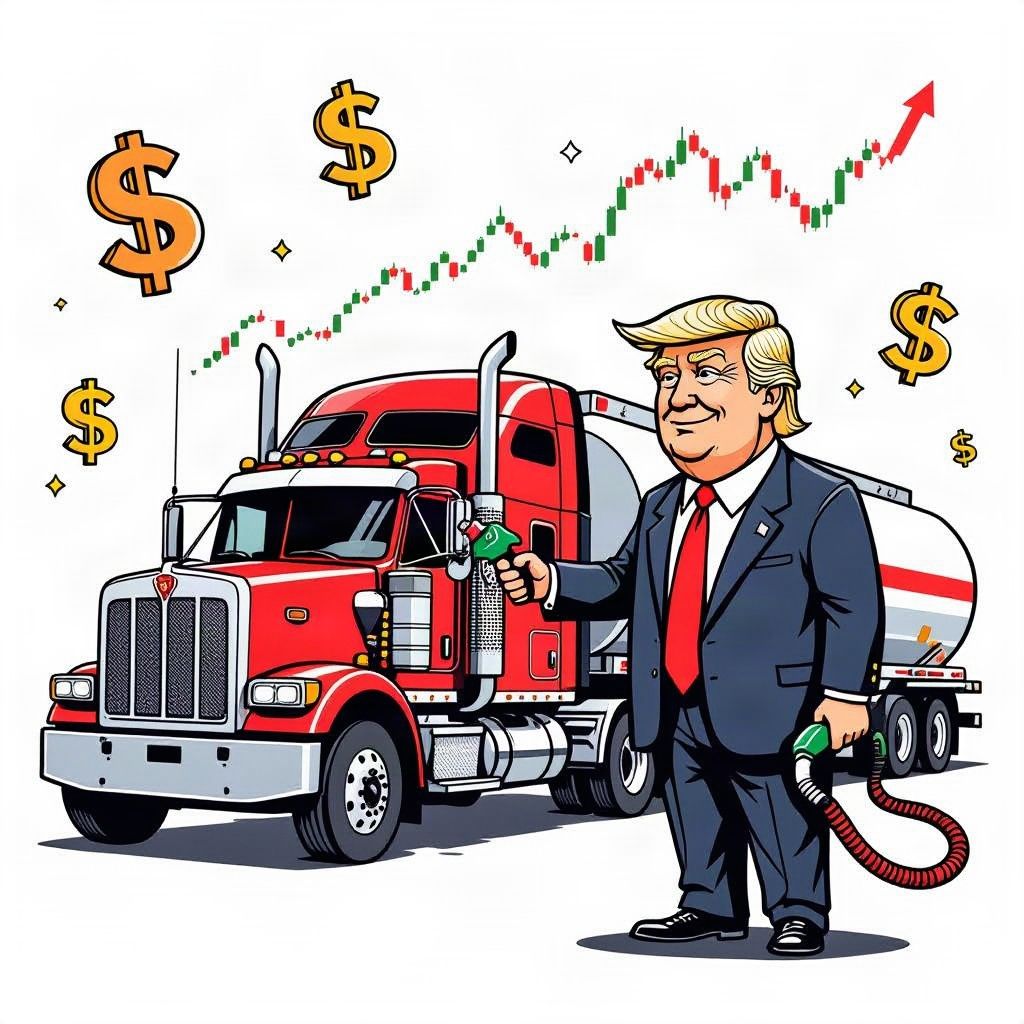
To combat record diesel prices exceeding $6 per gallon, President Trump authorized tax-exempt off-road red diesel for highway use, saving truckers over $100 per fill-up.
Federal Executive Action on Fuel Costs
On October 5, 2026, President Donald Trump signed an executive order temporarily authorizing the use of red-dyed diesel on public highways [1][3]. This regulatory shift aims to mitigate record-breaking fuel costs by allowing commercial truckers and farmers to access tax-exempt fuel typically reserved for off-road machinery [2][3]. The order directs the Treasury Secretary to defer the federal excise tax of 24.4 cents per gallon on highway diesel through the end of 2026 [1][3].
Market Response and Price Records
The national average price of diesel fuel surpassed $6 per gallon in September 2026 for the first time in history [1][2]. By October 5, 2026, the average price settled at approximately $6.32 per gallon, reflecting a significant surge from pre-conflict levels [3]. The White House estimates that truckers could save more than $100 per fill-up under the new provisions [1].
Geopolitical Drivers of Price Volatility
Supply disruptions stemming from conflicts in Ukraine and Iran have constrained global fuel supplies [2][3]. Drone attacks on Russian oil refineries contributed to a Kremlin ban on diesel exports through October 31, 2026 [2]. Additionally, Middle Eastern oil shipment disruptions exacerbated the shortage, prompting earlier measures by the Transportation Department in September 2026 [2][3].
State-Level Precedents and Coordination
Prior to the federal mandate, ten U.S. states independently relaxed restrictions on red-dyed diesel between September 23 and October 2, 2026 [3]. These states, including Texas, Oklahoma, and Alabama, represent roughly one-third of U.S. diesel sales [3]. The federal action standardizes this relief across the nation to ease freight supply chain bottlenecks [1].
State-Level Implementation and Tax Nuances
In Texas, Governor Greg Abbott issued a statewide disaster proclamation on September 28, 2026, allowing expanded use of dyed diesel on roads [4][5]. The proclamation also raised the allowable gross vehicle weight to 95,000 pounds for trucks transporting fuel, agricultural, or timber products [4][5]. However, state officials clarified that the disaster proclamation does not waive the state motor fuels tax [5].
Tax Obligations and Regulatory Waivers
While the federal order defers federal excise tax collection, the Texas Comptroller confirmed that the state’s 20-cent-per-gallon motor fuel tax remains owed under Texas Tax Code Section 162.203 [5]. The initial term of the Texas disaster proclamation is set to expire on October 28, 2026 [5]. Federal approval is still pending for waivers regarding ultra-low sulfur diesel requirements in 110 Texas counties [alert! ‘Status unconfirmed as of October 6, 2026’][4][5].
Economic Impact and Market Limitations
The price increase from early 2026 to the record high represents a substantial economic burden, calculated as 73.67 percent based on national averages [3]. Americans are spending approximately $700 million more per day on gas and diesel compared to the previous year [1]. The Group of Seven nations agreed to release 100 million barrels of diesel and crude reserves following pressure from the U.S. administration [1].
Analyst Outlook on Supply Constraints
Analysts note that while the order saves consumers money in the short term, it does not solve underlying refining capacity issues [3]. Patrick De Haan of GasBuddy described the move as not being a needle-mover for long-term supply constraints [3]. The administration hopes prices will plummet soon, reducing the need for prolonged intervention [3].