Global Gas Car Sales Fall Below 50 Percent as Energy Crisis Drives Electric Vehicle Adoption
New York, Tuesday, 6 October 2026.
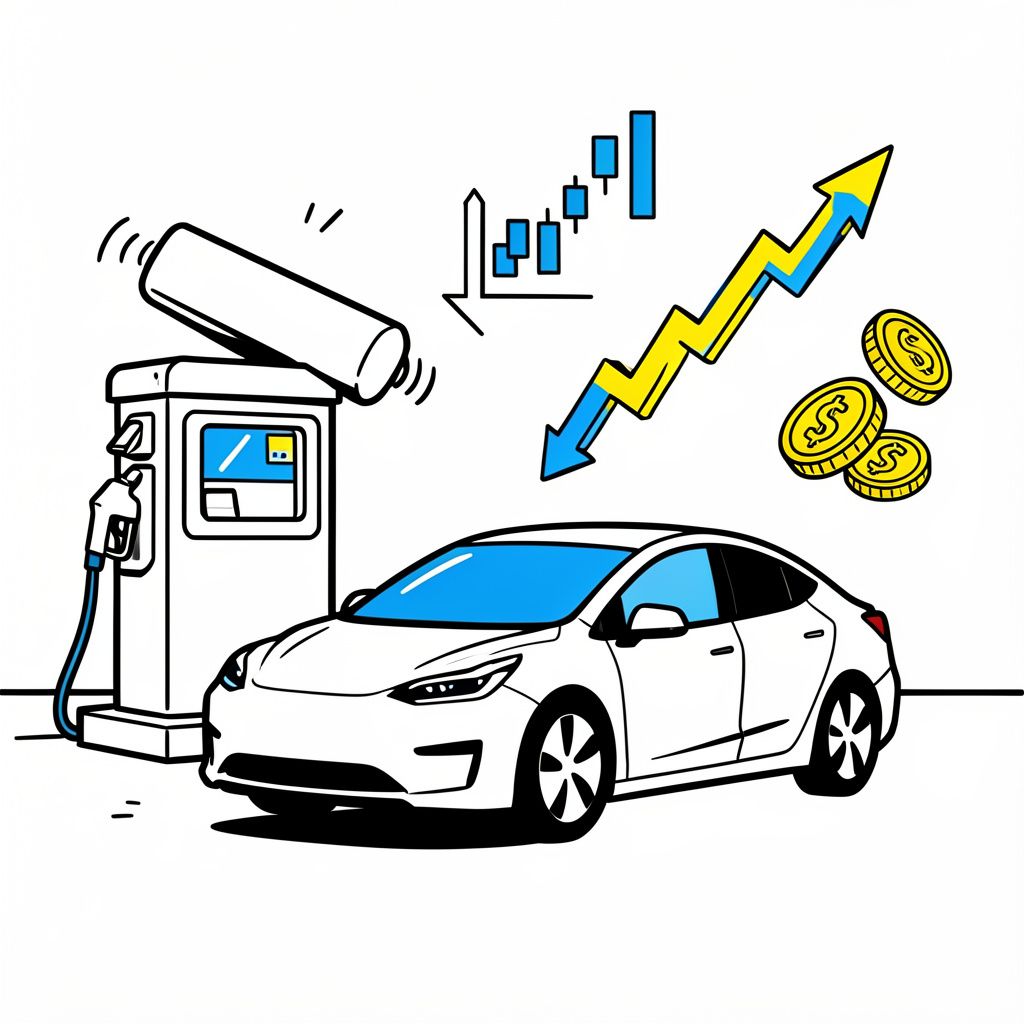
Gasoline-only vehicle sales plummeted to 49% globally in early 2026, dropping below 50% for the first time in history as severe fuel price shocks accelerated consumer adoption of electric and hybrid alternatives.
Historic Shift in Global Automotive Market
The global automotive landscape underwent a seismic shift in the first half of 2026, marking the first time on record that gasoline-only vehicle sales fell below 50% of total new-vehicle sales [2][4]. Data compiled between January and June 2026 reveals that pure internal combustion engine (ICE) vehicles accounted for just 49% of global sales, a significant decline from the 73% market share held in 2021 [2][7]. This transition represents a 32.877 drop in market dominance over a five-year period, accelerated sharply by geopolitical tensions affecting energy supplies [4][7]. Sales volume for gas-powered vehicles decreased by 10% year-over-year to 20.25 million units during this period, driven primarily by record-high fuel prices following disruptions in the Strait of Hormuz [1][4].
Regional Variations and European Surge
Regional analysis indicates disparate impacts, with Europe and China experiencing the most pronounced declines in gasoline vehicle demand [2][5]. In Europe, gasoline-only sales dropped by 13% in the first half of 2026, while China saw a steep 26% decline in the same category [4][7]. Conversely, battery electric vehicle (BEV) sales in Europe surged by 32% to reach 1.81 million units, reflecting a broader consumer pivot away from fossil fuels [2][5]. In Germany specifically, BEV sales rose 75% year-over-year in August 2026 alone, capturing one in three passenger car sales as gasoline prices reached 2.31 euros per liter [1]. This regional data underscores how energy volatility is reshaping consumer preferences across major economic zones.
United States Market Dynamics and Policy Impact
The United States market presents a complex picture where federal policy changes have intersected with global fuel price trends [4][7]. While global EV sales grew, US EV sales declined by 15% in the first half of 2026 following the removal of federal tax incentives by the administration [5][7]. Cox Automotive estimates that Tesla’s US quarterly sales dropped 31% year-over-year to 123,880 vehicles after the elimination of the $7,500 federal tax credit [4]. Despite this, gasoline prices in the US reached approximately $4.50 per gallon, a 41% increase year-over-year, creating conflicting pressures on consumers [2]. Nevertheless, 52,154 US households returned to purchasing gasoline vehicles between June 2025 and June 2026, indicating a segment of the market remains sensitive to infrastructure and cost barriers despite high fuel prices [4][5].
Economic Implications and Future Outlook
The economic ramifications of this transition extend beyond automakers to energy markets and supply chains worldwide [1][5]. The International Energy Agency reported that global EV sales jumped in Q2 2026 after the Middle East crisis reduced crude supply, highlighting the correlation between energy security and automotive technology adoption [1]. Analysts project that if geopolitical negotiations regarding the Strait of Hormuz remain stalled, demand for electrified transport will likely sustain its upward trajectory [5][7]. As Yoshiaki Kawano of Mobility Global noted, demand is increasingly driven by genuine consumer needs rather than subsidies, suggesting this market shift may be structural rather than temporary [2][4]. With 90 countries reporting annual growth in EV sales as of the first half of 2026, the industry faces a long-term recalibration of production and energy strategies [1][5].