Federal Policy Reversals Projected to Boost Long-Term Household Energy Costs
Washington, Friday, 2 October 2026.
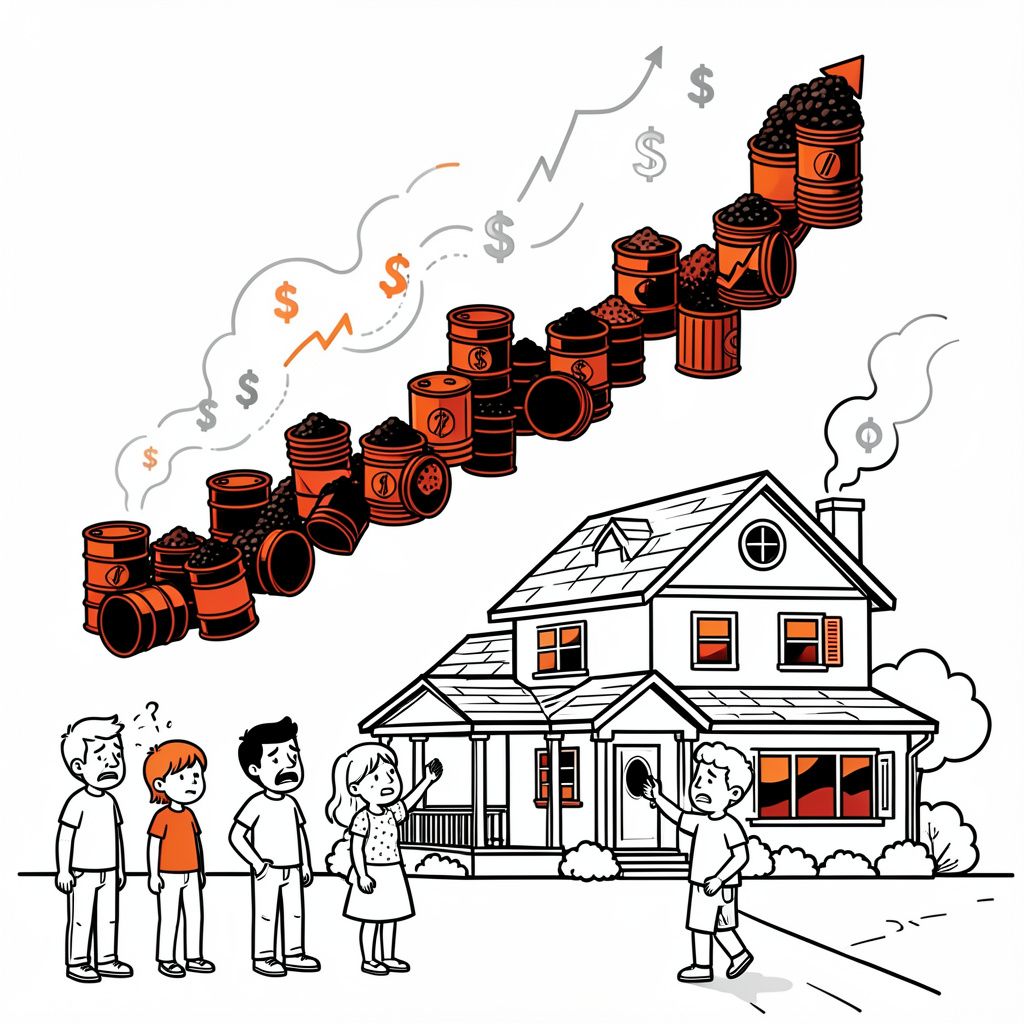
A new analysis reveals federal policy shifts prioritizing fossil fuels will raise average U.S. household energy expenses by $6,500 through 2040, with red states facing even higher increases.
Federal Policy Reversals Projected to Boost Long-Term Household Energy Costs
A new analysis reveals federal policy shifts prioritizing fossil fuels will raise average U.S. household energy expenses by $6,500 through 2040, with red states facing even higher increases. A modeling report released Friday, 25 September 2026, by the California-based think tank Energy Innovation projects that federal energy policy changes enacted since President Donald Trump returned to office will increase cumulative household energy costs in the contiguous U.S. significantly [1][2]. The analysis indicates that American consumers will pay thousands of dollars more over the coming decades due to rollbacks on clean energy incentives, altered grid management priorities, and updated utility cost-allocation rules [1][3].
Drivers of Increased Expenditure
The analysis identifies two primary drivers for these increased costs: rising demand for natural gas in electricity generation caused by the cancellation of new clean energy projects, and increased gasoline demand resulting from the revocation of policies that incentivized efficient and lower-emissions vehicles [1][2]. Policy shifts analyzed include the “One Big Beautiful Bill,” which slashed clean energy tax credits, the blocking of California’s 2035 ban on new gas-powered car sales, the loosening of fuel economy standards, and federal actions halting wind, solar, and hydrogen projects [2][3]. White House spokeswoman Taylor Rogers stated on Wednesday, 30 September 2026, that the administration views coal and natural gas as reliable energy sources necessary to fix grid issues caused by previous clean energy expansion [1][6].
Regional Disparities and Economic Impact
Households in five specific states—Oregon, Mississippi, South Dakota, Virginia, and Wyoming—are projected to face higher costs of roughly $9,000 each through 2040 due to these policy shifts [1][2]. Energy Innovation analysis indicates households in states that voted for Trump in 2024 will face $7,000 in cumulative increased energy spending, compared to $5,800 for households in states that voted for Kamala Harris [2][5]. Corporate leaders and energy sector executives must navigate these changing cost structures as higher residential and industrial power tariffs threaten consumer spending power and elevate operational expenses [1][3].
Market Trends and Price Trajectories
Electricity bills across the U.S. are currently rising faster than inflation, a trend attributed in some regions to power demand from data centers and the impact of the Iran war on oil and gasoline prices [1][4]. According to EIA data, U.S. residential electricity prices rose from 12.6 cents/kWh in January 2021 to 18.31 cents/kWh in July 2026, representing a significant percentage increase calculated as 45.317 over the period [2][6]. Massachusetts residents currently pay double the national average for electricity, with energy affordability identified as the top household concern in a business group poll released shortly after the start of the Iran war earlier in 2026 [4].
Environmental and Health Consequences
The environmental and economic impact of these policy changes is projected to include 37,000 additional premature deaths from air pollution, $72 billion in additional healthcare costs, and the emission of more than 9 billion tons of additional carbon pollution through 2040 [2][3]. Robbie Orvis, senior director for modeling and analysis at Energy Innovation, noted that across pretty much every state, the outlook is worse and the affordability crisis will be worse because of the combined set of policies [2][6]. As the nation moves forward, the balance between energy reliability and affordability remains a critical point of contention for policymakers and consumers alike [1][4].
Sources
- apnews.com
- abcnews.com
- energyinnovation.org
- commonwealthbeacon.org
- www.wdbo.com
- www.ottumwacourier.com