President Trump Considers US Diesel Export Ban as Global Fuel Prices Surge
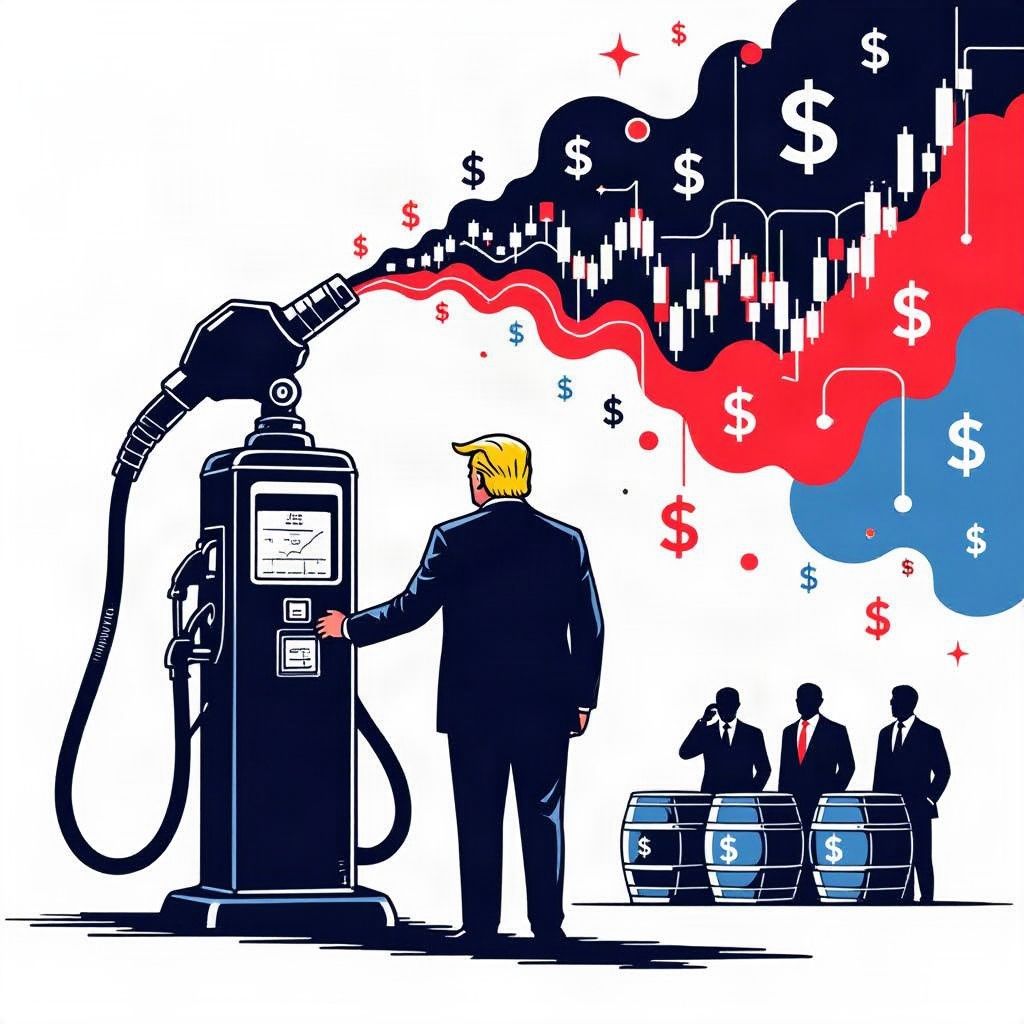
Brussels, Friday, 2 October 2026.
As global diesel prices reach record highs, U.S. threats to ban diesel exports have forced European leaders into emergency talks to discuss releasing strategic fuel reserves.
Market Shock and Emergency Responses
European Union officials convened emergency discussions on Friday, 2 October 2026, following warnings from U.S. President Donald Trump regarding a potential ban on American diesel exports [1][3]. The threat of restricted supply has pushed transatlantic fuel prices to record highs, forcing European nations and the United Kingdom to compete aggressively for alternative energy imports from the Middle East and Asia [1][7]. Commercial fleet operators and logistics firms face immediate cost increases, threatening to reignite broader inflationary pressures across major global supply chains [3][8].
Market Shock and Emergency Responses
The timing of these developments coincides with heightened political pressure in the United States ahead of the November 2026 midterm elections [1][5]. President Trump has indicated he may ask European countries to draw down their strategic reserves to alleviate domestic price burdens [1][3]. Treasury Secretary Scott Bessent emphasized that American farmers, truckers, and businesses should not bear the burden of soaring prices, underscoring the administration’s focus on domestic economic stability [1][6].
The Export Ban Threat
President Trump stated on the campaign trail in Texas that he “may” ask European countries to draw down their reserves and has not ruled out restricting diesel shipments despite industry pushback [1][5]. While signaling on 29 September 2026 that a ban could have a negative impact on gasoline prices, the President confirmed the option remains under active daily discussion [4][6]. Energy Secretary Chris Wright noted that diesel prices had decreased slightly during the week of 22 September 2026 to 29 September 2026, yet global supplies remain tight due to conflicts in Russia, the Middle East, and China [4][6].
The Export Ban Threat
Administration officials argue that cutting off American supply would likely cause international prices to skyrocket, creating a complex trade-off for policymakers [3][5]. President Trump acknowledged this risk, stating, “It just seems that it would have a negative impact on gasoline. That would go up a little bit and diesel would come down a little bit” [4][6]. Despite these concerns, the White House continues to face mounting pressure to take steps to bring down record-high diesel prices before voters head to the polls [5][7].
European Vulnerability and Reserves
The United Kingdom imports nearly 55% of the diesel it uses, with the United States accounting for around 31% of that volume [1][3]. While countries like Spain and Germany maintain nearly 400 days’ worth of supplies, the UK holds only about 42 days of reserves, highlighting a significant vulnerability [1][3]. EU members are required to hold reserves for 61 days of consumption, whereas International Energy Agency rules require the UK to hold stocks equivalent to 90 days of net imports [3][8].
European Vulnerability and Reserves
UK Transport Minister Keir Mather sought to reassure the public that the United Kingdom has a diverse range of supply sources and built-in resilience [1][8]. Government officials confirmed they are working closely with US counterparts and international partners to sustain flows of diesel around the world [1][3]. However, analysts warn that the UK is highly vulnerable to US export restrictions because domestic refineries produce insufficient diesel despite having an excess of petrol [3][8].
Economic Implications and Price Surges
UK diesel pump prices reached a record 199.79p per litre, compared to 142.38p previously, representing a significant surge calculated as 40.322 [3]. In the United States, the average price of diesel fuel has soared by 70% since late February 2026, reaching $6.38 per gallon as of 30 September 2026 [6][8]. Such high prices spell trouble for inflation, as diesel is used in transporting goods and can cause costs to rise across the board [1][6].
Economic Implications and Price Surges
EU member states scheduled urgent talks with the European Commission for Friday, 2 October 2026, to coordinate a response to high prices and potential supply shortages [3][8]. President Macron had previously announced plans to convene a G7 video meeting to coordinate fuel price strategies, expected in mid-October 2026 [7]. As global leaders navigate these complex economic landscapes, the outcome of these negotiations will determine energy security for millions of consumers and businesses [5][7].
Sources
- news.sky.com
- www.nytimes.com
- www.bbc.com
- www.cnbc.com
- www.politico.com
- www.nbcnews.com
- www.france24.com
- www.theguardian.com