US Threatens Higher Tariffs as South Korea Resists Multibillion Energy Investment
Washington, Monday, 5 October 2026.
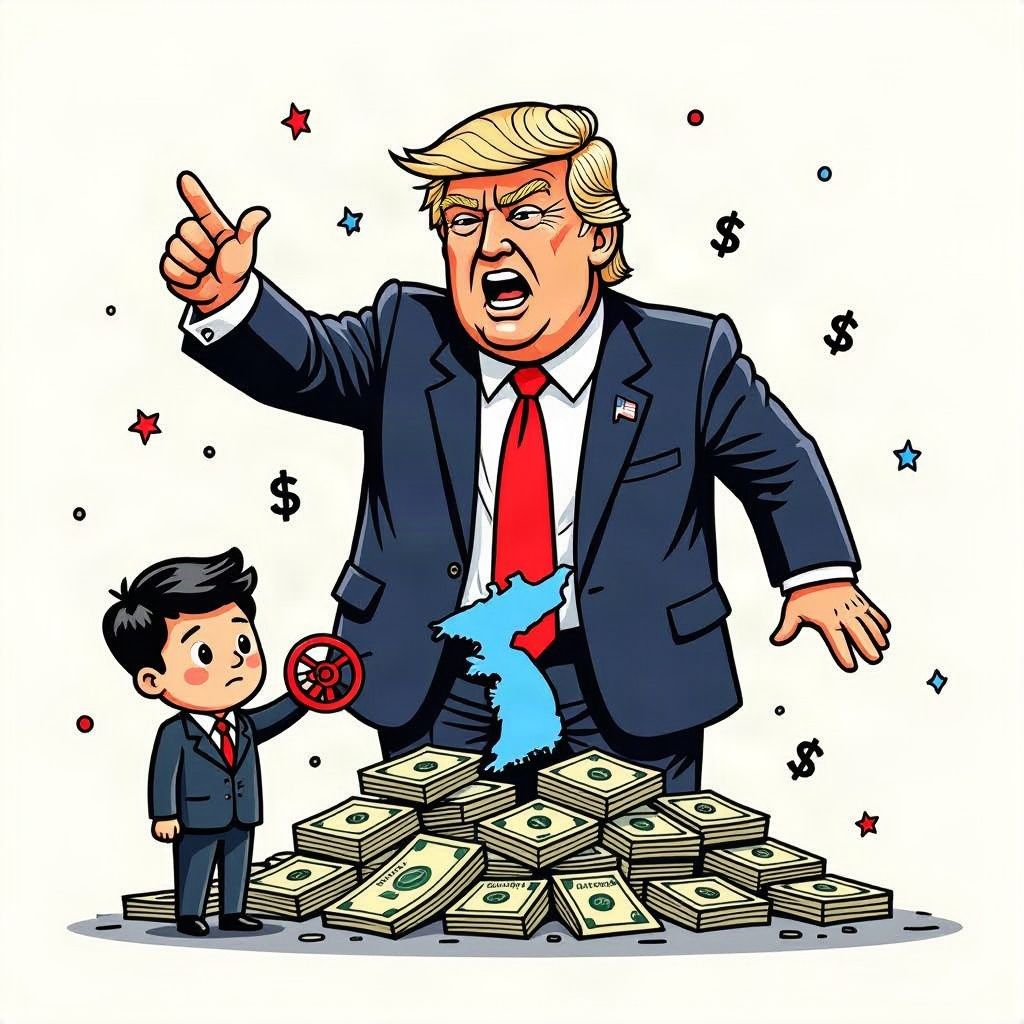
President Trump threatened to double tariffs on South Korea after Seoul disputed a premature White House announcement claiming a $54 billion commitment to an unproven Alaska natural gas project.
Escalating Trade Tensions Over Energy Deal
President Donald Trump has intensified pressure on South Korea, threatening to double existing trade tariffs if Seoul does not commit to a $54 billion investment in the Alaska Liquefied Natural Gas (LNG) project [1][4]. This escalation follows a previous report detailing South Korea’s initial hesitation regarding the terms of the multibillion-dollar energy deal promised by the U.S. [8]. While the Trump administration announced the investment on September 30, 2026, South Korean officials have consistently maintained that no final agreement has been reached [6][8]. The confrontation highlights a growing strategy of linking energy infrastructure investments directly to trade terms between Washington and key Asian partners [1][5].
Threat of Increased Economic Charges
On October 2, 2026, President Trump told reporters he would “double it up” if South Korea does not sign the investment agreement shortly [1][2]. Although the President did not explicitly specify what would be doubled, South Korean local media raised the possibility that he was referring to higher tariffs on the country [1][3]. The current tariff rate on South Korean goods stands at 15 percent, meaning a doubling would result in a rate of 30 percent [4][7]. This threat underscores the administration’s willingness to use economic leverage to secure foreign capital for domestic energy projects [5][7].
Disputed Commitments and Viability
South Korean President Lee Jae Myung and Industry Minister Kim Jung-kwan have stated that nothing has been decided regarding whether to invest or the size of any investment [4][6]. Minister Kim noted that putting out figures or using definitive language goes far beyond what was agreed upon during negotiations [4][7]. The Alaska LNG project, estimated to cost between $45 billion and $55 billion, has been in development for over a decade and faces challenges regarding financing and purchase agreements [6][10]. Seoul maintains that any participation is dependent on the project’s commercial viability and compliance with domestic legal procedures [1][6].
Additional Projects and Verification
Separately, President Trump announced on Truth Social on Friday, October 2, 2026, an additional $8.4 billion enhanced oil recovery project, claiming the deal “keeps getting BETTER” [1][9]. Enhanced oil recovery uses techniques such as carbon dioxide injection to increase the amount of crude oil produced from an oil field [11]. However, South Korean local media reported that this oil recovery project was not included in the agreements reached between Seoul and Washington [1][10]. The South Korean industry ministry is seeking to verify the announcement and has contacted the U.S. through trade channels for clarification [1][10].
Sources
- www.cnbc.com
- www.whitehouse.gov
- www.chosun.com
- www.adn.com
- www.bloomberg.com
- www.cnn.com
- thehill.com
- wsnext.com
- truthsocial.com
- biz.chosun.com
- www.energy.gov