U.S. Intelligence Chief Brings Operative Behind Maduro Capture to Havana Meeting
Havana, Saturday, 23 May 2026.
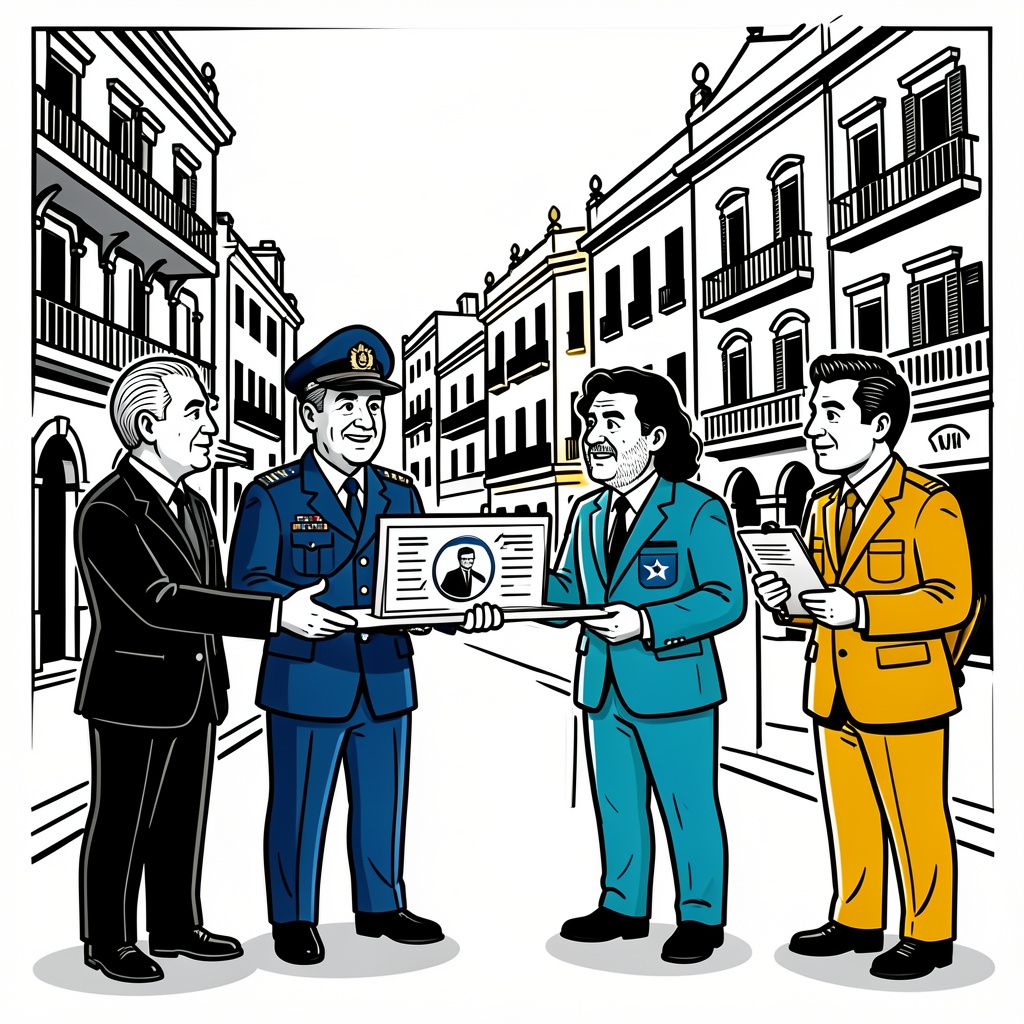
In a striking diplomatic move, the CIA Director introduced the operative who captured Venezuela’s Nicolás Maduro directly to Cuban officials, signaling a decisive shift in U.S. foreign policy.
A Calculated Show of Force in Havana
On May 14, 2026, Central Intelligence Agency Director John Ratcliffe traveled to Havana for a high-stakes meeting with senior Cuban officials, including Raúl Rodriguez Castro, the grandson of former Cuban President Raúl Castro [1]. In an unprecedented display of brinkmanship, Ratcliffe brought along a covert operative who played a key role in the January 2026 United States military raid that extracted Venezuelan President Nicolás Maduro [1]. During the discussions, Ratcliffe explicitly introduced this paramilitary leader to the Cuban delegation as the individual responsible for neutralizing Cuban forces in Venezuela—an operation that resulted in the deaths of 32 Cuban military and police officers [1].
Legal Maneuvers and Historical Grievances
This direct confrontation underscores a rapidly hardening U.S. posture toward the island nation. Ratcliffe utilized the Havana meeting to deliver a stark warning, stating that Cuba has little time left to implement “fundamental changes” and can no longer serve as a safe haven for Western Hemisphere adversaries [1][5]. This aggressive diplomatic signaling is deeply intertwined with broader regional security concerns. By May 20, 2026, U.S. Secretary of State Marco Rubio publicly asserted that Cuba currently hosts both Russian and Chinese intelligence operations, alongside weaponry from those nations [1].
Simultaneous to these diplomatic pressures, the U.S. Justice Department has weaponized historical grievances to isolate the Cuban leadership. In mid-May 2026, federal prosecutors unsealed a sweeping indictment against 94-year-old Raúl Castro, charging the former Cuban leader with murder and the destruction of an aircraft [1][2][4]. The charges stem from the February 24, 1996 incident in which Cuban MiG-29 fighter jets shot down two unarmed civilian Cessna planes operated by the Miami-based exile group Brothers to the Rescue, killing four individuals [2][4]. This legal action arrives exactly 30 years after the fatal event [GPT].
Escalating Military and Economic Pressures
Acting Attorney General Todd Blanche emphasized that the families of the victims have waited nearly three decades for justice, noting that the victims were flying humanitarian missions for people fleeing oppression [2][4]. Blanche also indicated that an arrest warrant has been issued, stating the expectation that Castro will face the U.S. justice system “by his own will or by another way” [4]—a thinly veiled reference to the recent forceful apprehension of Maduro [4][5]. Five other individuals, including three Cuban military pilots, were also charged in the indictment [4]. Republican lawmakers from Florida heavily praised the move, with Representative Mario Díaz-Balart declaring that “the day of justice is finally arriving,” and Representative María Elvira Salazar warning the Castro family that their “days are over” [3].
The government in Havana has vehemently rejected these actions. On May 21, 2026, Cuban President Miguel Díaz-Canel condemned the indictment as “a political action without any legal basis,” designed primarily to fabricate a pretext for U.S. military aggression [2][4]. However, American intelligence agencies are actively monitoring Cuba’s defensive maneuvers. Analysts report that Cuba has acquired attack drones, with intelligence suggesting the military has equipped 300 of these unmanned aerial vehicles for potential strikes against U.S. naval bases at Guantanamo Bay [1][5] [alert! ‘Drone strike targets are based on preliminary intelligence assessments and have not been independently verified by international observers’]. In response, the U.S. is increasing reconnaissance flights over the island and is reportedly considering the deployment of an aircraft carrier to the region [5].
The Strategic Endgame
The current U.S. administration is employing a dual-pronged “carrot and stick” strategy to force systemic change in Havana. Economically, Washington is blocking vital fuel shipments and threatening steep tariffs on any country exporting oil to Cuba, while simultaneously dangling an offer of $100 million in conditional aid [1][5]. Secretary of State Rubio has specifically targeted GAESA, the Cuban military conglomerate that dominates 70 percent of the island’s economy, labeling it the “heart of the corrupt and plundering communist regime” [5]. Ultimately, the Trump administration appears resolute in its ambition to dismantle the communist system that has governed Cuba for 67 years, aiming to replicate the decisive, albeit highly controversial, interventions recently executed in Venezuela [1][5].