US Escalates Public Surveillance Flights Off Cuban Coast Amid Oil Blockade
Havana, Wednesday, 20 May 2026.
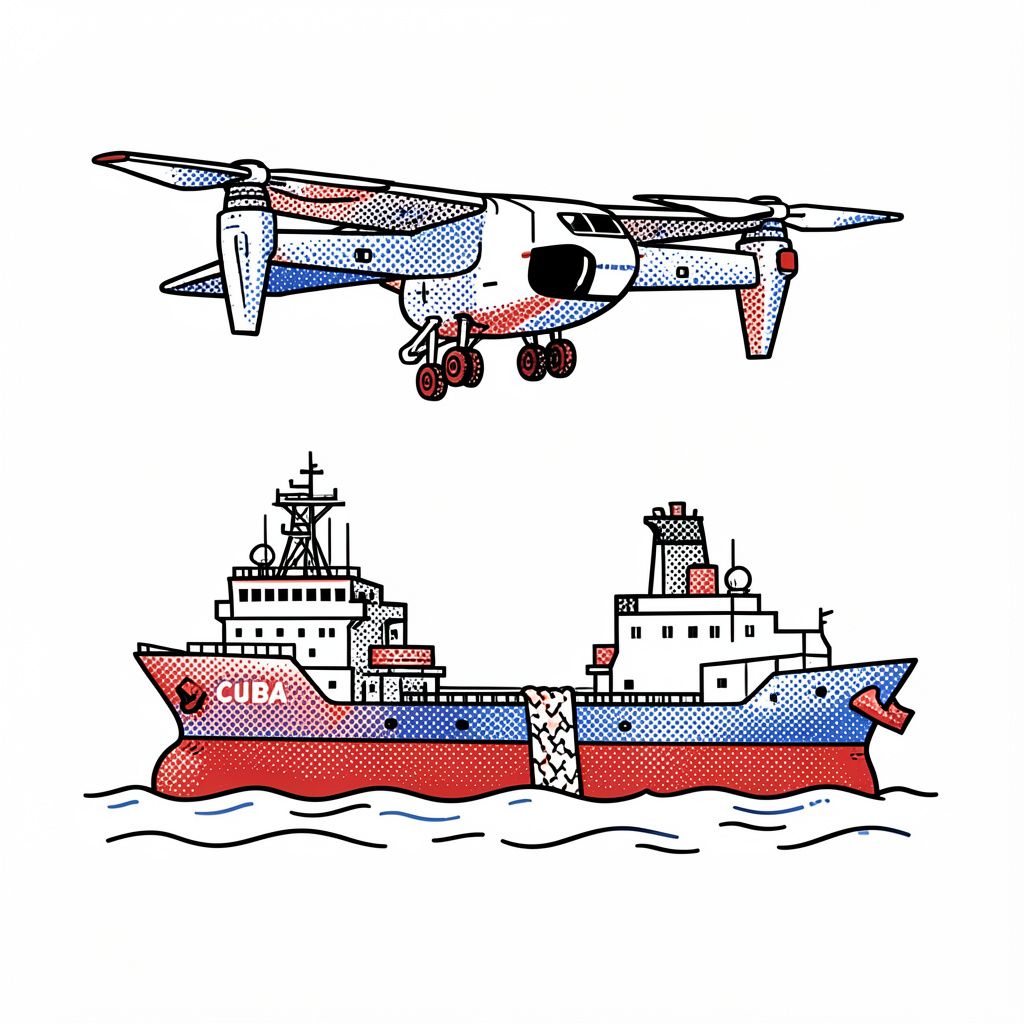
Amid severe fuel shortages, the US is intentionally broadcasting its intensified drone surveillance within 80 kilometers of Cuba to visibly enforce a strict oil blockade.
A Visible Squeeze on Energy Shipments
Since May 11, 2026, the United States military has openly deployed at least five US Navy P-8A Poseidon aircraft and three MQ-4C Triton surveillance drones in the Caribbean Sea [1][2]. Operating as close as 80 kilometers from the Cuban coastline, these flights represent a marked escalation in regional intelligence, surveillance, and reconnaissance sorties [1][2]. In contrast, flight tracking data from February 1 to February 7, 2026, showed only one P-8 operating in the vicinity and no MQ-4C Triton activity [1][2]. This represents a 400 percent increase in P-8 deployments alone over this three-month period [1][2]. Defense intelligence firm Janes notes that the deliberate broadcasting of these flight paths on open-source tracking tools is designed to apply maximum pressure on the Cuban government and deter allies from attempting to break the ongoing US oil blockade [1][2].
Coercive Diplomacy and Regional Warnings
Parallel to the military posturing, Washington has escalated direct diplomatic pressure. On May 14, 2026, CIA Director John Ratcliffe led a delegation to Havana aboard a US Air Force Boeing C-40B Clipper jet [3]. During this visit, Ratcliffe delivered an ultimatum from President Trump, indicating that the US is prepared to engage on economic and security issues only if Cuba implements fundamental changes [3]. To underscore the gravity of the warning, the CIA delegation explicitly reminded Cuban officials of recent events in Venezuela, where US Special Forces killed 32 members of Cuba’s security team and captured Venezuelan President Nicolás Maduro earlier this year [1][2][3].
Competing Narratives and Civil Defense
The justification for increased US military presence has been bolstered by domestic political narratives regarding Cuban military capabilities. A recent report by Axios claimed that Havana had acquired hundreds of drones capable of striking the US mainland, prompting Florida politicians Mario Díaz-Balart and Carlos Giménez to immediately call for military action [2][4]. However, buried within the same report was an acknowledgment from US officials stating that Cuba does not pose an imminent threat and is not planning attacks against the United States [4]. Cuba’s foreign minister responded to the escalating rhetoric by stating the country “neither threatens nor desires war,” and accused Washington of fabricating a “fraudulent case” to justify military intervention [2].