LeBron James and NBA's 2026 Free Agency: A League-Changing Summer
New York, Tuesday, 23 June 2026.
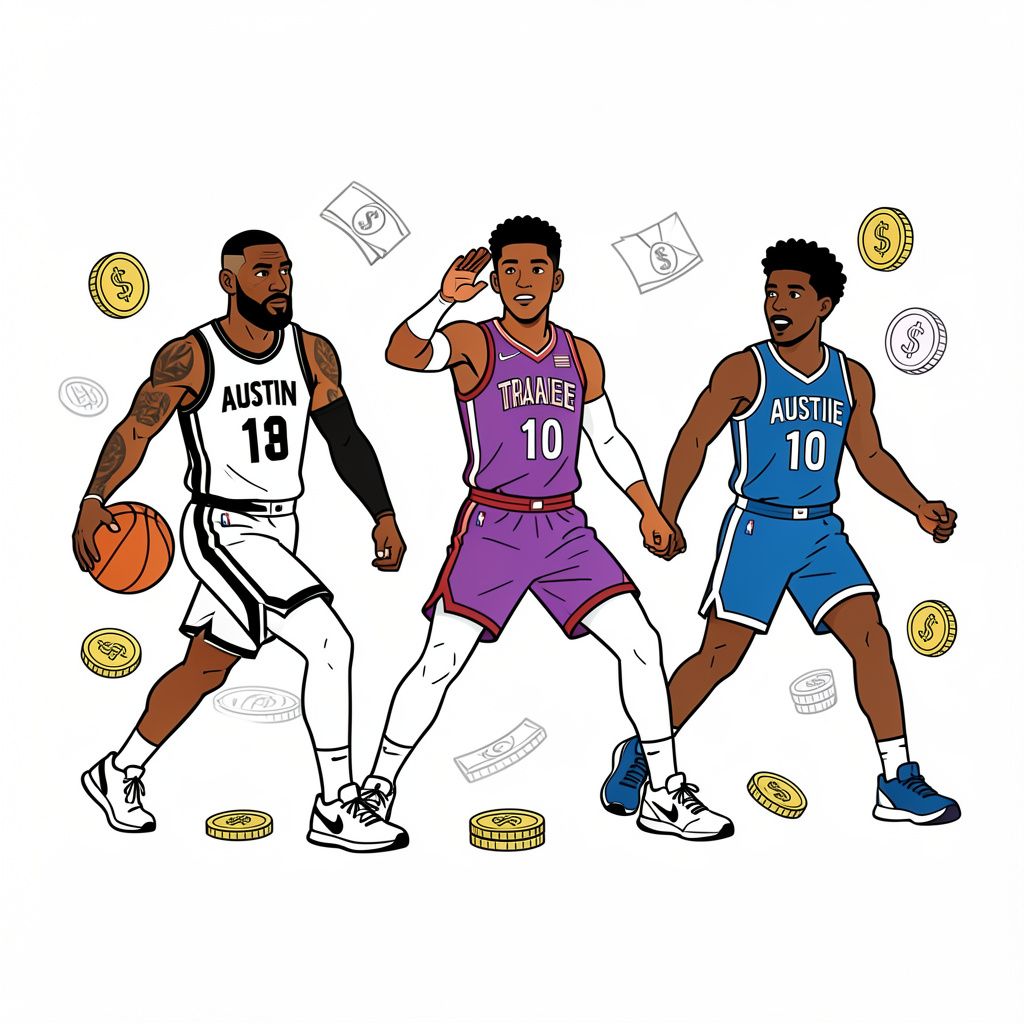
The 2026 NBA free agency could redefine team dynamics, with LeBron James and All-Stars like Trae Young and Austin Reaves set to hit the market. Teams like the Knicks face tough choices due to salary cap constraints, while bidding wars for top talent may reshape championship contenders. The decisions made this summer will have long-term salary cap implications and could shift power in both conferences for years.
The LeBron James Decision: A 41-Year-Old Superstar’s Market Value
The NBA’s 2026 free agency period, set to officially begin at 6 p.m. ET on June 30, 2026, will be headlined by LeBron James, who at 41 years old remains one of the league’s most productive players [2]. In the 2025-26 season, James averaged 20.9 points, 6.1 rebounds, and 7.2 assists per game while shooting 51.5% from the field and 32.0% from three-point range [6]. Despite his age, James’ market value remains substantial, with multiple contenders expected to pursue his services. The Los Angeles Lakers, Cleveland Cavaliers, and Golden State Warriors are considered the primary suitors, though the Lakers’ ability to offer more years and money under the league’s salary cap rules gives them a significant advantage [6]. James’ decision will not only impact his legacy but also set the tone for how teams value aging superstars in an era where player movement has become increasingly fluid [GPT].
Trae Young’s $212 Million Commitment: A New Era for the Wizards
While LeBron James’ free agency looms large, Trae Young has already made headlines by agreeing to a four-year, $212 million contract to remain with the Washington Wizards, a deal that includes a player option for the fourth year [4]. The agreement, reported by ESPN’s Shams Charania, comes after Young turned down a $49 million player option for the 2026-27 season, signaling his long-term commitment to the franchise [4]. Despite a career-worst 17.9 points per game in limited action during the 2025-26 season, Young’s value as one of the league’s premier playmakers and three-point shooters remains undeniable [6]. The Wizards’ decision to lock in Young at this price point reflects their belief in his ability to lead a rebuilding effort, though the contract’s structure—less than the maximum Washington could have offered—suggests a degree of financial prudence [4]. This deal sets a benchmark for other All-Star guards, including Austin Reaves, who is expected to command a similarly lucrative contract [6].
Salary Cap Constraints: The Knicks’ Uphill Battle for Top Talent
The New York Knicks, long constrained by salary cap limitations, face an uphill battle in the 2026 free agency market unless they execute strategic trades or contract restructurings [1]. With key players like Julius Randle and Jalen Brunson already commanding significant cap space, the Knicks’ ability to pursue top-tier free agents like LeBron James or Austin Reaves is severely limited [GPT]. Analysts suggest that the Knicks may need to offload salary via trade to create the necessary cap flexibility, a move that could involve parting with young assets or future draft picks [1]. The team’s cap situation is further complicated by the luxury tax implications of adding high-priced talent, which could push them into the second apron—a financial threshold that triggers additional penalties and restrictions [GPT]. For the Knicks, the 2026 free agency period is less about landing a marquee name and more about navigating the complexities of the salary cap to build a competitive roster without mortgaging the future [1].
Austin Reaves and the Lakers’ Cap Sheet: A ‘War Crime’ in the Making?
The Los Angeles Lakers’ approach to the 2026 free agency period has drawn criticism from fans and analysts alike, with some describing the team’s cap sheet as a ‘war crime’ [5]. Austin Reaves, the Lakers’ 28-year-old guard, is expected to command a five-year deal worth up to $239.3 million, a figure that reflects his breakout 2025-26 season in which he averaged 23.3 points, 7.7 rebounds, and 5.5 assists per game [6]. However, the Lakers’ cap situation is already strained, with the team projected to use its full mid-level exception on players like Mitch Robinson and Tyus Jones while attempting to retain key contributors like Marcus Smart and Rui Hachimura [5]. The challenge for Lakers general manager Rob Pelinka will be to structure contracts in a way that avoids the second apron, a financial threshold that would limit the team’s ability to make further moves [5]. With Reaves’ cap hold set at $21 million for the 2026-27 season, the Lakers may need to use Bird rights to finalize his deal, a strategy that could leave little room for additional signings [5].
Fantasy Basketball Implications: Who Holds the Most Value?
For fantasy basketball enthusiasts, the 2026 free agency period offers a mix of high-risk and high-reward opportunities, with players like LeBron James, Trae Young, and Austin Reaves topping the list of valuable assets [7]. James, despite his age, remains a reliable source of points, rebounds, and assists, and his fantasy stock could rise further if he lands in a system that maximizes his three-point shooting [6][7]. Trae Young, on the other hand, presents a more volatile option; while his 2025-26 season was marred by injuries and inefficiency, his projected return to form—23.5 points and 11.0 assists per game—makes him a tantalizing pick for fantasy managers [6]. Austin Reaves, meanwhile, is expected to see his role expand in 2026-27, with projections of 25+ points per game and maintained production in rebounds and assists [6]. The fantasy value of these players will depend heavily on their landing spots, with team context playing a crucial role in determining their statistical output [7]. For example, James’ fantasy production could vary significantly depending on whether he joins a contender like the Warriors or a rebuilding team like the Cavaliers [6].
The Draft and Free Agency Collide: Early Moves Set the Stage
The 2026 NBA offseason has already seen significant activity, with trades and signings trickling in ahead of the official free agency window on June 30 [3]. The Atlanta Hawks, for instance, re-signed CJ McCollum to a one-year, $21 million deal, a move that reflects the team’s strategy of maintaining flexibility while retaining veteran leadership [8]. Meanwhile, the Phoenix Suns locked in young guards Collin Gillespie and Jordan Goodwin to multi-year deals, signaling their commitment to building a competitive roster around their core [8]. The Hawks also made headlines by trading two second-round picks to the Oklahoma City Thunder for Aaron Wiggins, a move that saved the Thunder an estimated $60 million in tax penalties [8]. These early moves underscore the interconnected nature of the draft and free agency, with teams positioning themselves to capitalize on the available talent pool. The NBA Draft, which began on June 22, 2026, has already produced its share of surprises, including the expected trade of Giannis Antetokounmpo during an 8:15 p.m. ET flight window [8]. As free agency approaches, the decisions made in the coming days will have far-reaching implications for the league’s power dynamics [GPT].