NBA Standoff: Why Walker Kessler’s Contract Dispute Could Reshape the Jazz’s Future
Salt Lake City, Tuesday, 16 June 2026.
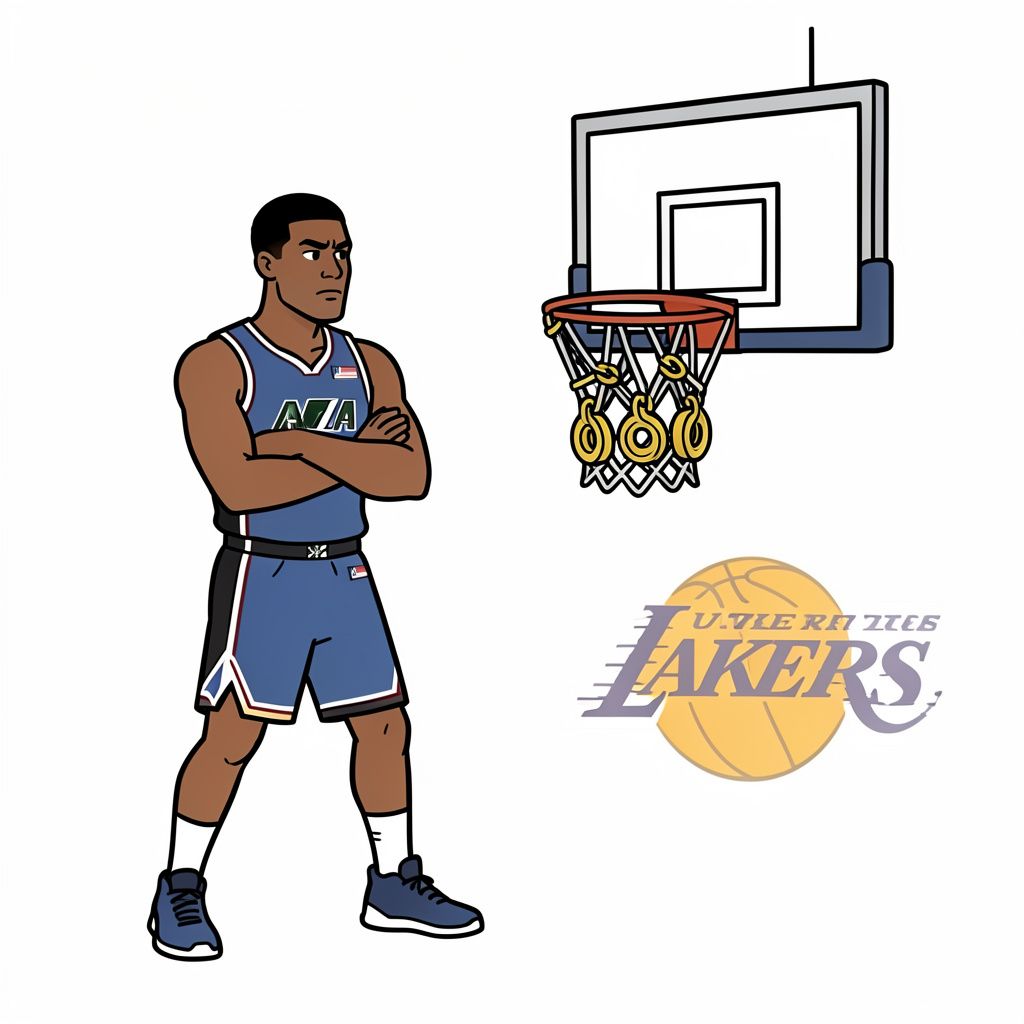
Utah Jazz center Walker Kessler, a rising defensive star, is locked in a high-stakes contract dispute with the team, just as rivals like the Lakers circle. With restricted free agency in play, Kessler’s frustration over the Jazz’s cautious approach could force a dramatic shift—either a long-term deal or an unexpected trade that alters the NBA landscape.
A Rising Star’s Frustration
Walker Kessler, the 23-year-old center for the Utah Jazz (NBA), has become a focal point of tension within the organization as restricted free agency negotiations intensify. Kessler, who has emerged as a defensive anchor for the Jazz, averaging a double-double in the 2025-26 NBA season with 14.5 points and 10.8 rebounds per game, is reportedly dissatisfied with the team’s approach to his contract [2]. The dispute centers on the Jazz’s cautious financial strategy, which has left Kessler and his representatives frustrated over the lack of clarity regarding his long-term role in Utah [2]. League sources indicate that Kessler has long expressed a desire to remain with the Jazz but is ‘extremely disappointed’ with how his situation is being handled [2]. This frustration comes at a critical juncture for both player and franchise, as Kessler’s restricted free agency officially opened on 15 June 2026, granting the Jazz the right to match any offer sheet he signs with another team [2].
Financial Constraints and Strategic Caution
The Jazz’s hesitation in negotiating a long-term deal with Kessler is rooted in their existing financial commitments. The team has already allocated approximately $95 million to Lauri Markkanen and Jaren Jackson Jr. for the 2025-26 season, leaving limited flexibility for additional major contracts [2]. This financial prudence reflects a broader trend in the NBA, where teams are increasingly cautious about overcommitting to long-term deals amid rising player valuations, particularly for big men [2]. The ascension of Victor Wembanyama, the 2023 No. 1 draft pick who has redefined the center position with his versatility and defensive dominance, has further complicated contract negotiations for traditional centers like Kessler [2]. Rival executives have noted that the Jazz, alongside the 2025-26 NBA champions New York Knicks, are among the few teams with sufficient big-man depth to counter Wembanyama’s impact, adding another layer of complexity to Kessler’s negotiations [2].
Draft Dilemmas and Frontcourt Depth
The Jazz’s frontcourt strategy is further complicated by their inability to secure a workout with top draft prospect Darryn Peterson, the projected No. 2 pick in the 2026 NBA Draft [2]. This mirrors a similar situation in 2025, when the Jazz were unable to workout Ace Bailey, the No. 5 pick, due to scheduling conflicts [2]. The team’s struggles to evaluate top prospects in person have raised questions about their long-term planning, particularly as they seek to balance their roster around young talent like Kessler. With Kessler’s restricted free agency in play, the Jazz must decide whether to prioritize retaining him as a foundational piece or explore trade opportunities that could reshape their roster [2]. The outcome of these negotiations could set a precedent for how the Jazz manage their young talent moving forward, particularly in a league where the value of traditional centers is being redefined [2].
The Lakers Loom: A Potential Trade Partner
The Los Angeles Lakers (NYSE: BATRA, ticker: BATRA) have emerged as a potential suitor for Kessler, monitoring his availability as they seek to bolster their frontcourt ahead of the 2026-27 NBA season [1]. The Lakers, who have struggled with frontcourt depth in recent years, view Kessler as a high-upside defensive anchor who could complement their existing roster [1]. While the Jazz retain the right to match any offer sheet Kessler signs, the current tensions between the player and the front office could push Utah to consider trade scenarios rather than risk losing him for nothing in the future [1][2]. For the Lakers, acquiring Kessler would not only address an immediate need but also provide a long-term solution at the center position, particularly as they look to remain competitive in the Western Conference [1]. The potential for a Kessler trade has added urgency to the Jazz’s decision-making process, as they weigh the benefits of retaining a young star against the assets they could acquire in return [1][2].
What’s Next for Kessler and the Jazz?
The next steps in Kessler’s restricted free agency will be pivotal for both the player and the Jazz. If Kessler signs an offer sheet with another team, the Jazz will have 48 hours to decide whether to match it, a timeline that could accelerate negotiations [GPT]. Should the Jazz opt not to match, they would receive no compensation, making this a high-risk scenario for the franchise [GPT]. Alternatively, the Jazz could negotiate a long-term deal with Kessler directly, though the financial constraints imposed by their existing contracts may limit their ability to offer a competitive package [2]. A third option—trading Kessler—could provide the Jazz with draft picks or young talent, aligning with their broader rebuilding strategy [1][2]. For Kessler, the stakes are equally high. At 23, he is entering his prime and faces a decision that could shape the trajectory of his career. Whether he remains in Utah, joins a contender like the Lakers, or lands elsewhere, the outcome of these negotiations will have ripple effects across the NBA [1][2].