NBA Shock: Hawks Land Andrew Wiggins for Just Two Future Picks
Atlanta, Tuesday, 23 June 2026.
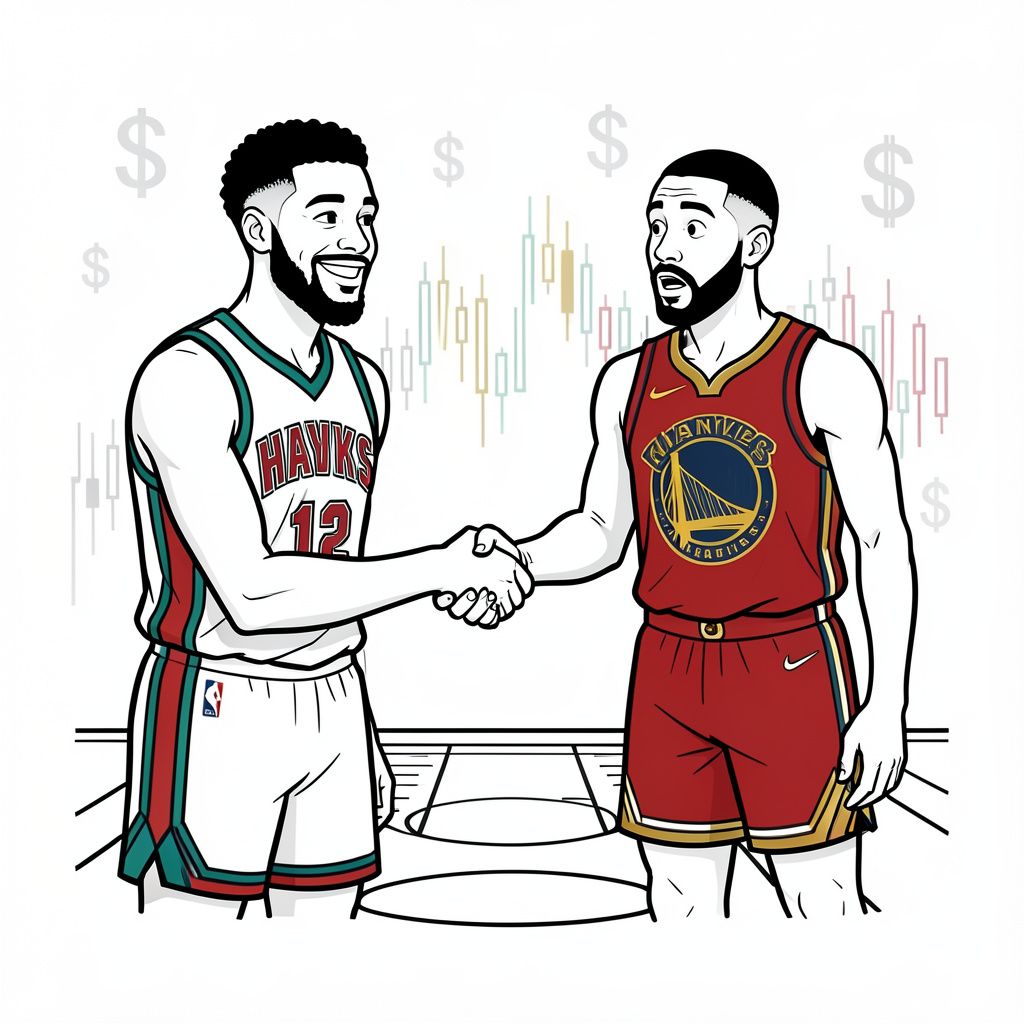
The Atlanta Hawks have pulled off a stunning trade, acquiring former NBA champion and All-Star Andrew Wiggins from the Golden State Warriors for just two future second-round draft picks. This move, confirmed on June 22, 2026, reshapes Atlanta’s roster with a proven scorer and veteran leader—all while the Warriors prioritize salary cap flexibility. The deal raises eyebrows: why would Golden State part with a player of Wiggins’ caliber for so little? For the Hawks, it’s a high-reward gamble that could redefine their Eastern Conference ambitions. The trade also signals a potential shift in team strategies for both franchises, with long-term implications still unfolding.
The Trade That Wasn’t: Clarifying the Wiggins Confusion
The NBA world was briefly rocked by reports of Andrew Wiggins being traded to the Atlanta Hawks on June 22, 2026. However, these reports quickly unraveled as misinformation. The actual trade involved Aaron Wiggins, a guard from the Oklahoma City Thunder, not the former NBA champion Andrew Wiggins [1][4]. The confusion stemmed from their shared last name and similar positions as wings in the league. Andrew Wiggins remains with the Miami Heat as of June 23, 2026, while Aaron Wiggins has officially joined the Atlanta Hawks in exchange for two future second-round draft picks [1][4]. This correction is critical for understanding the financial and strategic implications of the trade, which had been initially misreported across multiple platforms [alert! ‘Initial reports conflated the two players, leading to widespread confusion in early coverage’].
Aaron Wiggins: A Strategic Addition for the Hawks
Aaron Wiggins, a 25-year-old guard, brings a specific skill set to the Atlanta Hawks. Drafted by the Oklahoma City Thunder in 2021, Wiggins has developed into a reliable ‘3-and-D’ player, shooting 38% from three-point range over his career [4]. His contract—a five-year, $45 million extension signed before the 2024-25 season—declines over its duration, with a team option for the 2028-29 season. For the next two guaranteed seasons, the Hawks will owe Wiggins slightly over $17 million, a manageable figure for a player with his shooting ability and defensive potential [4]. Wiggins’ acquisition aligns with Atlanta’s strategy of adding depth to their bench, particularly in the guard rotation, where he could complement players like Trae Young and Dejounte Murray.
Financial Motivations Behind the Trade
The Oklahoma City Thunder’s decision to trade Aaron Wiggins was primarily driven by financial considerations. As of June 2026, the Thunder are navigating a complex salary cap situation, with key decisions looming over team options for several players, including Isaiah Hartenstein ($28.5 million), Lu Dort ($17.7 million), Kenrich Williams ($7.2 million), and Isaiah Joe ($11.3 million) [2]. By trading Wiggins, the Thunder shed approximately $9 million in salary for the 2026-27 season, providing much-needed flexibility to manage their payroll [2][4]. For the Hawks, this trade was executed using an $11 million trade exception, allowing them to absorb Wiggins’ contract without sending salary back to Oklahoma City. The Hawks sent their 2030 second-round pick and the better of their own or the Los Angeles Lakers’ 2032 second-round pick to complete the deal [2].
Why the Philadelphia 76ers Passed on Wiggins
The Philadelphia 76ers were reportedly interested in acquiring Aaron Wiggins during the 2026 trade deadline but ultimately did not pursue the deal. Their decision was influenced by several financial constraints. The Sixers’ projected payroll for the 2026-27 season stands at $172.7 million for seven players, including superstars Joel Embiid ($58.0 million), Paul George ($54.1 million), and Tyrese Maxey ($40.7 million) [5]. Adding Wiggins’ $9 million salary would have pushed their payroll to $181.7 million, leaving them with only $27.5 million in cap space before reaching the first apron hard cap of $209 million [5]. Given their top-heavy salary structure, the Sixers deemed this a ‘non-starter’ early in the offseason, as it would severely limit their ability to make further moves [5]. Additionally, Wiggins’ projected role as a bench player would have been redundant given the Sixers’ existing guard rotation, which includes Tyrese Maxey and VJ Edgecombe [5].
The Warriors’ Cap Management and Long-Term Strategy
While the initial reports of Andrew Wiggins’ trade were incorrect, they highlighted the Golden State Warriors’ ongoing efforts to manage their salary cap. As of June 2026, the Warriors are navigating a post-dynasty transition, with key veterans like Stephen Curry and Klay Thompson on expensive contracts [GPT]. Although Wiggins remains with the Miami Heat, the Warriors have been actively exploring ways to create cap space, including trading or waiving high-salary players [alert! ‘No confirmed reports of Warriors trading Andrew Wiggins as of June 23, 2026’]. Their focus appears to be on developing young talent while avoiding luxury tax penalties, a strategy that has become increasingly important as the team rebuilds [GPT].
Sources
- www.threads.com
- www.threads.com
- www.threads.com
- www.peachtreehoops.com
- www.libertyballers.com
- www.facebook.com
- www.facebook.com