NBA Star Secures Record-Breaking $21 Million Deal with Atlanta Hawks
Atlanta, Sunday, 21 June 2026.
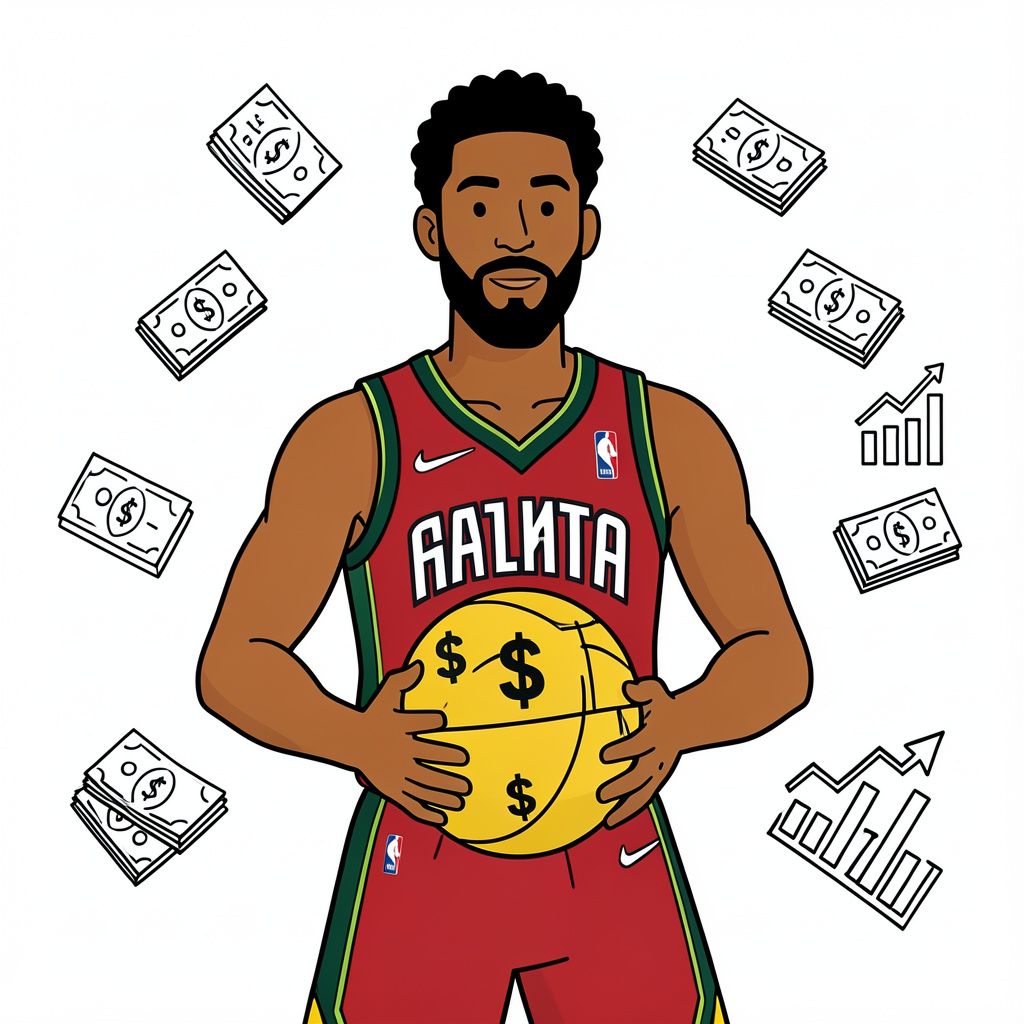
CJ McCollum signs a one-year, $21 million contract extension with the Atlanta Hawks, marking one of the most lucrative short-term deals in NBA history. This move highlights the team’s strategy to retain top talent while navigating the league’s complex salary cap dynamics, offering a glimpse into the evolving economics of professional basketball.
A Strategic Move in the NBA’s Financial Playbook
On Sunday, 21 June 2026, the Atlanta Hawks and veteran guard CJ McCollum finalized a one-year, $21 million contract extension, a deal that underscores the evolving financial strategies in the NBA [1][2]. This agreement not only secures McCollum’s role in the Hawks’ lineup for the 2026-2027 season but also reflects the growing trend of short-term, high-value contracts in professional basketball. Such deals offer teams flexibility in managing salary caps while allowing players to maximize earnings in a competitive market [1].
McCollum’s Impact and the Hawks’ Playoff Push
McCollum joined the Hawks in January 2026 as part of a trade that sent Trae Young to the Washington Wizards [1]. In his 41 regular-season games with Atlanta, McCollum averaged 18.7 points and 4.1 assists per game, providing a significant boost to the team’s offensive firepower [1]. His performance was particularly crucial during the playoffs, where he led the Hawks to a six-game series against the New York Knicks. McCollum’s 32-point outing in Game 2 of that series was a standout moment, demonstrating his ability to deliver under pressure [1]. This late-season surge helped solidify his value to the franchise, making his retention a priority for the Hawks’ front office.
Salary Cap Dynamics and Team Strategy
The Hawks’ decision to re-sign McCollum aligns with their broader strategy of balancing financial flexibility with on-court competitiveness. As of 21 June 2026, the Hawks had $252.4 million in total cap allocations, a figure that includes salaries, bonuses, and other financial commitments [1]. By opting for a one-year deal, the Hawks retain the ability to adjust their roster in response to future salary cap changes, which are expected to rise in the coming years [GPT]. This approach is increasingly common in the NBA, where teams seek to maintain agility in a rapidly evolving financial landscape [1].
The Business of Player Mobility and Market Value
McCollum’s career trajectory offers a case study in the modern NBA’s player mobility and market dynamics. After spending nine seasons with the Portland Trail Blazers, McCollum played for the New Orleans Pelicans for three and a half seasons before a brief stint with the Washington Wizards in early 2026 [1]. His move to Atlanta marked his fourth team in less than three years, a testament to the fluidity of player contracts in today’s NBA. The $21 million extension reflects not only McCollum’s on-court contributions but also the premium placed on experienced guards who can mentor younger players while delivering consistent performance [1].
Looking Ahead: The Hawks’ Roster and Future Prospects
With McCollum’s contract secured, the Hawks are now positioned to focus on building a roster capable of sustained playoff contention. Sources suggest that the team is likely to bring along a young guard to complement McCollum, potentially integrating a player like Flemings, whose speed and athleticism could fit well with the Hawks’ existing core of Jalen Johnson, Jonathan Kuminga, and Dyson Daniels [3]. This strategy aligns with the broader trend of teams blending veteran leadership with emerging talent to create a balanced and competitive lineup [3]. Additionally, speculation about potential trades, such as acquiring De’Aaron Fox from the Sacramento Kings, highlights the Hawks’ ambition to strengthen their backcourt further [7].
The Broader Implications for the NBA
McCollum’s contract extension is more than just a financial transaction; it is a snapshot of the NBA’s shifting economic landscape. Short-term deals like this one allow teams to navigate the complexities of the salary cap while giving players the opportunity to capitalize on their market value in a league where contracts are becoming increasingly performance-driven [1]. For the Hawks, this move signals a commitment to building a competitive team without overcommitting to long-term financial obligations. As the NBA continues to evolve, such strategic decisions will likely become more prevalent, reshaping how teams and players approach contract negotiations [GPT].