Rising Asia-Pacific Shipping Costs Threaten Corporate Profits
Taipei, Thursday, 30 April 2026.
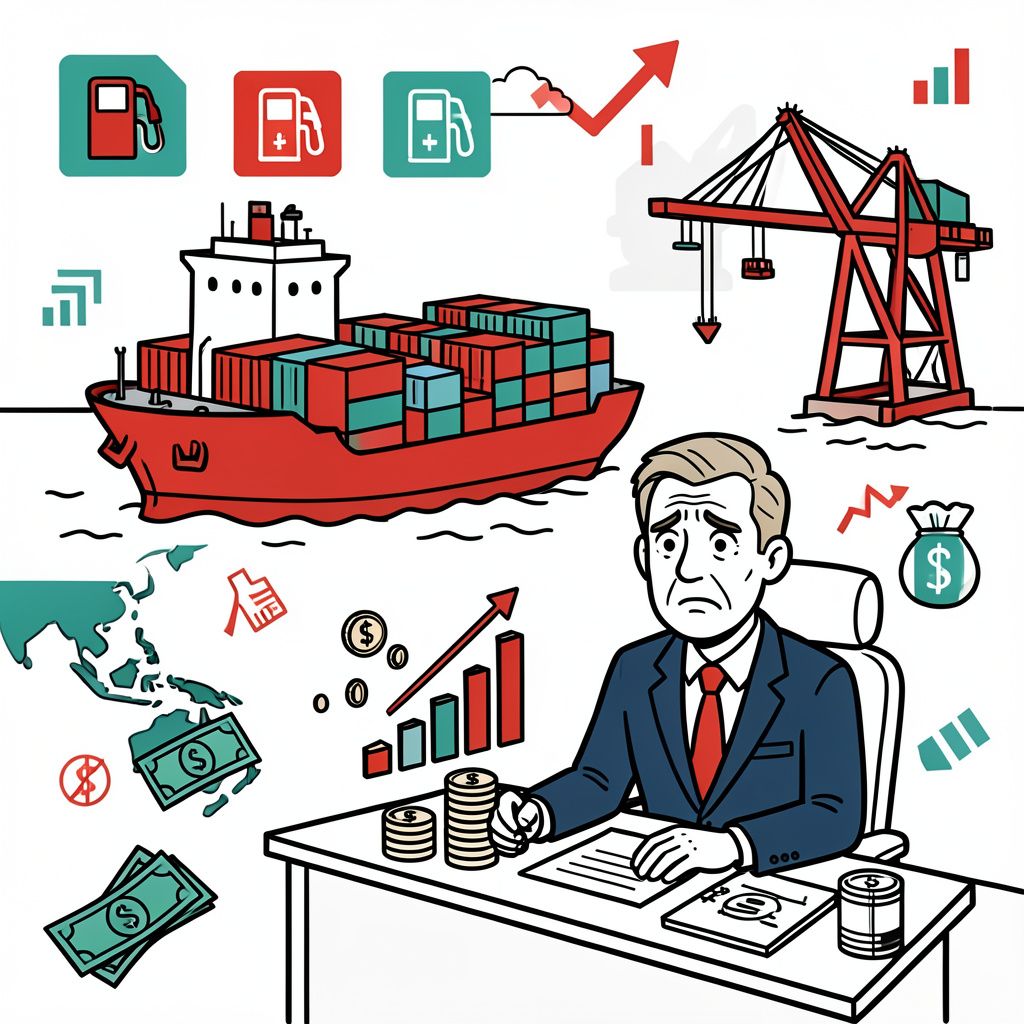
Dimerco warns that severe fuel volatility and tight shipping capacity across the Asia-Pacific are surging freight costs, directly threatening United States corporate profit margins this upcoming quarter.
The Geopolitical Squeeze on Global Chokepoints
The global shipping system, which transports roughly 80 to 90 percent of the world’s goods, is currently experiencing severe structural ruptures [5]. Disruption across key maritime chokepoints has fundamentally altered traditional trade routes. The Strait of Hormuz, a passage merely 33 kilometers wide at its narrowest point, has become a focal point of geopolitical tension, impacting roughly one-fifth of global oil trade alongside containerized cargo linking the Persian Gulf to Asia and Europe [5]. According to Tobias Maier, CEO of DHL Global Forwarding Middle East & Africa, this situation has placed immense pressure on the regional logistics ecosystem, as safe passage relies heavily on security confidence and insurance cover [5].
Fuel Price Shocks and Air Freight Constraints
The rerouting of ocean freight and the instability in the Middle East have triggered a sharp spike in operational costs, most notably in fuel. Between late February and March 20, 2026, the price of jet fuel soared from approximately $95 per barrel to $197 per barrel [2]. This represents a staggering price increase of 107.368 percent in less than a month [2]. Ocean carriers are responding by layering emergency bunker and fuel-related surcharges onto their base rates, while reduced vessel supply continues to plague Asia-Europe services [1][2].
Manufacturing Resilience Meets Logistical Bottlenecks
Despite these mounting logistical hurdles, industrial demand remains robust. The Global Manufacturing Purchasing Managers’ Index (PMI) reached 51.3 in March 2026, marking its eighth consecutive month of expansion [1]. The Asia-Pacific region demonstrated particular strength, with March PMIs showing solid growth in Thailand at 54.1, India at 53.9, and Taiwan at 53.3 [1]. This resilient manufacturing activity, especially the strong demand for artificial intelligence components and semiconductors directed toward the United States, is clashing directly with constrained freight capacity [1].
Strategic Imperatives for U.S. Importers
Navigating this volatile environment requires a fundamental shift from traditional “just-in-time” optimization to proactive supply chain resilience [5]. Dimerco’s May 2026 Asia Pacific Freight Report strongly advises shippers to book early on constrained lanes, integrate rising surcharges into their total landed cost calculations, and build substantial schedule buffers into their planning for May and early summer 2026 [1]. Catherine Chien, Chairwoman of Dimerco Express Group, noted that geopolitical uncertainty and tight capacity are forcing companies to build more flexibility into their routing strategies [1].