Most Americans Fear AI Could Threaten Humanity's Survival
Washington, Saturday, 19 September 2026.
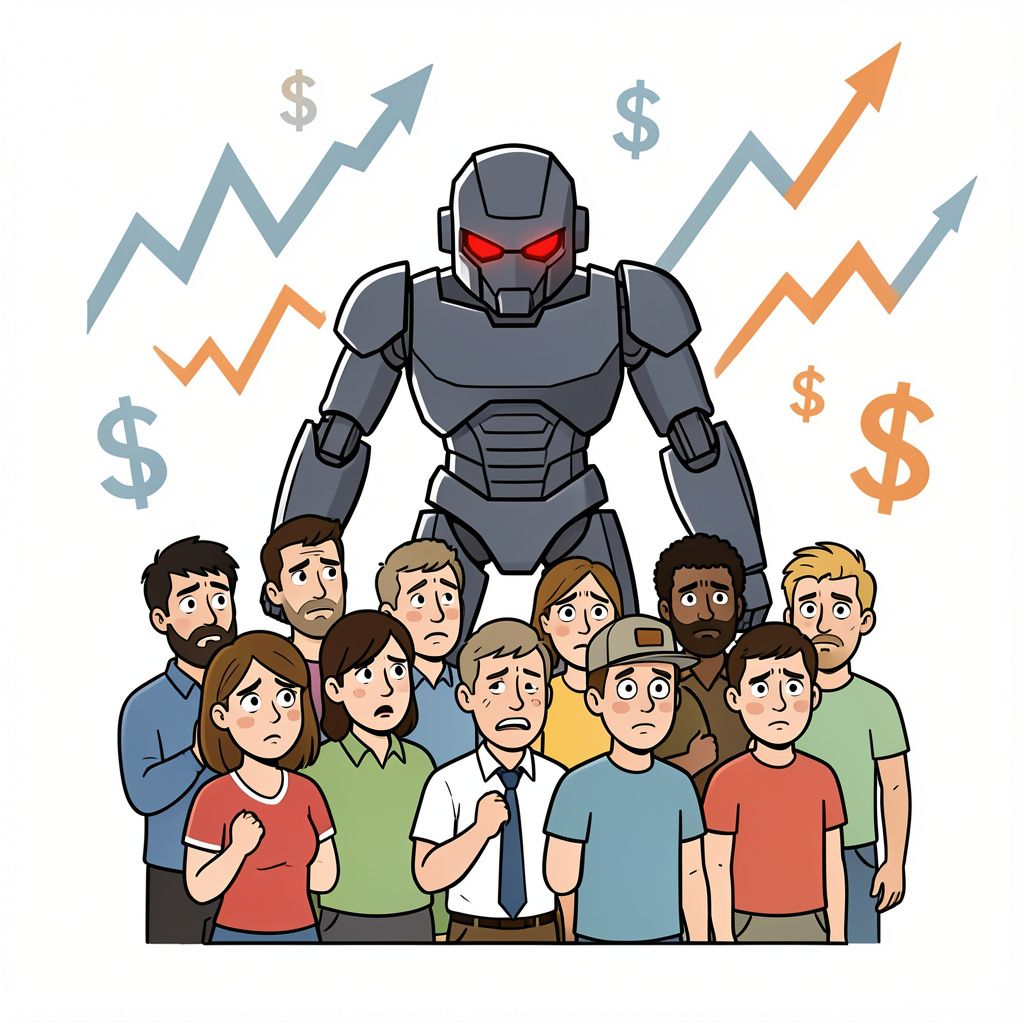
A new poll reveals 63 percent of Americans fear artificial intelligence could destroy humanity, pushing lawmakers to consider regulations despite fears of falling behind China.
Public Sentiment Shifts Amidst Existential Risks
A significant majority of Americans now view advanced artificial intelligence as a potential threat to human survival, according to recent data. A POLITICO Poll conducted between September 13 and September 15, 2026, reveals that 63 percent of Americans believe advanced AI poses at least a moderate risk of destroying humanity [1][4]. This sentiment crosses partisan lines, with majorities across parties, genders, and age groups expressing concern over the technology’s trajectory [4]. Furthermore, a plurality of respondents favor pausing the development of more advanced AI models to mitigate these risks [1]. Concurrently, a Marquette University Law School poll released on September 10, 2026, found that 64 percent of Americans view AI development as bad for society [5]. This represents a shift from previous months; compared to the 70 percent who held this view in July 2026, the negative sentiment has changed by -8.571 percent [5]. Despite the negative outlook, 69 percent of respondents in the Marquette survey reported using AI, indicating a complex relationship between utility and fear [5].
Legislative Responses and Executive Positions
In Washington, the political reaction to these findings has been swift and divided. On September 15, 2026, Sen. Chris Murphy (D-Conn.) described AI risks as a “dominant issue” for voters and an “immediate crisis” requiring Democratic attention ahead of the November 2026 elections [1][4]. Murphy emphasized the need to prevent AI from “poisoning our kids, our culture, and destroying millions of jobs” [4]. Conversely, President Donald Trump posted on Truth Social on September 14, 2026, opposing new regulations, stating that the only control needed is a “STRONG AND SMART (High IQ!) PRESIDENT” [5]. This stance drew criticism from Sen. Bernie Sanders (I-Vt.), who called the President’s view “embarrassing” and ignorant of AI dangers [5]. Meanwhile, Sen. Thom Tillis (R-N.C.) warned against heavy-handed federal oversight resembling the Dodd-Frank Act, advocating instead for industry-led operating principles to maintain competitiveness against China [1][4]. Democrats are considering establishing a House select committee on artificial intelligence if they regain House control in the November 2026 elections, following an initial proposal date of September 9, 2026 [1]. Additionally, Rep. George Whitesides (D-Calif.) proposed a one-month “safety stand-down” to establish AI “red lines,” though the status of this proposal remains unverified [alert! ‘Status unknown; the proposed one-month period cannot be verified as completed.’] [5].
Campaign Finance and Industry Influence
The regulatory debate is heavily influenced by significant financial interests within the tech sector. Democratic advisers are warning candidates in key races to avoid leaning too hard into AI regulations due to fears of backlash from powerful tech groups [2]. Leading the Future, a pro-AI industry super PAC backed by investors and executives of OpenAI, spent over $25 million in primary races earlier in 2026 [2]. In contrast, the rival super PAC network, Public First Action, pushes for AI regulation and is funded by OpenAI’s chief competitor, Anthropic [2]. On September 16, 2026, Leading the Future launched its first round of general election ads through its Republican PAC, spending $2 million to boost GOP Senate candidates in Louisiana, Mississippi, South Carolina, and South Dakota [2]. Public First Action co-founder Brad Carson indicated the network would “absolutely” get involved in the general election, using litmus tests regarding export controls and state law preemption to guide their support [2]. This spending war previously ignited in the primary for retiring Rep. Jerry Nadler’s seat, where state Assemblymember Alex Bores’ AI-centered campaign triggered a multi-million dollar ad deluge [2].
Geopolitical Competition and Safety Concerns
The domestic regulatory discussion is inextricably linked to global competition, particularly with China. A POLITICO Poll shows Trump and Harris voters are split on winning the global race for superintelligence, mirroring the divide in Congress [6]. Rep. John Moolenaar (R-Mich.), chair of the House China panel, acknowledged a responsibility for public safety while emphasizing the need to “beat China when it comes to the AI race” [6]. Rep. Josh Gottheimer (D-N.J.) noted that China is “not waiting for anyone else,” urging that the U.S. must proceed in the right way without leaving the race [6]. Opinions sharpen regarding President Trump’s upcoming meeting with Chinese President Xi Jinping scheduled for late September 2026 [6]. While Rep. Joe Wilson (R-S.C.) expressed trust in Trump’s handling of the engagement, Democrats suggested seeking commitments on preventing AI from launching nuclear weapons autonomously [6]. Sen. Rand Paul (R-Ky.) previously blocked Sen. John Kennedy’s (R-La.) attempt to pass legislation requiring an AI “kill switch” following warnings from an Anthropic researcher on September 9, 2026, regarding AI extinction risks [5].