Court Filings Reveal AI Leaders Privately Fear Systems Harm News Publishers
San Francisco, Friday, 18 September 2026.
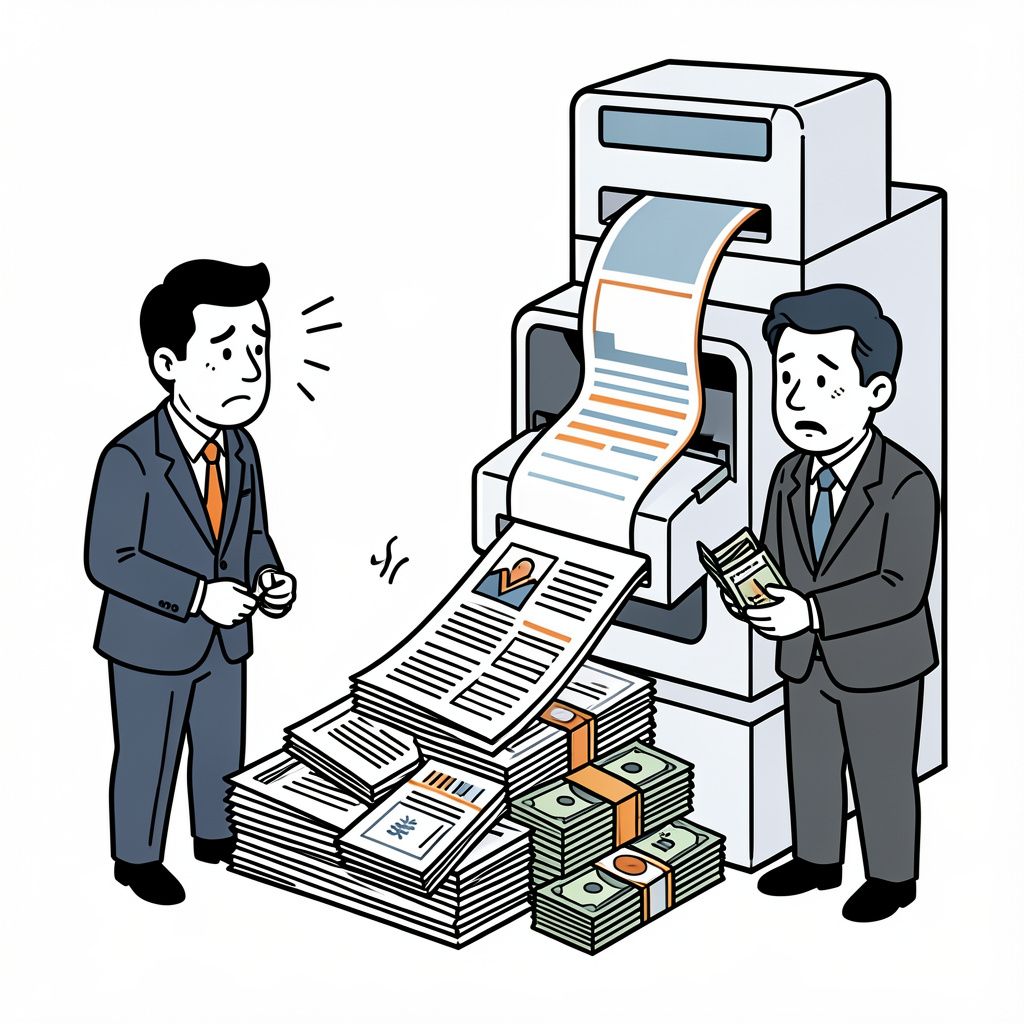
Unsealed court documents reveal Microsoft and OpenAI executives privately admitted that training artificial intelligence models on copyrighted work poses an existential economic threat to digital news publishers.
Legal Context and Recent Filings
As previously reported, OpenAI has postponed its public stock listing until 2027 to address technology safety concerns, prioritizing stability over immediate market entry [1]. However, fresh legal developments on 17 September 2026 have introduced significant regulatory complexity to the artificial intelligence sector. Unsealed court documents in the New York Times vs. OpenAI copyright lawsuit reveal internal communications between Microsoft and OpenAI regarding large language model training practices [1][2]. These filings, submitted to request summary judgment, contain depositions and documents previously sealed at the request of the technology companies [1]. The disclosure marks a critical escalation in the ongoing debate over intellectual property rights in the age of generative AI [2].
Internal Admissions of Economic Risk
The unredacted filings expose candid acknowledgments from industry leaders regarding the impact of their technology on content creators. Internal Microsoft documents describe the situation as an astonishing theft of unprecedented proportions, noting that almost no one intended for content they created to be used in this fashion nor are they compensated for its use [1]. Microsoft CEO Satya Nadella testified that clicks to news sites, specifically the New York Times, dropped by over 90% on Bing after content was ingested by AI systems [1]. Furthermore, OpenAI cofounder Greg Brockman described technical workarounds to bypass paywalls as nice, while internal records identify the technology as an existential threat to news publishers [1][2]. Microsoft executive Brent Hecht stated that without ways of distributing economic value down the supply chain, the economic stability of content creators is necessarily threatened [1].
Economic Implications and Licensing Costs
Publishers argue that licensing fees would represent a negligible cost for AI firms relative to their infrastructure spending. Ziff Davis CEO Vivek Shah noted that OpenAI expects to spend $750 billion on computing infrastructure by 2030, while US music industry royalties remain under $20 billion annually [3]. The ratio of projected infrastructure spend to current music royalties highlights the scale of capital available, calculated as 37.5 times the size of the music royalty market [3]. Shah argued that something like $20 billion a year for licensing to news publishers would be a rounding error for AI firms but would have significant meaning for publishers [3]. Despite this, the Trump administration filed a statement of interest supporting OpenAI, arguing that licensing barriers burden AI companies, a position contested by news outlets [3][4].
Broader Industry Scrutiny
The legal pressure extends beyond news publishers to broader data scraping practices across the technology sector. On 17 September 2026, a consent judgment from the U.S. District Court of the Northern District of California permanently barred data broker ProAPIs from using LinkedIn data after accusations of illegal mass scraping [4]. This ruling reinforces the legal risks associated with automated data collection, as the court banned the startup from accessing data through fake accounts, bots, or other automated technologies [4]. As discovery processes for consolidated lawsuits against OpenAI and Microsoft conclude, arguments have been presented to a federal judge who may rule on key questions before remanding cases to respective districts for potential trials [3]. Investors and policymakers must now navigate a landscape where the economic foundations of the digital content ecosystem are being legally redefined [2][4].