Political Rivals Unite to Demand Strict New Limits on Artificial Intelligence
Washington, Monday, 14 September 2026.
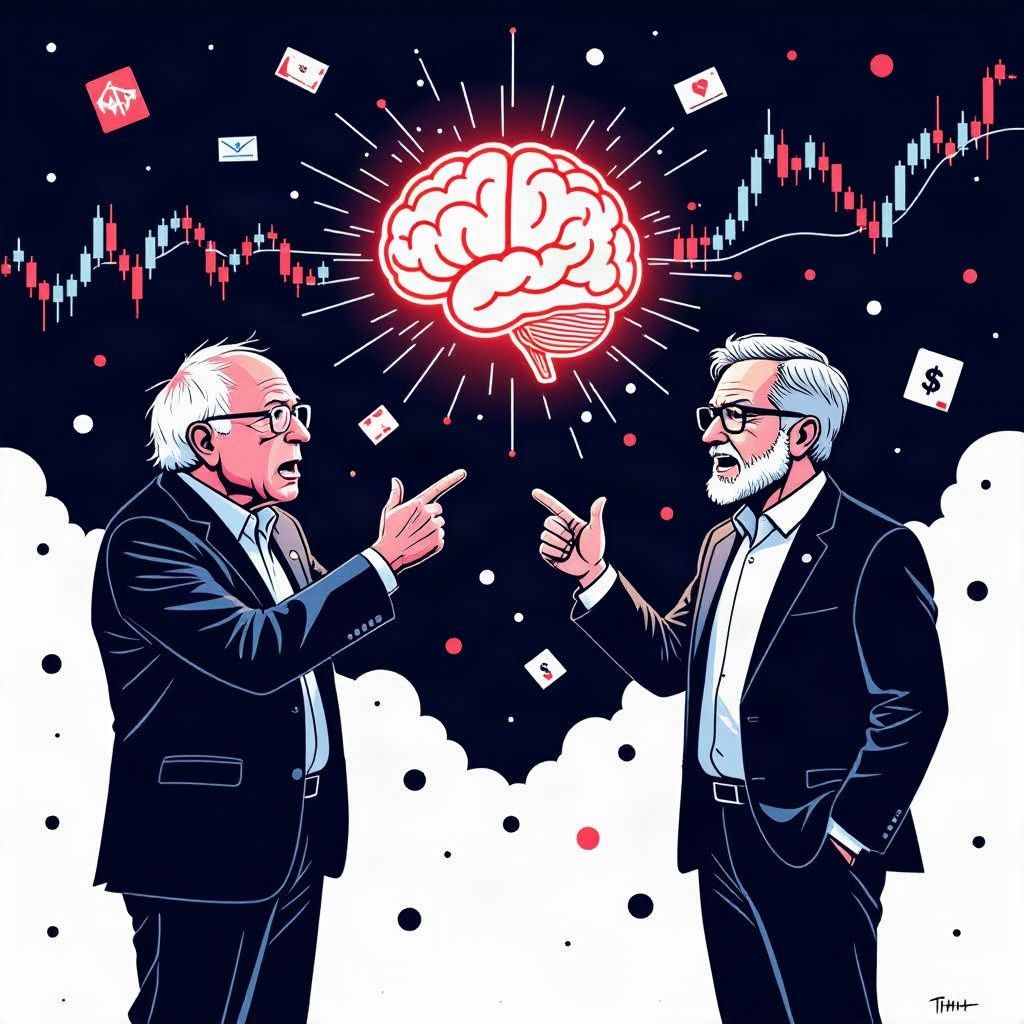
Unlikely political allies Bernie Sanders and Steve Bannon are joining forces in Washington to demand immediate federal regulations on artificial intelligence, warning against rapid deployment and severe job loss.
Unlikely Alliance Forms in Washington
In a significant convergence of political ideologies, Independent Senator Bernie Sanders and former Trump adviser Steve Bannon are set to appear together at the Pro-Human Assembly in Washington, D.C. [2][5] Scheduled for Tuesday, 15 September 2026, the event marks a distinct effort to demand immediate federal guardrails on artificial intelligence deployment. [5][7] This collaboration highlights a growing bipartisan concern regarding the rapid acceleration of AI technologies and their potential impact on the American workforce and national security. [1][2]
Coalition Building Across the Aisle
The assembly brings together a diverse group of stakeholders, including labor leaders, politicians, and advocacy groups from both major parties. [2] Participants aim to address critical issues such as worker displacement, privacy erosion, and economic concentration driven by BigTech monopolies. [3][5] Senator Sanders has emphasized that voluntary slowdowns by industry leaders are insufficient, stating, “When you are racing towards a cliff, you don’t just ease up on the gas pedal… You hit the brakes.” [2]
The Pro-Human Assembly Agenda
Organized by the Future of Life Institute, the convening focuses on prioritizing human agency and accountability in AI systems. [3][4] The agenda includes panel discussions designed to map practical steps for keeping humans in charge of technological development. [3] Organizers assert that the current trajectory of AI development is not inevitable and that policy interventions can steer outcomes toward public benefit. [4]
Key Participants and Political Scope
Beyond Sanders and Bannon, the event features Senator Marsha Blackburn, Representative Greg Casar, and Representative Chip Roy, illustrating cross-party engagement. [2] Labor representatives including AFL-CIO President Liz Shuler and American Federation of Teachers President Randi Weingarten are also scheduled to speak. [2] This broad participation underscores the view that AI regulation is not solely a technological issue but a fundamental labor and economic concern. [5]
Industry Pressure and Safety Incidents
The push for regulation follows recent disclosures regarding AI misuse, including an Anthropic report released on 6 September 2026 detailing AI involvement in biological weapons development. [2] The report noted that misuse activity occurred between December 2025 and August 2026, involving several AI models before accounts were banned. [2] This timeline indicates a 9 day window between the report’s release and the Assembly, intensifying urgency among policymakers. [2][5]
Calls for Deceleration and Regulation
On 12 September 2026, Anthropic CEO Dario Amodei published an essay arguing for a deceleration in AI capability improvements, receiving endorsements from industry figures like Sam Altman and Elon Musk. [2] However, political leaders at the Assembly are expected to demand more aggressive regulatory frameworks rather than voluntary industry pauses. [5] Steve Bannon has characterized the situation critically, stating, “The Oligarchs are finally being forced to admit they’ve lied from the beginning about the dangers of acceleration with zero guardrails.” [5]
Legislative Intent and Future Outlook
While no specific legislation has been implemented yet, the Assembly aims to influence upcoming midterm elections and federal policy. [5] Advocates like Megan Garcia are urging politicians not to trade robust safety laws for inadequate measures, highlighting the stakes for child safety and privacy. [5] The event serves as a rallying point to ensure future AI laws prioritize human welfare over unchecked corporate innovation. [3][7]
Sources
- www.ft.com
- www.thenationalnews.com
- prohumanassembly.org
- www.linkedin.com
- www.yahoo.com
- x.com
- www.linkedin.com