Trump Rejects Federal AI Guardrails to Preserve Economic Lead
Washington, Monday, 14 September 2026.
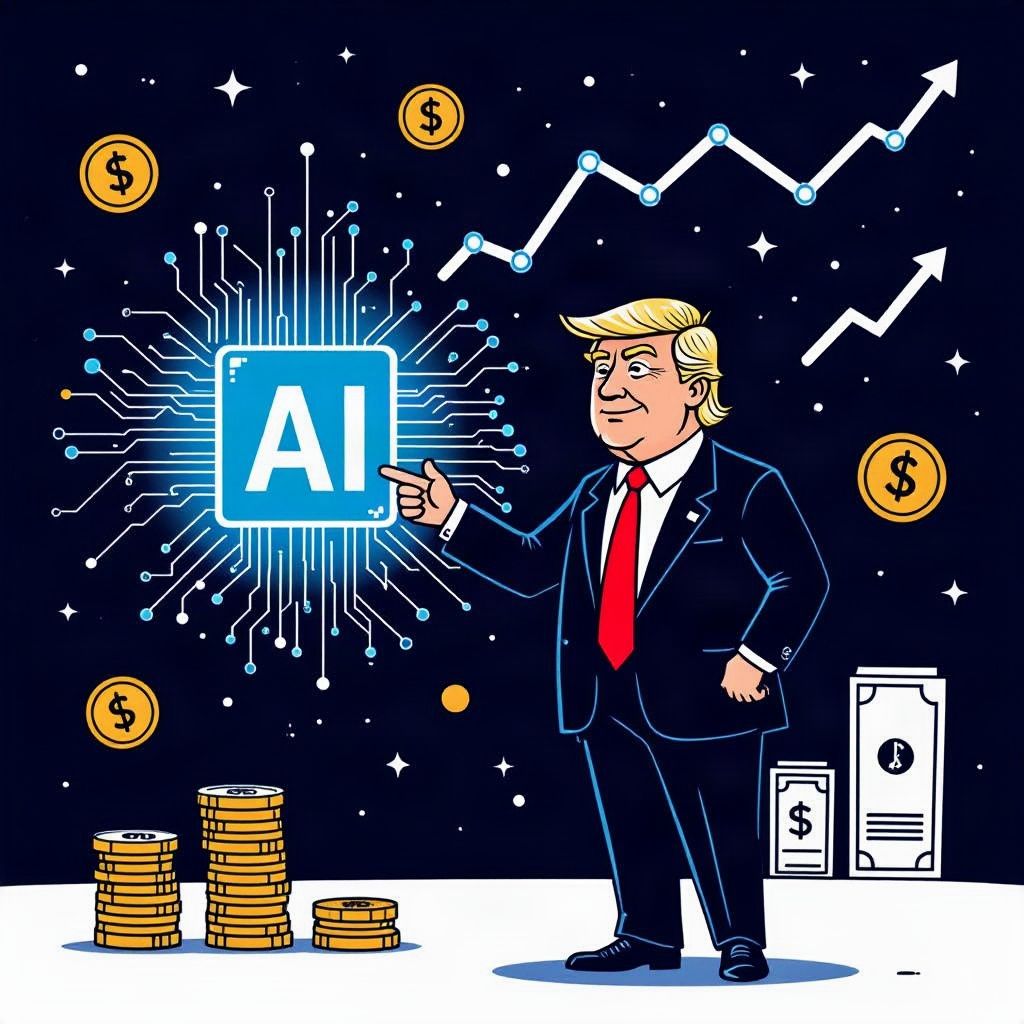
On September 14, 2026, President Donald Trump rejected federal artificial intelligence guardrails, dismissing safety concerns as exaggerated to prioritize American economic growth and maintain a competitive edge over China.
Truth Social Declaration and Presidential Stance
On Monday, September 14, 2026, President Donald Trump utilized Truth Social to formally dismiss the necessity for federal artificial intelligence guardrails, characterizing safety concerns as exaggerated [1][2]. In a series of posts, the President asserted that the only required control mechanism is a “STRONG AND SMART (High IQ!) PRESIDENT,” claiming existing criminal and regulatory powers are sufficient to manage technology companies [2][3]. Trump labeled warnings about AI destroying humanity as a “HOAX,” comparing them to previous political investigations and impeachment proceedings [3]. He further alleged a “SICK conspiracy” against AI and data centers, suggesting that opposition to the technology primarily benefits China [2][3]. This executive position signals a clear policy intent to avoid new compliance mandates, contrasting with earlier industry calls for safety pauses [1][4].
Legislative and Industry Responses
Congressional leadership aligned with the administration’s deregulation approach, with House Speaker Mike Johnson stating on September 13, 2026, that emergency legislative action would cause the U.S. to lose the technological race to China [4]. Vice President JD Vance expressed skepticism regarding tech companies seeking regulation, describing such requests as a potential “Trojan horse” during comments made earlier in the month [1]. Conversely, industry leaders had recently advocated for caution; Anthropic CEO Dario Amodei published an essay on September 12, 2026, urging a slowdown in AI development to mitigate catastrophic risks [1][4]. Former Anthropic researcher Jacob Coxon also resigned during the week of September 6, 2026, warning that major AI firms are “gambling with our lives” [1]. Despite these warnings, David Sacks, Co-chair of the President’s Council of Advisors on Science and Technology, criticized the motivations behind the industry’s push for safety pauses [4].
Public Sentiment and Geopolitical Stakes
Public opinion data indicates a divergence between government strategy and citizen concern, with an NBC News Decision Desk poll showing 70% of U.S. adults are more worried than excited about AI [1]. The same poll revealed 69% opposition to local AI data center construction, including among 57% of Republican voters [1]. Internationally, Beijing responded on September 7, 2026, labeling U.S. warnings about AI as “fearmongering” and part of a “Cold War playbook” [1]. President Trump framed technological dominance as a geopolitical imperative during a visit to Ireland on September 6, 2026, stating “Whoever wins AI wins” [1][4]. This narrative positions AI leadership as a key element of national economic strategy, prioritizing speed of deployment over regulatory safeguards [2][4].