White House Threatens Federal Reserve Governor With Prison Time in Removal Push
Washington, Friday, 7 August 2026.
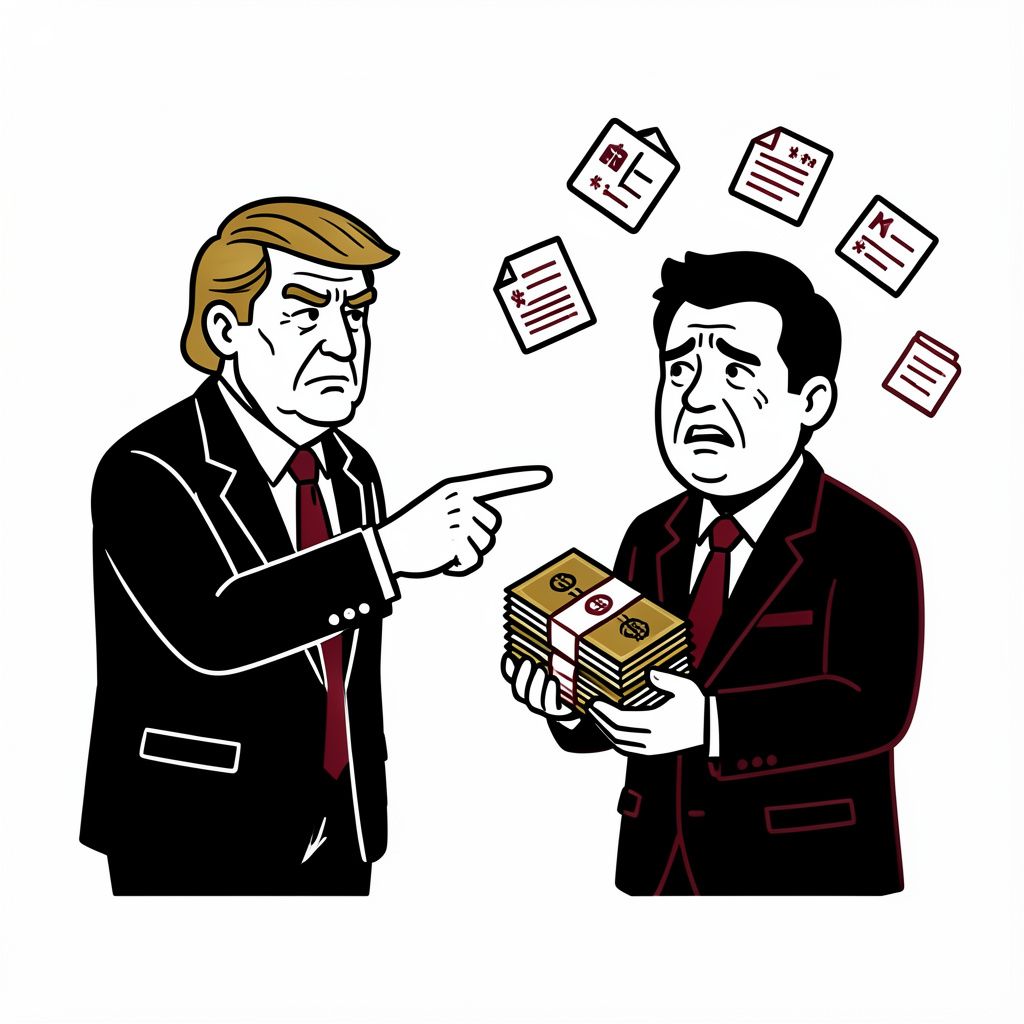
President Trump has renewed efforts to fire Federal Reserve Governor Lisa Cook, sending a formal notice threatening up to 30 years in prison over unproven mortgage fraud allegations.
Administrative Action and Legal Deadlines
The White House has issued a formal letter to Federal Reserve Governor Lisa Cook, demanding a response within three weeks regarding unproven allegations of mortgage fraud [1][4]. The correspondence, signed by White House Deputy Chief of Staff Dan Scavino, warns that the President is considering removing Cook from her post and cites potential criminal penalties including up to 30 years in prison [1][4]. This administrative action marks a renewed escalation following a Supreme Court decision in June 2026 that blocked a previous attempt to dismiss Cook on procedural grounds [4][5]. The letter alleges gross negligence regarding loan documentation from before Cook joined the central bank, asserting the conduct questions her trustworthiness as a monetary policymaker [4]. Cook’s legal team, led by attorney Abbe D. Lowell, has characterized the allegations as a manufactured pretext designed to undermine the central bank’s statutory autonomy [1][4]. The deadline for Cook’s response is expected to fall approximately on 24 August 2026, setting a timeline for the next phase of legal contention [1].
Supreme Court Precedent and Procedural Rights
The legal framework surrounding this dispute was significantly shaped by a 5-4 Supreme Court ruling in June 2026, where Chief Justice John Roberts authored the opinion stating the President failed to afford Cook the procedural protections entitled by statute [1][3]. The Court determined that without such protections, Cook could not properly dispute the charges laid against her, leaving open the question of whether the alleged conduct constituted gross negligence or deceitful behavior [1][4]. Justices Clarence Thomas, Samuel Alito, Neil Gorsuch, and Amy Coney Barrett dissented from the majority opinion, while Justice Brett Kavanaugh joined the liberal justices in the majority [1]. The Supreme Court returned the case to lower courts to determine the validity of the factual dispute, specifically regarding the allegations raised by the President [1]. This procedural requirement highlights the historical insulation of the Federal Reserve Board of Governors from executive branch interference, a structure intentionally designed by Congress to resist political pressure [4]. No U.S. president since the Federal Reserve’s founding in 1913 has attempted to fire a Fed governor prior to Trump’s actions, marking this as an unprecedented challenge to the institution’s independence [1][3].
Economic Context and Market Stability
Amidst the political turmoil, Governor Cook recently reaffirmed her commitment to price stability during a keynote address at the Anchorage Economic Development Corporation’s Economic Outlook Luncheon on 5 August 2026 [3]. Cook reported that U.S. inflation has remained above target for five years, with the personal consumption expenditures price index rising to 3.7% in the 12 months ending June 2026, nearly double the Fed’s 2% target [3]. The inflation gap stands at 1.7 percentage points, indicating persistent pressure on purchasing power [3]. Cook confirmed she voted to maintain the federal funds target rate at 3.5% to 3.75% in July 2026 but stated she is prepared to raise rates if necessary to address entrenched inflation [3]. Economic indicators cited include a 4.2% unemployment rate as of June 2026 and adjusted output growth of 1.8% for the first half of 2026 [3]. Market observers note that Fed officials are very careful about their remarks because everything they say is analyzed by Wall Street and the financial industry, impacting national and global economies [3]. The renewed effort to remove Cook is likely to spark a new legal battle over the independence of the central bank, raising significant political and economic concerns across financial markets [2][5].