US Senate Approves Landmark Bill Threatening High Tariffs on Buyers of Russian Energy
Washington, Friday, 7 August 2026.
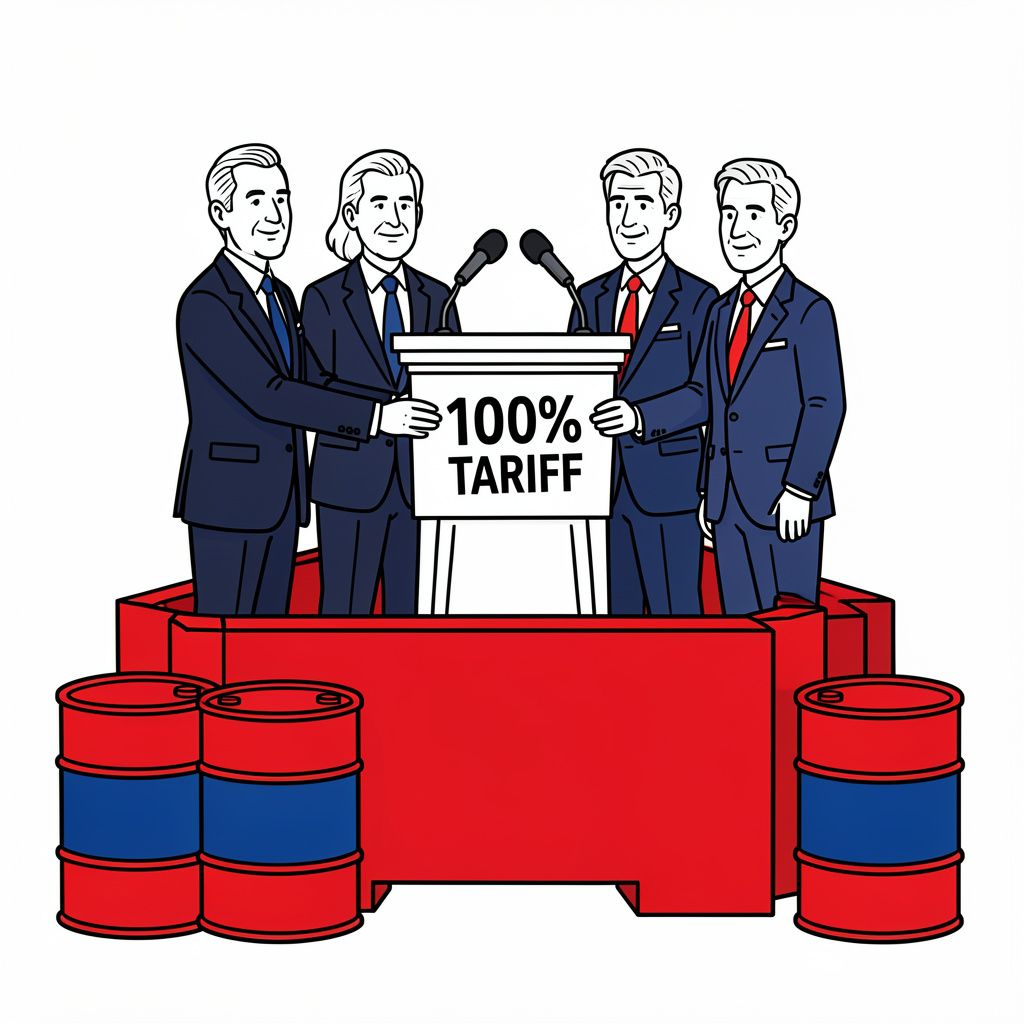
The U.S. Senate passed a landmark bill authorizing tariffs up to 100% on top buyers of Russian energy, targeting key funding sources for Moscow’s war effort.
Senate Passage and Political Context
On Friday, August 7, 2026, the United States Senate voted to pass the Lindsey O. Graham Sanctioning Russia Act of 2026 with a bipartisan vote count of 86–11 [5][7]. The legislation, designated as S. 5025, moves to the House of Representatives following the session, marking a significant step in congressional efforts to penalize Russian energy revenue streams [4][8]. The vote occurred on the same day as the legislative session, confirmed by real-time reporting from Capitol Hill correspondents [2]. This passage represents a culmination of negotiations between lawmakers and the White House, solidifying the bill’s status as a priority for the current administration [6].
The bill is named in honor of the late Senator Lindsey Graham, a Republican from South Carolina who passed away on July 11, 2026, shortly after finalizing an agreement with the White House to advance the measure [5][7]. His sister, Senator Darline Graham, along with cosponsors including Senator Richard Blumenthal (Democrat, Connecticut) and Senator Kevin Cramer (Republican, North Dakota), championed the legislation through the Senate [1][7]. The bipartisan support underscores the legislative intent to maintain pressure on Moscow, with Senator Blumenthal noting the symbolic importance of the vote for Ukraine during the proceedings [8]. President Volodymyr Zelenskyy of Ukraine observed procedural votes on the legislation during the week of July 27, 2026, highlighting the international significance of the act [8].
Tariff Authorities and Economic Mechanisms
A central provision of the Act authorizes the President to impose tariffs of up to 100% on imports from the top five purchasers of Russian crude oil or natural gas [1][5]. This tiered tariff structure replaces earlier proposals that suggested a blanket 500% tariff, aiming to balance economic pressure with diplomatic flexibility [1][6]. The legislation mandates that the Office of the United States Trade Representative reassess the list of top five purchasers every 180 days to adjust tariff rates based on purchasing behavior [1]. Countries importing less than 15% of Russia’s total natural gas exports are eligible for exemptions, provided they demonstrate significant steps to reduce those imports [1][5].
The Act also grants the President waiver authority, allowing for the suspension of sanctions or duties upon certifying to Congress that such actions align with United States national interests [1][3]. This provision was a key point of negotiation, addressing executive branch concerns regarding flexibility in foreign policy implementation [6]. Additionally, the bill integrates the SHADOW Fleet Sanctions Act to target Russia’s sanctions-evasion maritime fleet and the STOP Russia-China Act to address Chinese support for Russian energy projects [1]. Financial institutions and corporate supply networks operating in third-party countries face new international compliance and supply chain risks under these expanded authorities [1].
Legislative Timeline and Future Steps
Following Senate passage, the legislation now awaits action by the House of Representatives, which is currently on a five-week August recess [5][8]. Legislative action on the bill is paused until the House returns to session at the end of August 2026, where it may face internal resistance from Democrats concerned about potential tariff expansions [5]. If passed by the House in identical form, the bill will require President Trump’s signature to become law, a step anticipated given the White House’s prior agreement to the revised text [6][7]. The GovTrack prognosis initially estimated a 12% chance of enactment prior to Senate passage, reflecting the complex legislative hurdles overcome during the 119th Congress [4].
Implementation timelines within the bill specify that certain sanctions must take effect within 30 days of enactment, including restrictions on Russian sovereign debt and new investments in the Russian energy sector [3]. The President is mandated to review persons and vessels subject to sanctions not later than 30 days after the date of enactment, with subsequent reviews every 180 days [3]. Termination of sanctions requires a certification that Russia has signed a peace agreement accepted by the Government of Ukraine and ceased military activities, subject to a 30-calendar-day congressional review period [3]. This structured timeline ensures ongoing legislative oversight over the execution of the sanctions regime [3].
Sources
- www.blumenthal.senate.gov
- x.com
- www.govtrack.us
- www.govtrack.us
- www.cbsnews.com
- www.politico.com
- www.cramer.senate.gov
- apnews.com