Federal Reserve Shifts Away From Public Forecasts, Leaving Wall Street in Uncertainty
New York, Tuesday, 4 August 2026.
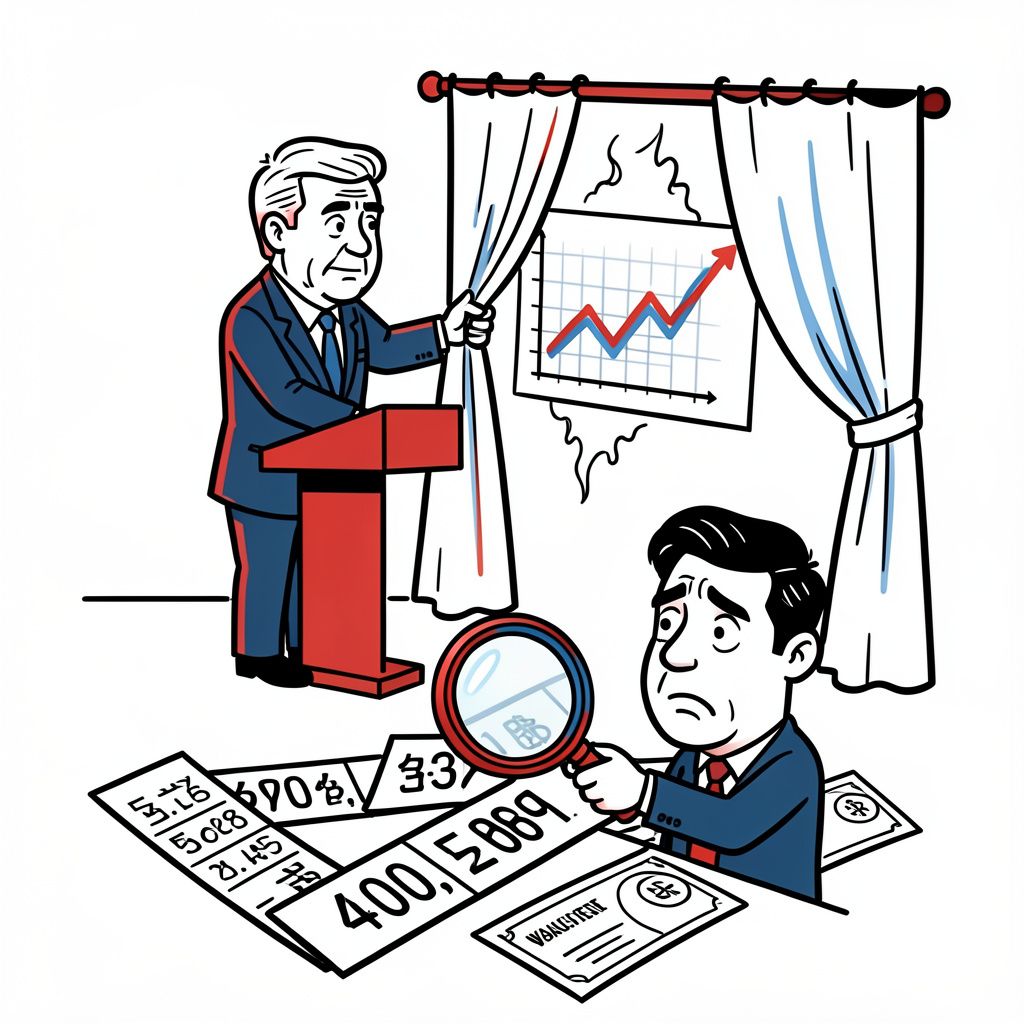
Fed Chair Kevin Warsh is scaling back forward guidance, forcing markets to interpret economic data independently and driving long-term Treasury yields to multi-year highs amid rising volatility.
Federal Reserve Shifts Away From Public Forecasts
Federal Reserve Chair Kevin Warsh has signaled a decisive shift toward reduced communication, sparking concern across Wall Street regarding market stability [1]. During a press conference on 2026-07-29, Warsh indicated that the central bank would provide less forward guidance, arguing that reducing guidance allows market prices to respond to economic data without Fed interference [1]. This marks a departure from previous protocols where the Fed publicly shared expectations for future short-term interest rates [1]. Institutional leaders warn that a lack of clear economic frameworks from central bankers could increase market vulnerability and foster misinformation across financial markets [1]. The Week reports that this change leaves financial analysts uncertain how to navigate the economy, as Warsh will not specify if rate hikes are likely to control inflation [2]. Warsh, who took office as Federal Reserve chair in May 2026, has presided over two FOMC meetings characterized by this significant shift in monetary policy communication [3]. The removal of forward guidance aims to prevent psychological bias among policymakers who previously felt locked into projections [3].
Market Volatility and Investor Uncertainty
Following Warsh’s statement on 2026-07-29, long-dated bonds spiked and remain elevated, while two-year Treasuries slumped, signaling investor uncertainty regarding Fed tightening [1]. Goldman Sachs chief U.S. economist Jan Hatzius issued a note on 2026-08-01 warning that reduced Fed communication may lead to market volatility and inaccurate beliefs that fail to provide policymakers with reliable signals about the real economy [1]. Hatzius noted that participants in short-term interest rate markets price what they think the Fed will do, not what they should do, implying unnecessary volatility in both financial conditions and the impulse from financial conditions to the real economy [1]. Reduction in Fed guidance is cited as a contributing factor to 30-year Treasury bonds reaching 20-year highs and home mortgage rates hitting 1-year highs as of 2026-08-03 [3]. Professor Jeremy Siegel criticized the move, stating that even without providing explicit forward guidance, central bankers still have an obligation to explain the economic framework behind their decisions [1]. Alex Wolf of J.P. Morgan observed that the response from investors was a reflection of newfound uncertainty rather than necessarily what Warsh did or didn’t say [1].
Inflation Targets and Policy Framework
Warsh has adopted a policy of providing no forward guidance regarding Fed intentions, citing the 2021 inflation surge as justification for avoiding locked-in policy paths [4]. During his latest press conference, Warsh emphasized that the Federal Reserve remains committed to a 2% inflation target without deviation [3]. He stated there is no soft or alternative inflation target, only 2% [3]. This stance comes as inflation rose from 2.4% in February 2026 to 4.2% in June 2026, driven by a war between the U.S. and Iran which caused oil prices to spike [4]. The percentage increase in inflation during this period is calculated as 75 [GPT]. Warsh’s shift away from Federal Reserve forward guidance aims to dismantle the Fed Put, the market expectation established post-2008 financial crisis that the central bank will intervene to support markets during downturns [3]. Analysts suggest that while Warsh’s policy may encourage investor prudence, it simultaneously increases market volatility surrounding Federal Reserve meetings due to decreased policy predictability [3]. Market analysts including James Bullard and Loretta Mester have criticized Warsh’s communication strategy, citing a perceived loss of market confidence [4].
Structural Changes and Future Outlook
On 2026-07-31, The New York Times reported that Warsh is considering reducing the frequency of FOMC meetings, currently eight per year, as part of a broader regime change at the central bank [4]. Bloomberg reported that he floated six rate-setting meetings each year, plus two meetings focused on broader economic issues [6]. Any new schedule could be decided before the Fed’s September meeting [6]. Warsh is scheduled to deliver a speech at the Federal Reserve’s annual retreat in Jackson Hole, Wyoming, later in August 2026 [4]. His term as Federal Reserve Chair extends until May 2030 [4]. As of 2026-07-31, financial markets priced a 67% probability of an interest rate hike for the September 2026 FOMC meeting [5]. The September 2026 FOMC meeting is designated as the next critical observation point to determine if the Fed will validate the deferred, state-contingent tightening or if the policy stance will passively ease amid rising inflation [5]. Warsh’s communication strategy frames recent Federal Reserve policy as deferred, state-contingent delivery rather than traditional guidance [5].
Sources
- fortune.com
- theweek.com
- economistwritingeveryday.com
- www.newyorker.com
- gianlucabenigno.substack.com
- www.axios.com