Federal Reserve Reorganizes Oversight System After Review Uncovers Missed Warnings
Washington, Thursday, 15 October 2026.
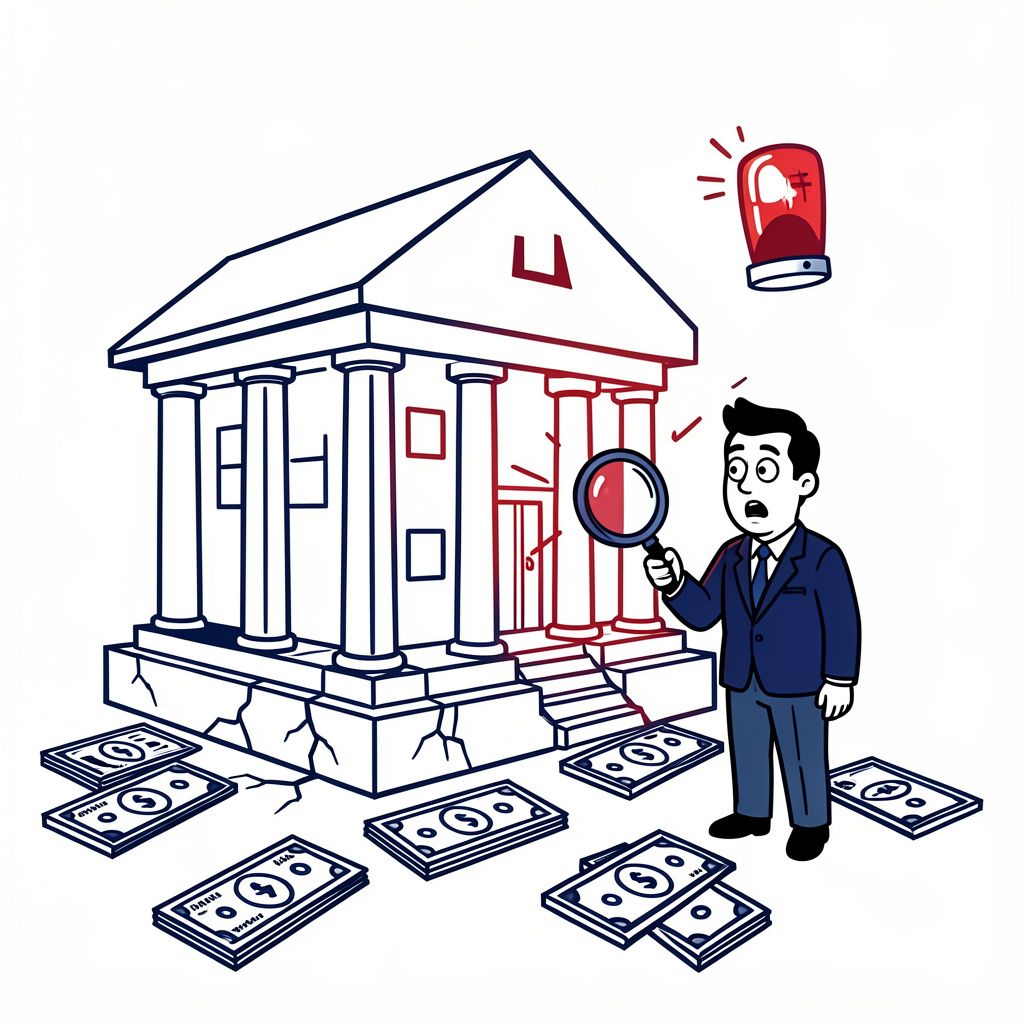
Regulators knew of Silicon Valley Bank’s major risks nine months before its collapse but failed to act, prompting the Federal Reserve to completely restructure its banking oversight.
Federal Reserve Reorganizes Oversight System After Review Uncovers Missed Warnings
On October 14, 2026, Federal Reserve Vice Chair for Supervision Michelle Bowman addressed the modernization of bank oversight following the collapse of Silicon Valley Bank during a speech delivered in Washington [1]. An independent review commissioned earlier in 2026 identified critical failures in the Federal Reserve’s supervisory process, specifically noting that supervisors possessed data on the bank’s interest rate and liquidity risks at least nine months prior to the FDIC taking the bank into receivership [1]. The review disputes previous narratives regarding the collapse, concluding that social media-driven runs and statutory tailoring were not the primary causes, but rather that long-standing issues regarding supervisory accountability prevented timely enforcement actions [1]. Bowman stated that the review closes prior gaps and confirms that Federal Reserve System staff failed to act in a timely manner despite having sufficient information [1]. She described the supervisory culture issue as a decades-long problem that required immediate structural intervention [4].
Structural Overhaul of Supervision
To address these failures, the Federal Reserve announced a restructuring of its supervisory function into five new regions on October 6, 2026 [2][3]. This reorganization is modeled after the Conference of State Bank Supervisors regional structure and is aligned with state boundaries rather than the traditional twelve Federal Reserve District lines [3][6]. The aim is to centralize decision-making authority under one accountable leader per region while maintaining front-line examiners in their current Reserve Bank locations [3]. Bowman described the previous structure as a complex web of dozens of committees that created diffused accountability and delays in decision-making [3][6]. The Federal Reserve is actively reforming its supervisory framework to clarify decision rights and mandate direct escalation channels for examination teams [1].
Regulatory Thresholds and Community Banks
Alongside structural changes, the Federal Reserve intends to propose indexing fixed-dollar regulatory thresholds to inflation and economic growth by the end of 2026 [3]. The Board plans to reconsider the $10 billion asset threshold currently defining community bank status, with potential adjustments to better align oversight with risk profiles and business models [3]. Additionally, revisions to Regulation O, which governs credit extensions to bank insiders and has not been comprehensively updated since 1979, were proposed in July 2026 [2]. These changes aim to reduce barriers to innovation and eliminate outdated supervisory programs such as the Novel Activities Supervision Program [2]. The Federal Reserve is also updating the community bank leverage ratio to a statutory 8 percent in coordination with the OCC and FDIC [2].
Economic Implications and Monetary Policy
Regarding monetary policy, Bowman indicated that although inflation remains above the central bank’s goal, there is no urgency to tighten policy further [5]. She emphasized the need to assess how financial markets and the US economy respond before taking further action, signaling a data-dependent pause [5]. This cautious approach contrasts with some officials who have suggested further rate rises may be needed before the end of the year [5]. The regulatory reforms are expected to support capital availability for the future economy through adjusted supervision and regulation in the banking system [5]. Bowman noted that fixed asset thresholds can push smaller noncomplex banks into higher supervisory tiers with standards designed for more complex institutions [2].
Sources
- www.federalreserve.gov
- www.bis.org
- www.troutmanfinancialservices.com
- www.centralbanking.com
- money.usnews.com
- www.consumerfinancialserviceslawmonitor.com