How Federal Reserve Data Proves Import Tariffs Drove Up Everyday Prices
New York, Thursday, 8 October 2026.
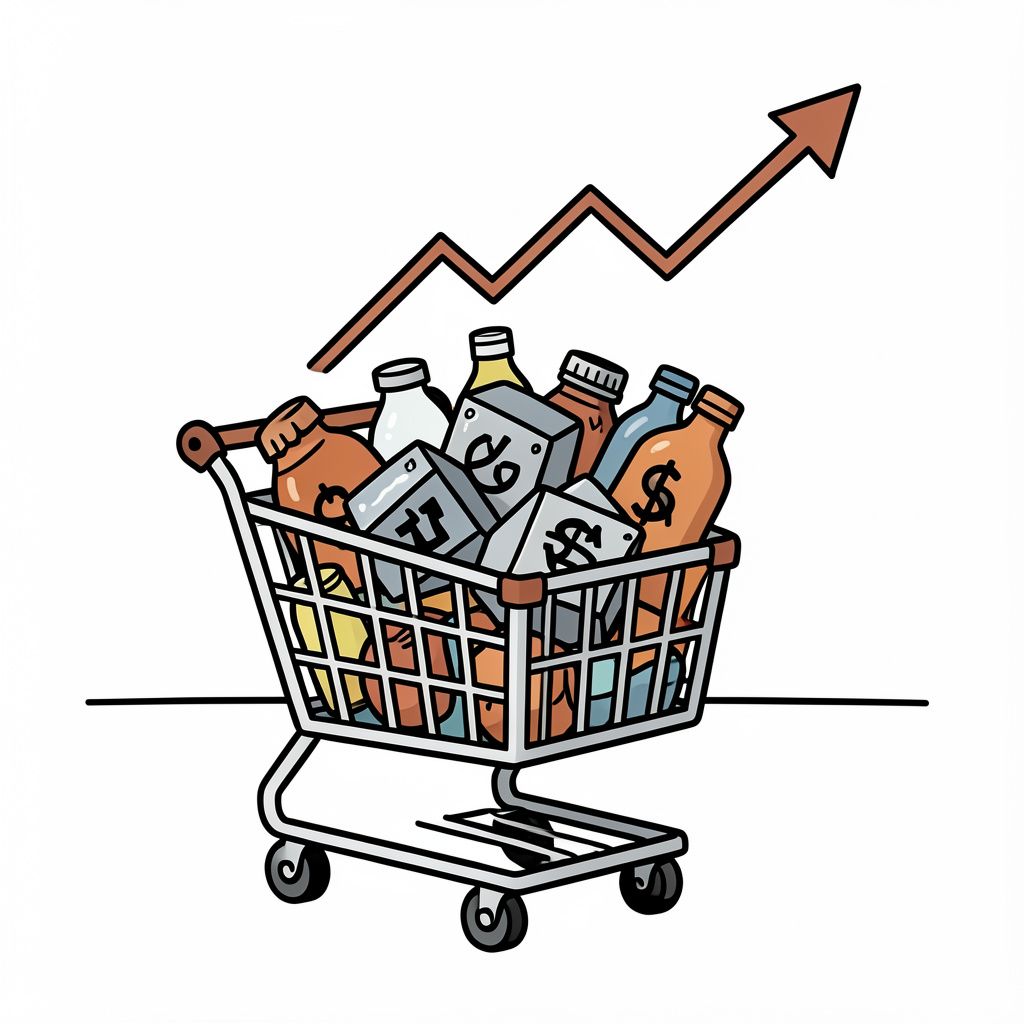
A New York Federal Reserve study reveals import tariffs raised everyday consumer goods prices by 2.9 percentage points by February 2026, preventing what would have been a natural price decline.
Study Reveals Tariff Impact on Inflation
A comprehensive study published by researchers at the Federal Reserve Bank of New York reveals that recent import tariffs added 2.9 percentage points to inflation across 67 categories of everyday consumer goods by February 2026 [1][2][3][4]. The findings indicate that without these trade policy measures, prices for the tracked products would have decreased by nearly 1% during the same period [1][2][4]. This data offers corporate leaders and economic policymakers a clearer understanding of how trade protectionism directly impacts consumer price indexes, contradicting earlier arguments that companies would absorb the costs rather than passing them to shoppers [1][2]. The research team, comprising Mary Amiti, Sebastian Heise, and David Weinstein, noted that tariffs have a larger and more drawn-out impact on consumer prices than the direct effect alone would suggest [1][2].
Mechanism of Price Transmission
The New York Fed researchers found that for every 1 percentage point increase in average tariffs, consumer goods prices rose by approximately 0.25% one year later [2][3]. Approximately 26% of tariff increases in 2025 were passed on to consumers as price hikes, with about two-thirds of this impact resulting directly from the levies and the remainder from knock-on effects for companies using imported parts [1][2]. Price adjustment timelines differ significantly; imported goods prices respond immediately to tariff changes, whereas U.S.-made goods prices adjust over a 6- to 12-month period as cost increases propagate through the supply chain [2][3]. This indirect effect, driven by higher costs for U.S.-produced goods due to imported parts and reduced competitive pressure, accounts for approximately one-third of the total price impact [2][4].
Legal Challenges and Policy Response
In February 2026, the U.S. Supreme Court struck down many of the original tariffs, leading to billions of dollars in retail refunds for major companies like Walmart, Home Depot, and Target [1][3][4]. Following this ruling, the tariff effect on the goods price level eased to approximately 2% by August 2026, a decline of 0.9 percentage points from the February peak [3][4]. Despite the legal setbacks, the White House announced on September 30, 2026, its intention to proceed with new levies through alternative measures, with current import tariffs frequently set at approximately 10% [1][3]. The White House initiative to push forward with these levies remains active as of October 8, 2026 [1].
Economic Outlook Through 2027
Annual price growth for the tracked goods peaked in early 2026, though elevated prices are projected to persist into 2027 [1][2]. Forecasts extending through September 2027 assume tariffs remain at end-of-September 2026 levels, excluding an announced January 2027 tariff increase on Canadian cars, trucks, and auto parts [2]. Economists expect tariff price pressures to pick up again as Canadian levies continue to filter through, with higher auto tariffs taking effect next year [3]. The study concludes that while tariffs have increased consumer goods price levels, their contribution to ongoing inflation is forecast to turn negative as 2025 tariff increases drop out of the twelve-month comparison [2][4].