Los Angeles Baseball Ticket Prices Plummet Following Playoff Losses
Los Angeles, Thursday, 15 October 2026.
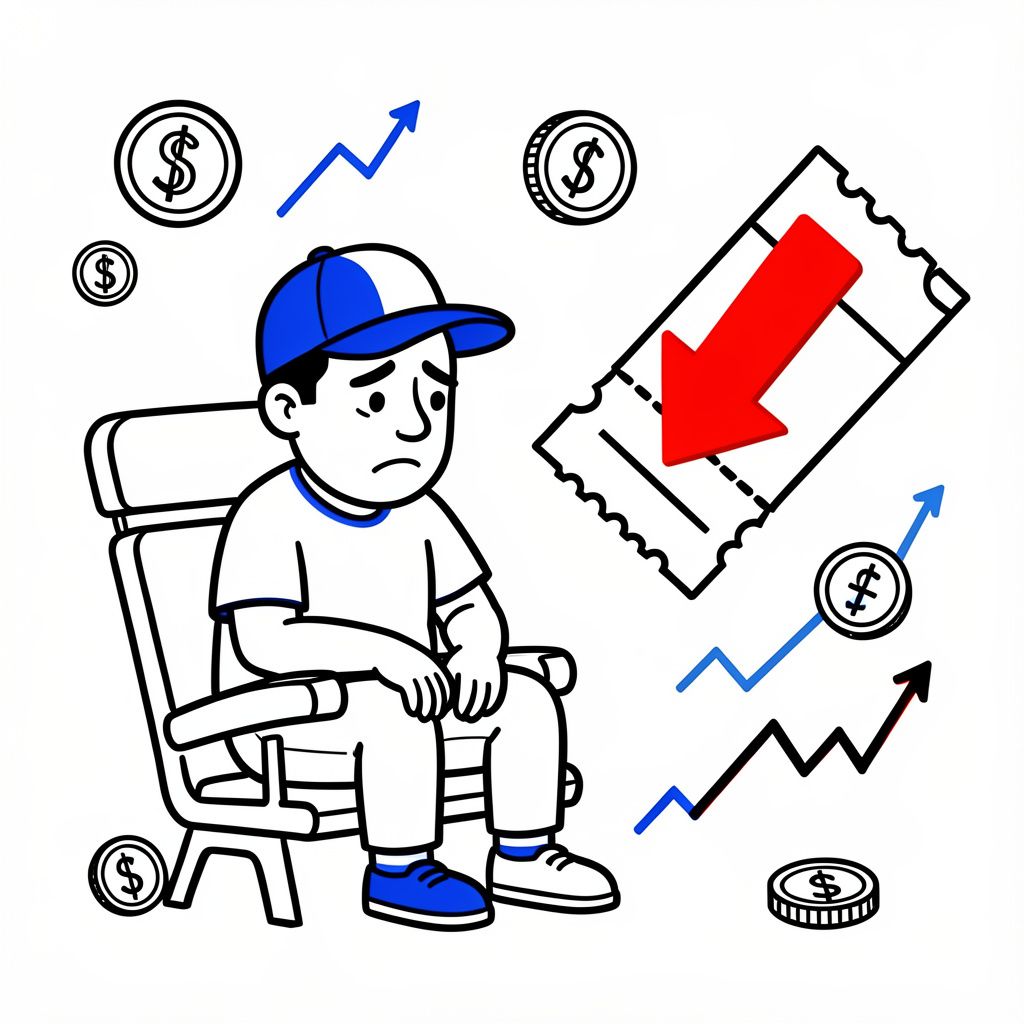
Resale prices for playoff baseball in Los Angeles dropped by roughly 50 percent after the team fell behind two games to zero, creating sudden market bargains for fans.
Secondary Market Volatility
The secondary ticket market for Major League Baseball postseason games reacts swiftly to on-field performance, a trend clearly visible in Los Angeles this week. Following the Milwaukee Brewers’ 7-4 victory on Monday, 12 October 2026, securing a 2-0 series lead, resale prices for National League Championship Series games at Dodger Stadium experienced a sharp decline [2]. Data indicates that ticket prices dropped approximately $75 across various seating categories as the Dodgers faced the potential end of their two-year championship reign [1]. This immediate correction highlights the sensitivity of live event economics to competitive momentum, particularly in a market accustomed to sustained success [2].
Specific pricing data from resale platforms illustrates the magnitude of this shift. Get-in prices for Games 3 and 4 at Dodger Stadium were recorded around $176 just two days prior to the price adjustment [4]. By 13 October 2026, these entry-level prices had fallen to approximately $88 for Game 3 and $89 for Game 4 on platforms like TickPick, representing a decrease of roughly 50 percent [4]. Earlier in the series lead-up, normal seating packages ranged from $175 to $620, but by 13 October, Game 3 tickets were listed between $97 and $476 [1]. This volatility underscores how quickly fan demand metrics adjust when a home team trails in a best-of-seven series [6].
Schedule and Stakes
The timeline for the series places significant pressure on the upcoming fixtures in Los Angeles. Game 3 was scheduled for 14 October 2026, at 5:00 p.m. PT, marking the Dodgers’ first home opportunity to reverse the momentum [5]. As of today, 15 October 2026, Game 4 is scheduled for 6:00 p.m. PT at Dodger Stadium, with the Dodgers requiring a win to avoid a critical deficit [5]. The stakes are elevated by the Dodgers’ status as back-to-back World Series champions from 2024 and 2025, making the current 0-2 deficit a notable deviation from their recent postseason trajectory [2].
Fan engagement metrics suggest a mixed response to the pricing adjustments. While lower prices offer accessibility, reports from 14 October indicated that significant ticket inventory remained available just 15 minutes before first pitch for Game 3 [5][7]. Some community voices noted the availability as surprising for a postseason contest, suggesting that price alone may not guarantee capacity crowds when optimism wanes [7]. Conversely, lower price points were viewed by some as a strategic opportunity for fans to attend high-stakes games at reduced costs, with tickets for Game 3 advertised as low as $97 on certain platforms [3]. The outcome of Game 4 will likely determine whether this pricing strategy stabilizes demand for a potential Game 5 on 16 October 2026 [5].
Regional Economic Shifts
The economic impact extends beyond Los Angeles, with ripple effects observed in the Milwaukee secondary market. While Los Angeles prices dropped sharply, ticket prices for potential Games 6 and 7 at American Family Field also saw reductions, though less severe than those in California [1]. Originally, Game 6 in Milwaukee was listed between $311 and $908, but by 13 October 2026, prices adjusted to a range of $254 to $1,361 [1]. This disparity suggests that home-field advantage retains value even when the visiting team holds a series lead, though the ceiling for premium pricing softens when the series length extends [6].
Refund policies and risk mitigation remain crucial for consumers navigating this volatility. Tickets for games that are not played due to series conclusion are typically refunded, a standard provision highlighted as fans consider purchasing for potential Games 5 through 7 [1]. The Brewers require only two more wins to advance to the World Series, creating a scenario where additional home games might not be necessary [1]. Ultimately, the 2026 NLCS serves as a case study in how postseason uncertainty drives real-time valuation in the sports entertainment sector, with prices fluctuating based on every pitch and hit [6].
Sources
- www.jsonline.com
- sports.yahoo.com
- www.facebook.com
- www.facebook.com
- www.mlb.com
- www.jconline.com
- www.instagram.com