Trump Forms Executive Committee to Investigate Federal Reserve Governor Lisa Cook
Washington, Friday, 9 October 2026.
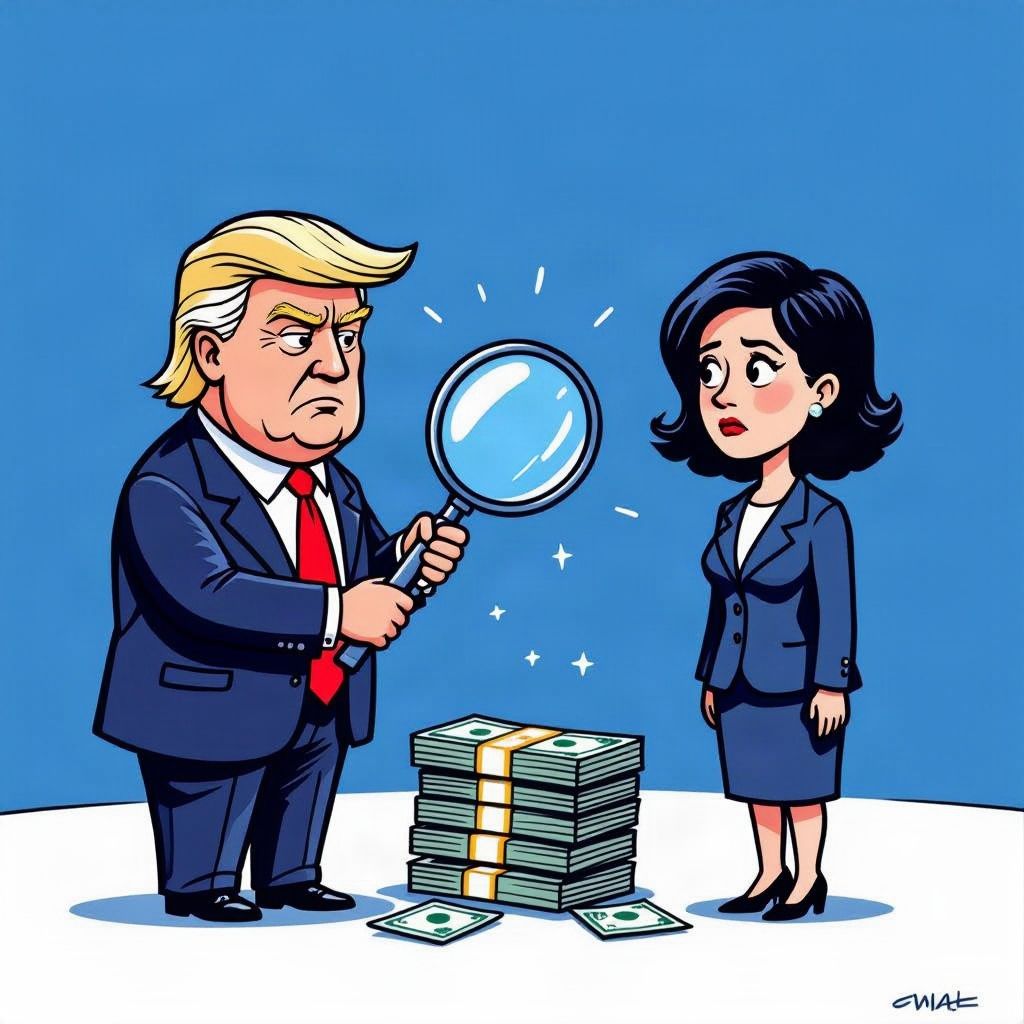
President Donald Trump established an executive committee to investigate Federal Reserve Governor Lisa Cook over mortgage fraud allegations, reviving his effort to remove her from the central bank.
Committee Composition and Mandate
The newly formed committee comprises three executive branch officials, led by Kevin Hassett, the Assistant to the President for Economic Policy [1][3]. Joining Hassett are Keith Sonderling, acting head of the Office of Government Ethics, and Equal Employment Opportunity Commission Chair Andrea Lucas [1][3]. This group is tasked with investigating allegations that Governor Cook made false statements regarding mortgage instruments, a claim rooted in accusations from Federal Housing Finance Agency Director Bill Pulte in 2025 [5]. The White House memorandum, dated October 7, 2026, grants the committee authority to question Cook and request evidentiary documents [3][4].
Procedural Timeline and Legal Precedent
A critical closed-door hearing is scheduled for November 5, 2026, at the White House, where Cook is required to appear and respond to questions [3][6]. Governor Cook retains the right to submit a written position statement by November 2, 2026, and a post-hearing statement by November 10, 2026 [3][4]. This process follows a Supreme Court ruling in June 2026, which blocked Trump’s previous attempt to remove Cook, citing a lack of due process [2][4]. The Court’s 5-4 decision allowed the administration to try again provided proper notice and an opportunity to respond were given, which this committee aims to satisfy [4][5].
Economic Implications and Federal Reserve Independence
The investigation arrives amidst heightened tension over monetary policy, following a unanimous decision by the Federal Reserve to raise interest rates on September 16, 2026 [6]. President Trump has frequently urged the central bank to lower rates, attributing the failure to do so to a hostile board [1][6]. Chairman Kevin Warsh, appointed by Trump earlier in 2026, has faced pressure as the administration seeks to influence the Fed’s independence [1][2]. Market observers note that removing a sitting governor could destabilize financial markets and challenge the legal boundaries of presidential authority over U.S. monetary policy [2][6].