Analysts Warn High Stock Prices Could Trigger a Market Downturn by 2027
New York, Sunday, 11 October 2026.
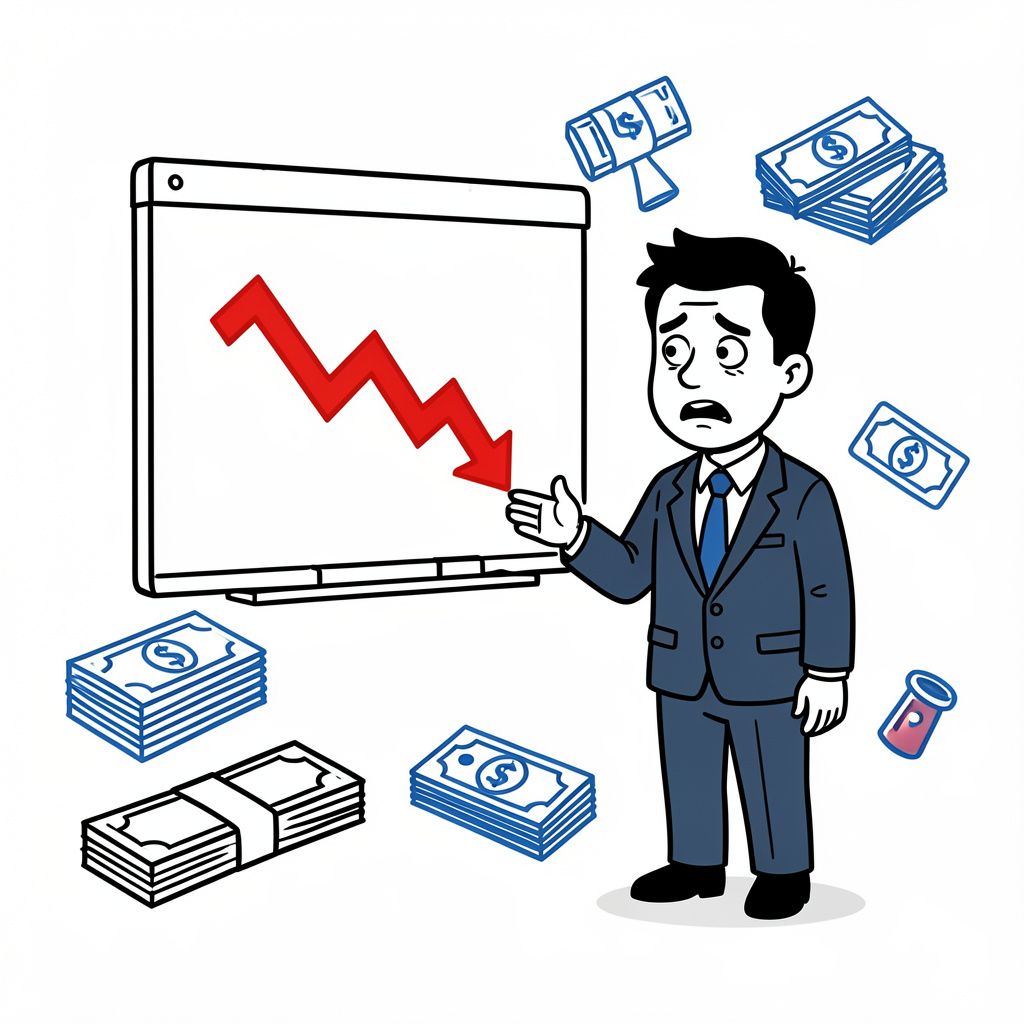
Historic stock market valuations have pushed key economic indicators to record levels, leading financial experts to warn investors that a major market downturn could arrive by 2027.
Valuation Metrics Reach Historic Highs
Key valuation benchmarks have surged to unprecedented levels, with the Buffett Indicator measuring total market capitalization relative to gross domestic product exceeding 300% [1]. Recent data from October 9, 2026, places the Buffett Indicator at 302%, significantly surpassing the 175% threshold defined as extremely expensive by a margin of 127 percentage points [2]. Concurrently, the cyclically adjusted price-to-earnings (CAPE) ratio has exceeded 40, a level historically observed only during the dot-com crash and the current market period [1]. Some analyses suggest the Buffett Indicator sits at 236%, marking its highest level ever and signaling potential overvaluation to investors [3]. These metrics indicate that the S&P 500 is approaching the conclusion of its fourth consecutive year of double-digit gains, driven largely by artificial intelligence development within the tech sector [1].
Analyst Projections for 2027
Prominent market strategists are warning that the AI boom could unravel within the next two years, dragging the S&P 500 sharply lower [4]. Panmure Liberium strategist Joachim Klement believes the AI trade could begin breaking down as soon as 2027 as hyperscalers face rising financing costs and increasingly stretched free cash flow [4]. His base case calls for the index to fall to 5,000 by the end of 2027, implying roughly 36% downside from current levels [4]. Klement argues that free cash flow at major technology companies is being increasingly absorbed by infrastructure spending just as debt costs rise, potentially making the current investment pace harder to sustain [4]. Bloomberg Intelligence estimates hyperscaler data-center spending could reach about $713 billion in 2026, more than double last year’s level [4].
Economic Headwinds and Strategic Shifts
Throughout 2025, markets experienced strong performance, but entering 2026, rising uncertainty was driven by high inflation and bond market volatility [5]. U.S. inflation rose 0.4% monthly to an annualized 3.4% in August 2026, driven by a 2.1% monthly increase in energy prices [5]. In September 2026, the Federal Reserve raised interest rates by 0.25%, contributing to the ten-year U.S. Treasury yield exceeding 5% [5]. Market valuation metrics indicated strong overvaluation, with Forward P/E at 19.0x compared to the 30-year average of 17.2x, a difference of 10.465 percent [5]. In response, investors are advised to maintain cash reserves to capitalize on potential bargains during a future bear market while continuing current investments [1]. Berkshire Hathaway’s current equity portfolio prioritizes defensive, blue-chip dividend stocks, such as Coca-Cola and American Express, while maintaining a large cash reserve [1].
Political Uncertainty and Future Outlook
On October 09, 2026, Bank of America Securities highlighted potential market volatility tied to the upcoming U.S. midterm elections, forecasting swings of up to 10% by 2027 [6]. Election outcome probabilities currently stand at 64% for a Democratic sweep, which could depress stocks by over 10% [6]. A divided Congress carries a 28% probability and could lift equities by more than 5% [6]. Analysts suggest a bear market may emerge in 2027, prompting recommendations for portfolio fortification [2]. Warren Buffett noted in a 2001 Fortune magazine article that market ratios nearing 200% should have served as a warning to investors [2]. As of October 11, 2026, the consensus among experts is to prepare contingency plans for when the market goes into a bear market [4].
Sources
- www.theglobeandmail.com
- finance.yahoo.com
- www.aol.com
- www.gurufocus.com
- www.lakeridge.bank
- www.gurufocus.com