US Crackdown on Offshore Call Centers Threatens Millions of Jobs in India and the Philippines
Washington DC, Sunday, 21 June 2026.
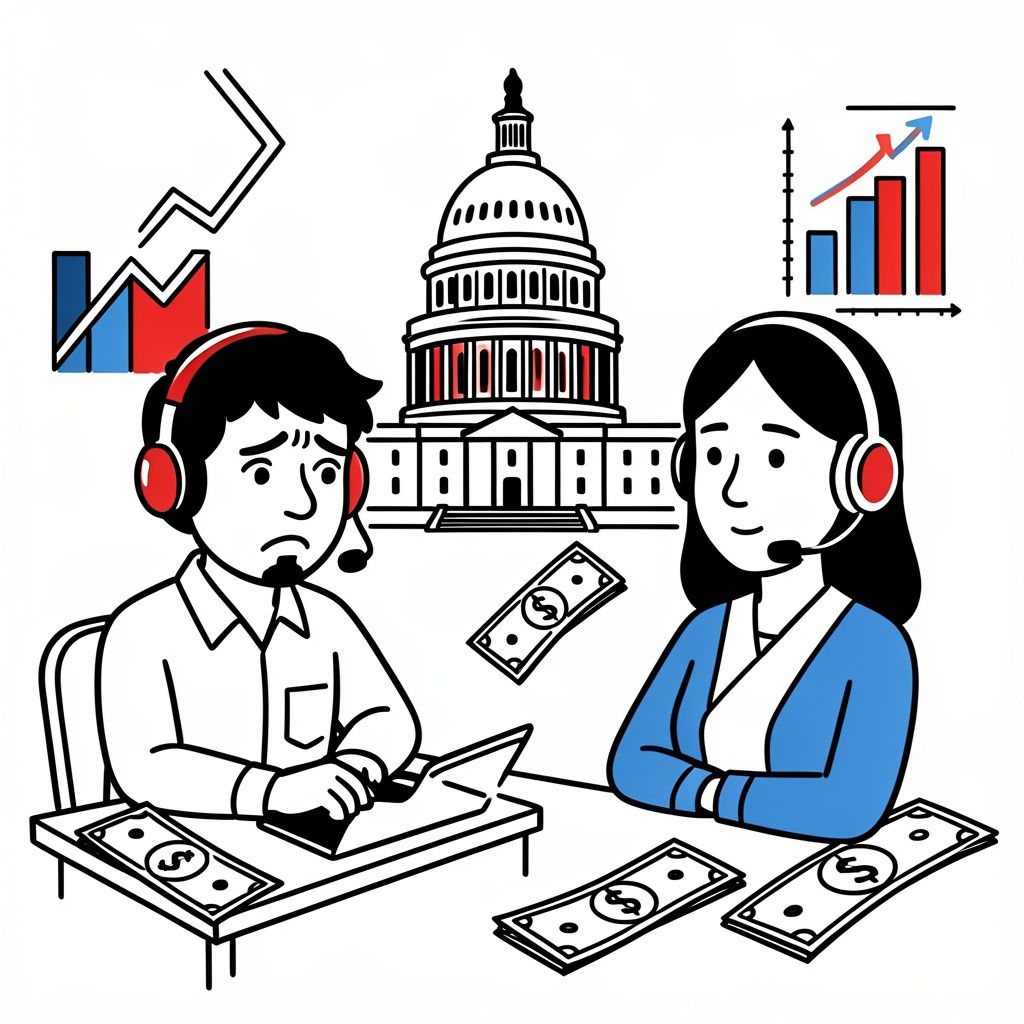
A new US regulatory proposal could devastate the $97 billion call center industries in India and the Philippines, employing nearly 2 million workers. The FCC plans to require location disclosures, English proficiency standards, and onshoring incentives, sparking fears of mass layoffs. Industry leaders warn of destabilization, while experts urge a shift to AI-driven, high-value services. With the public comment deadline looming on June 22, 2026, both nations are mobilizing diplomatic and industry responses to protect their economic lifelines.
The Regulatory Storm: FCC Proposals Target Offshore Operations
The United States Federal Communications Commission (FCC) has unveiled two Notice of Proposed Rulemakings (NPRMs) that could reshape the global business process outsourcing (BPO) landscape. FCC 25-76, released on 2025-10-29, mandates foreign-origin indicators on all U.S.-bound calls, while FCC 26-16, published on 2026-04-23, proposes more stringent measures including a 30% cap on offshore call volume, American Standard English proficiency requirements, and gateway accountability for call centers [1]. These proposals come as the FCC seeks public comments until 2026-06-22, with industry stakeholders racing against the deadline to influence the final regulations [2].
Economic Lifelines at Risk: The Numbers Behind the Industry
The proposed regulations threaten to destabilize two of the world’s largest BPO markets. In the Philippines, the business process management (BPM) industry employs approximately 1.8 million workers and generates annual revenues of US$38 billion (₱2.1 trillion), accounting for 7.5% of the country’s GDP [2][4]. India’s BPM sector, meanwhile, reported revenues of US$59 billion for the fiscal year ending March 2026, with the United States serving as the largest export market for both nations [2]. The combined economic impact of these industries represents a significant portion of the US$97 billion global call center market [GPT].
Industry Responses: From Resistance to Reinvention
Industry leaders in both countries are mobilizing comprehensive responses to the FCC proposals. In the Philippines, the House of Representatives adopted a resolution on 2026-06-18 urging the Department of Trade and Industry (DTI) and Department of Foreign Affairs (DFA) to engage with U.S. counterparts, while the Philippine Ambassador to Washington works with lawmakers and industry groups to secure exemptions [2]. The Contact Center Association of the Philippines, rebranded in May 2026 as the Customer Xperience Association of the Philippines, signals a strategic shift toward higher-value, AI-enabled services [5].
The AI Factor: Automation Accelerates Industry Transformation
The regulatory pressures coincide with rapid technological disruption in the call center industry. Artificial intelligence tools are increasingly replacing routine customer service functions, with Philippine call centers reporting reduced headcounts and lower volumes in basic service operations [5]. Delhi-based technology and public policy consultant Prasanto Roy observes that BPOs must transition from traditional per-seat business models to performance-based pricing, stating, “BPOs must move from their old per-seat business model to charging based on what they actually deliver, such as charging per customer issue resolved” [5].
Human Costs: Workers Face Uncertain Futures
The human impact of these regulatory and technological shifts is already being felt across both countries. Mae Caluya, a senior director for operations at a Manila call center who was retrenched in 2024, expresses concern for frontline workers, stating, “The regular agents are the ones I worry about. Most Filipinos don’t have deep savings” [5]. Caluya’s experience reflects broader industry trends, with many workers now advised to “save and embrace the job while they can” [5].
Retail Sector Pushback: Unintended Consequences of Protectionism
The FCC proposals have faced unexpected opposition from segments of the U.S. business community. The National Retail Federation (NRF) submitted a letter to the FCC on 2026-04-21 arguing that the proposed rules could have counterproductive effects, including increased wait times, higher operational costs, and reduced multilingual support capabilities [1]. NRF Executive Vice President of Government Relations David French warned, “A policy intended to preserve domestic jobs could therefore have the opposite effect by hastening transitions that reduce human roles over time” [1].
Diplomatic Maneuvering: Trade Relations in the Balance
The regulatory proposals have introduced new tensions into U.S. trade relations with both India and the Philippines. While the U.S. Ambassador to India suggested on 2026-06-18 that an interim trade deal between the two countries is likely in the coming months, the call center regulations threaten to overshadow these negotiations [6]. Industry experts warn that the proposed measures could trigger retaliatory actions, with both countries exploring options to protect their economic interests [2].
The Path Forward: Compliance, Innovation, and Uncertainty
As the 2026-06-22 public comment deadline approaches, industry leaders are exploring multiple strategies to navigate the regulatory landscape. Some companies are considering blended delivery models that combine offshore operations with U.S.-based centers to ensure compliance with potential location requirements [5]. Others are investing in advanced training programs to meet the proposed English proficiency standards and customer service benchmarks [1].
Conclusion: A Pivotal Moment for Global Services Trade
The FCC’s proposed regulations represent a watershed moment for the global BPO industry, with implications that extend far beyond the call center sector. As both the Philippines and India mobilize diplomatic and industry responses, the outcome of this regulatory battle could set precedents for future cross-border service trade policies [2][4]. The public comment period, closing on 2026-06-22, offers a final opportunity for stakeholders to shape the regulations before they potentially take effect later this year [1].
Sources
- www.contactcenterpipeline.com
- www.thestar.com.my
- www.straitstimes.com
- www.facebook.com
- www.straitstimes.com
- www.instagram.com