Trump-Backed Outsider Wins NY-21 Primary with Bold Manufacturing Revival Plan
Rome, Sunday, 21 June 2026.
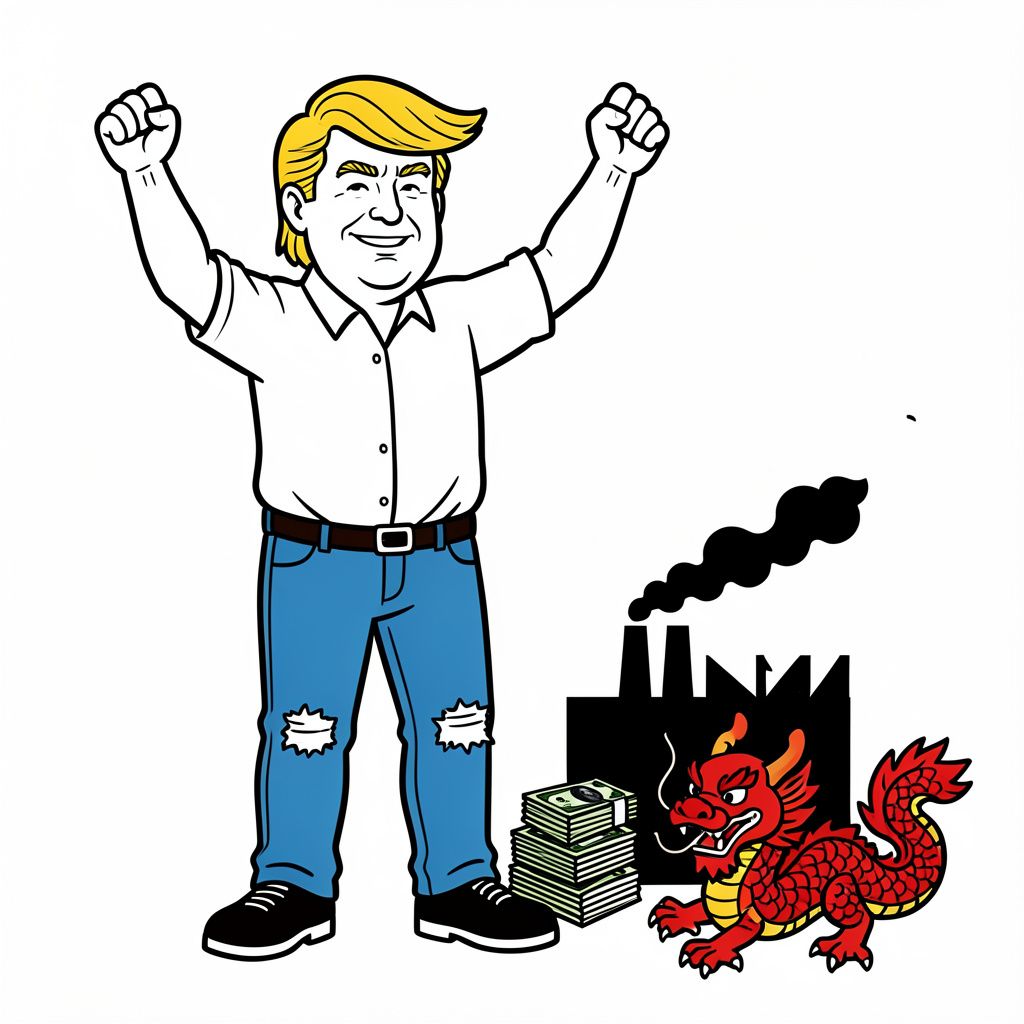
Anthony Constantino, a political newcomer endorsed by Donald Trump, clinched the NY-21 Republican primary on June 20, 2026, with a bold plan to revive American manufacturing. His victory, backed by Trump’s 155-0 primary endorsement streak, signals a shift toward aggressive industrial policy. Constantino’s platform—tax incentives, deregulation, and tough trade measures—aims to reshore jobs and counter China’s dominance. But his unorthodox campaign style, from ripped jeans to diss-track rap videos, has divided the GOP. With NY-21’s manufacturing legacy at stake, his win could redefine national economic strategies ahead of November.
A Political Outsider with Business Credentials
Anthony Constantino’s victory in the NY-21 Republican primary on June 20, 2026, marks the ascension of a political outsider whose background blends entrepreneurial success with an unorthodox campaign style [1]. As the founder and CEO of Sticker Mule, a custom printing company based in Amsterdam, New York, Constantino has built a business employing approximately 1,000 people, positioning himself as a job creator in a district that has struggled with manufacturing decline [2]. His campaign leveraged this business experience, framing him as a problem-solver capable of revitalizing the region’s industrial base. However, Constantino’s path to the nomination was far from conventional. Unlike traditional candidates who often rise through local political ranks, he entered the race as a Trump-backed outsider, bypassing the state GOP establishment that had coalesced around Assemblyman Robert Smullen [3]. This dynamic reflects broader tensions within the Republican Party, where Trump’s endorsement has become a dominant force in primary elections, often overriding local party preferences [4].
The Trump Endorsement: A Decisive Factor in NY-21
Donald Trump’s endorsement of Constantino proved pivotal in the NY-21 primary, continuing the former president’s unbroken streak of 155 successful House primary endorsements in 2026 [5]. The endorsement, announced on April 22, 2024, came after Constantino met with Trump in Florida earlier that month, where he secured the former president’s public support with a promise to champion ‘Made in America’ policies [6]. Trump’s influence in the race was further amplified when he shared one of Constantino’s campaign rap videos on Truth Social on June 14, 2026, just days before the primary [7]. This digital endorsement underscored the evolving nature of political campaigning, where social media and unconventional content can play a decisive role in candidate visibility. The Trump endorsement also brought with it a network of high-profile allies, including Ohio Representative Jim Jordan, who campaigned for Constantino at a medical device manufacturer in Fulton County on June 12, 2026 [8]. Jordan’s involvement highlighted the national implications of the NY-21 race, framing it as part of a broader conservative movement to reshape the Republican Party in Trump’s image [9].
Manufacturing Revival: The Core of Constantino’s Economic Plan
At the heart of Constantino’s campaign is a detailed three-point plan aimed at reviving American manufacturing, with a particular focus on addressing the economic challenges facing NY-21 [10]. The district, which includes parts of the Adirondacks and the Mohawk Valley, was once a thriving manufacturing hub but has seen significant job losses due to offshoring and automation over the past three decades [GPT]. Constantino’s proposal centers on three key pillars: negotiating fair trade deals to counter foreign competition, simplifying the patent process to encourage domestic innovation, and refocusing universities on STEM education to build a skilled workforce [11]. His plan draws inspiration from the region’s industrial history, particularly its role in the Erie Canal economy and 20th-century manufacturing [GPT]. During his closing campaign event in Rome, New York, Constantino emphasized the potential for reshoring jobs, stating, ‘America is the best at engineering software. We can easily bring back manufacturing if we direct that same intellect to developing advanced machinery as well’ [12]. This vision aligns with broader national trends, as both major parties have increasingly focused on industrial policy in response to supply chain vulnerabilities exposed by the COVID-19 pandemic and geopolitical tensions with China [13].
Tax Incentives and Deregulation: The Policy Tools for Reshoring
Constantino’s manufacturing revival plan relies heavily on two key policy tools: targeted tax incentives and deregulation [14]. While specific details of his tax proposal remain limited, his campaign has outlined a framework that would provide significant tax breaks for companies that reshore production to the United States, particularly to economically distressed regions like NY-21 [15]. This approach mirrors the Opportunity Zones program established by the Tax Cuts and Jobs Act of 2017, which offered tax advantages to investors in designated low-income communities [GPT]. However, Constantino’s plan goes further by proposing to tie tax incentives directly to job creation metrics, with greater benefits for companies that hire locally and invest in advanced manufacturing technologies [16]. On the regulatory front, Constantino has called for streamlining environmental and labor regulations that he argues have made American manufacturing less competitive globally [17]. His deregulation agenda includes revisiting the National Environmental Policy Act (NEPA) review processes for manufacturing facilities and revising workplace safety regulations to reduce what he describes as ‘burdensome compliance costs’ [18]. These proposals have drawn both support and criticism, with proponents arguing they will spur economic growth and opponents warning they could undermine environmental protections and worker safety standards [19].
Trade Policy: Taking a Hard Line Against China
A cornerstone of Constantino’s manufacturing plan is an aggressive trade policy aimed at countering China’s dominance in global manufacturing [20]. His campaign has called for renegotiating existing trade agreements to include stricter rules of origin requirements, ensuring that products labeled ‘Made in America’ contain a higher percentage of domestically sourced components [21]. This proposal builds on the Trump administration’s trade policies, which included tariffs on Chinese goods and the renegotiation of NAFTA into the United States-Mexico-Canada Agreement (USMCA) [GPT]. Constantino has also advocated for expanding the use of Section 301 tariffs, which allow the U.S. to impose duties on foreign goods that benefit from unfair trade practices [22]. His plan specifically targets critical industries where China has gained significant market share, including electronics, pharmaceuticals, and rare earth minerals [23]. To support domestic manufacturers, Constantino has proposed creating a ‘Reshoring Fund’ that would provide low-interest loans and grants to companies relocating production from China to the United States [24]. This fund would be capitalized through a combination of federal appropriations and repurposed tariff revenues, with a projected initial budget of $50 billion [25]. Critics of this approach argue that such policies could lead to higher consumer prices and retaliatory tariffs from trading partners, potentially harming export-dependent industries [26].
The Primary Battle: Establishment vs. Outsider
The NY-21 primary pitted Constantino against Assemblyman Robert Smullen in a bitter contest that highlighted deep divisions within the Republican Party [35]. Smullen, a 14-year veteran of the state Assembly with three tours in Afghanistan, represented the GOP establishment, securing endorsements from 12 of the 15 Republican county committees in the district and the state Conservative Party [36]. His campaign emphasized his military service, legislative experience, and deep roots in the community, contrasting his record with Constantino’s relative political inexperience [37]. The primary battle turned acrimonious in late May 2026 when Constantino declined to participate in a scheduled debate, leading to a public falling-out between the candidates [38]. Smullen seized on this moment to question Constantino’s commitment to the democratic process, while Constantino accused Smullen of being part of a ‘broken establishment’ that had failed to revitalize the district’s economy [39]. The campaign took a particularly dark turn when Smullen accused Constantino of exploiting the 2024 death of his 14-year-old son, AJ, for political gain [40]. This accusation, which Constantino vehemently denied, led to a series of defamation warning letters from Constantino’s legal team, escalating tensions between the campaigns [41]. The primary also exposed divisions within the local GOP infrastructure, with reports of intimidation and infighting among county committees [42].
Controversies and Challenges: The Dark Side of the Campaign
Constantino’s campaign has not been without controversy, with several issues emerging that could complicate his path to the general election [43]. One of the most significant challenges stems from his business record at Sticker Mule. In 2025, the company laid off 68 employees, a move that Smullen highlighted as contradictory to Constantino’s ‘Made in America’ messaging [44]. Constantino defended the layoffs as necessary for the company’s long-term health, arguing that they were part of a broader restructuring to improve efficiency [45]. However, this explanation did little to quell criticism from opponents who accused him of hypocrisy. Another controversy arose from Constantino’s past political affiliations. Records show that he was registered as a Democrat as recently as 2024, a fact that Smullen used to question his Republican credentials [46]. Constantino responded by citing Ronald Reagan’s transition from Democrat to Republican, a comparison echoed by Jim Jordan during a campaign event [47]. Perhaps most damaging were revelations about the backgrounds of some campaign staffers. Constantino’s team included individuals with past legal issues, including a 2020 grand larceny charge that was later reduced to a misdemeanor, a 2014 signature forgery arrest, and a 2026 murder charge involving a staffer who was out on bail while working for the campaign [48]. These controversies have provided ample ammunition for opponents seeking to question Constantino’s judgment and fitness for office [49].
The Road Ahead: Implications for NY-21 and National Politics
Constantino’s primary victory sets the stage for a contentious general election in NY-21, where he will face either Democrat Blake Gendebien or Stuart Amell in November 2026 [50]. The district, which has a Cook Partisan Voting Index of R+24, is considered safely Republican, but the primary results suggest that Constantino’s unorthodox campaign style and aggressive manufacturing revival plan could energize both supporters and detractors [GPT]. His victory also carries broader implications for national politics, particularly in the realm of industrial policy. With both parties increasingly focused on reshoring manufacturing jobs and countering China’s economic influence, Constantino’s proposals could serve as a template for Republican candidates in other industrial regions [51]. However, his ability to implement these policies will depend on his performance in the general election and the composition of the next Congress. The NY-21 race also highlights the growing influence of Trump’s endorsement in Republican primaries, with Constantino’s victory marking the 155th consecutive win for Trump-backed House candidates in 2026 [52]. This trend suggests that the former president’s grip on the GOP remains strong, even as the party grapples with internal divisions between establishment figures and Trump-aligned outsiders [53]. As the general election approaches, Constantino’s challenge will be to unite the Republican Party behind his candidacy while appealing to independent voters who may be skeptical of his unconventional approach to politics [54].
Sources
- www.globenewswire.com
- spectrumlocalnews.com
- www.cityandstateny.com
- nymag.com
- nymag.com
- nymag.com
- nymag.com
- www.cityandstateny.com
- spectrumlocalnews.com
- www.globenewswire.com
- www.globenewswire.com
- www.globenewswire.com
- www.globenewswire.com
- www.globenewswire.com
- www.globenewswire.com
- www.globenewswire.com
- nymag.com
- nymag.com
- nymag.com
- www.cityandstateny.com
- nymag.com
- nymag.com
- nymag.com
- www.cityandstateny.com
- spectrumlocalnews.com
- www.cityandstateny.com
- www.cityandstateny.com
- www.cityandstateny.com
- www.cityandstateny.com
- www.cityandstateny.com
- www.cityandstateny.com
- www.cityandstateny.com
- spectrumlocalnews.com
- spectrumlocalnews.com
- www.cityandstateny.com
- spectrumlocalnews.com
- nymag.com