U.S. Tariffs on 60 Countries: Why Your Wallet Will Feel the Pinch Sooner Than You Think
Washington D.C., Sunday, 14 June 2026.
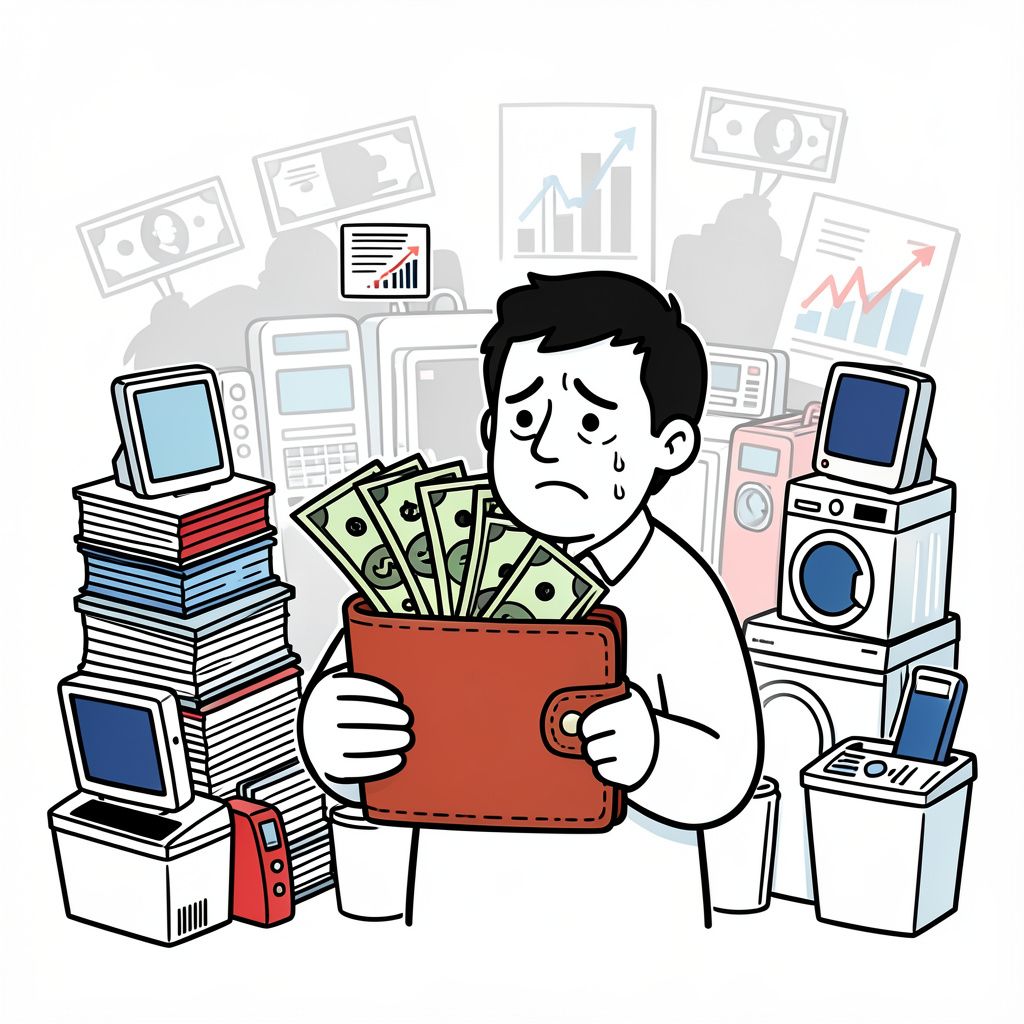
Starting July 2026, U.S. tariffs on 60 countries will hit imports hard—just as critical exemptions expire. The result? American households could face an extra $1,500 in annual costs, with prices for electronics, medical equipment, and everyday goods set to rise. The move, aimed at protecting domestic industries, risks sparking global trade retaliation and fueling inflation. With the U.S. economy still fragile, this policy shift could reshape supply chains, squeeze corporate profits, and test consumer resilience. The big question: Will the benefits outweigh the backlash?
The Policy Shift: What’s Changing and When
On June 10, 2026, the Biden administration announced new tariffs ranging from 10% to 12.5% on imports from 60 countries, citing alleged forced labor practices under Section 301 of the Trade Act of 1974 [1]. This policy shift comes as critical tariff exclusions—originally introduced to mitigate supply chain disruptions—are set to expire on July 31, 2026 [2]. The timing is particularly significant: the new tariffs were proposed on June 2, 2026, with a public comment period currently underway, and finalization expected later this year [3]. For context, these measures follow the expiration of a temporary 10% global tariff in July 2025, which had been imposed under the International Emergency Economic Powers Act (IEEPA) before being struck down by the Supreme Court in Learning Resources, Inc. v. Trump [4]. The current administration has replaced these with a temporary 10% import surcharge under Section 122 of the Trade Act of 1974, which is also set to expire on July 24, 2026 [5].
The Economic Impact: Who Pays the Price?
The financial burden of these tariffs is expected to fall disproportionately on American households. The Tax Foundation estimates that existing trade barriers already cost the average U.S. family approximately $1,500 annually—the largest tax increase by GDP share since 1993 [6]. Lower- and middle-income families are particularly vulnerable, as they spend a higher proportion of their budgets on goods (which are subject to tariffs) rather than services (which are generally tariff-free) [6]. The expiration of tariff exclusions will further strain sectors reliant on foreign manufacturing, including electronics, automotive parts, and industrial machinery [2]. Goldman Sachs has pushed back its forecast for Federal Reserve rate cuts to 2027, citing a strong jobs market and persistent inflationary pressures [7]. The ISM Manufacturing PMI reached its highest level since May 2022 as of June 1, 2026, signaling robust industrial activity but also raising concerns about overheating [8]. Economists warn that the combination of new tariffs and expiring exclusions could lead to structural inflation, unlike energy price spikes tied to geopolitical conflicts, which may resolve more quickly [2].
The Global Ripple Effect: Retaliation and Trade Wars
The Biden administration has framed the new tariffs as a measure to protect domestic industries and address unfair trade practices, but critics argue the policy could provoke retaliatory actions from affected nations [2]. Historically, tariffs have led to trade disputes: in 2018–2019, retaliatory tariffs from China, Mexico, Canada, the EU, India, and Turkey caused over $27 billion in U.S. agricultural export losses, with dairy exports to China plummeting by 47% between December 2018 and November 2019 [9]. The current Section 301 investigation, launched on March 11, 2026, targets 16 major trading partners, including the EU, China, Mexico, Japan, and India, focusing on sectors such as steel, semiconductors, batteries, and automobiles [10]. U.S. dairy exports, which account for 16–18% of domestic milk production on a solids basis, are particularly exposed to retaliation, with key markets including Mexico (cheese), China (whey/lactose), and Southeast Asia (nonfat dry milk) [9]. Treasury Secretary Bessent has stated that the combination of Section 122, Section 232, and Section 301 actions ‘will result in virtually unchanged tariff revenue in 2026,’ suggesting the administration is prioritizing trade policy over short-term revenue gains [11].
The Business Response: Adaptation and Uncertainty
Businesses are already adjusting to the shifting trade landscape. Many companies had previously exploited Trump-era tariffs to increase prices beyond the cost of the tariffs themselves, padding profit margins [1]. However, the Supreme Court’s 2026 ruling in Learning Resources, Inc. v. Trump has allowed businesses to seek refunds for illegal tariffs, though delays in processing have created cash flow challenges [4]. Small businesses, in particular, have grown accustomed to navigating tariff-related disruptions. A June 2026 survey by The Guardian found that many now view tariffs as a short-term issue, given the upcoming 2026 election and the potential for a change in administration [12]. No Democratic challengers have expressed support for the current tariff policies, while Republican figures like JD Vance and Marco Rubio have remained ambiguous on the issue [12]. Meanwhile, the U.S.-Mexico-Canada Agreement (USMCA) joint review begins on July 1, 2026, with USTR Ambassador Greer indicating that the agreement will not receive a ‘rubber-stamp’ extension [11]. Businesses are particularly concerned about rules of origin, non-market inputs, and the effects of industrial overcapacity on North American supply chains [11].
The Political Calculus: Protectionism vs. Global Integration
The Biden administration’s tariff strategy reflects a broader shift toward protectionism, a stance that has drawn both praise and criticism. Proponents argue that the tariffs will encourage reshoring, reduce the U.S. trade deficit, and negotiate more favorable bilateral trade agreements [10]. However, opponents warn that the policy could destabilize global trade flows and harm U.S. exporters. The timing of the tariffs is particularly contentious, as the U.S. economy continues to navigate post-pandemic recovery. Inflation stood at 4.2% as of June 13, 2026, down from its 2022 peak but still above the Federal Reserve’s 2% target [13]. The administration’s focus on forced labor in traded goods has added a moral dimension to the economic debate, with the new tariffs targeting apparel and footwear from Vietnam, Bangladesh, and Cambodia, as well as electronics from Malaysia and Thailand [3]. Yet, the lack of regulatory authority over privately financed research into synthetic embryos—highlighted in a June 12, 2026, Instagram post by science journalist Hollie McKay Rosa—underscores the administration’s selective approach to intervention in emerging industries [14] [alert! ‘This comparison is tangential but illustrates broader regulatory gaps in U.S. policy’].
The Road Ahead: What to Watch in the Coming Months
The next few months will be critical in determining the full impact of the new tariffs. The public comment period for the proposed tariffs is ongoing, with finalization expected later in 2026 [3]. The expiration of tariff exclusions on July 31, 2026, will immediately increase costs for importers, with consumer price effects likely materializing in early-to-mid 2027, given typical supply chain lags [2]. The USMCA joint review, beginning on July 1, 2026, could further reshape North American trade dynamics, particularly in the automotive and dairy sectors [11]. Meanwhile, the U.S. International Trade Commission held public hearings on the Section 301 investigation from May 5 to May 8, 2026, with USTR aiming to complete the investigation and impose tariffs by July 24, 2026 [5]. Businesses and consumers alike will need to monitor these developments closely, as the interplay between tariffs, inflation, and global trade retaliation could have far-reaching consequences for the U.S. economy. The key question remains: Will the long-term benefits of protectionism outweigh the short-term pain for American households and industries?
Sources
- www.theguardian.com
- www.walletdispatch.com
- farms.extension.wisc.edu
- tariffschart.com
- www.investing.com
- www.advisorperspectives.com
- www.whitehouse.gov
- www.instagram.com
- www.usda.gov
- ustr.gov
- www.treasury.gov
- www.bls.gov
- www.federalregister.gov