German Opposition Leaders Plan Talks with Kremlin Envoy to Restore Russian Gas Supplies
Berlin, Saturday, 19 September 2026.
Germany’s opposition AfD party is preparing March 2027 talks with Moscow to restart Russian natural gas flows, contingent on a Ukraine peace framework, despite strong domestic political condemnation.
Preparations for High-Level Energy Talks
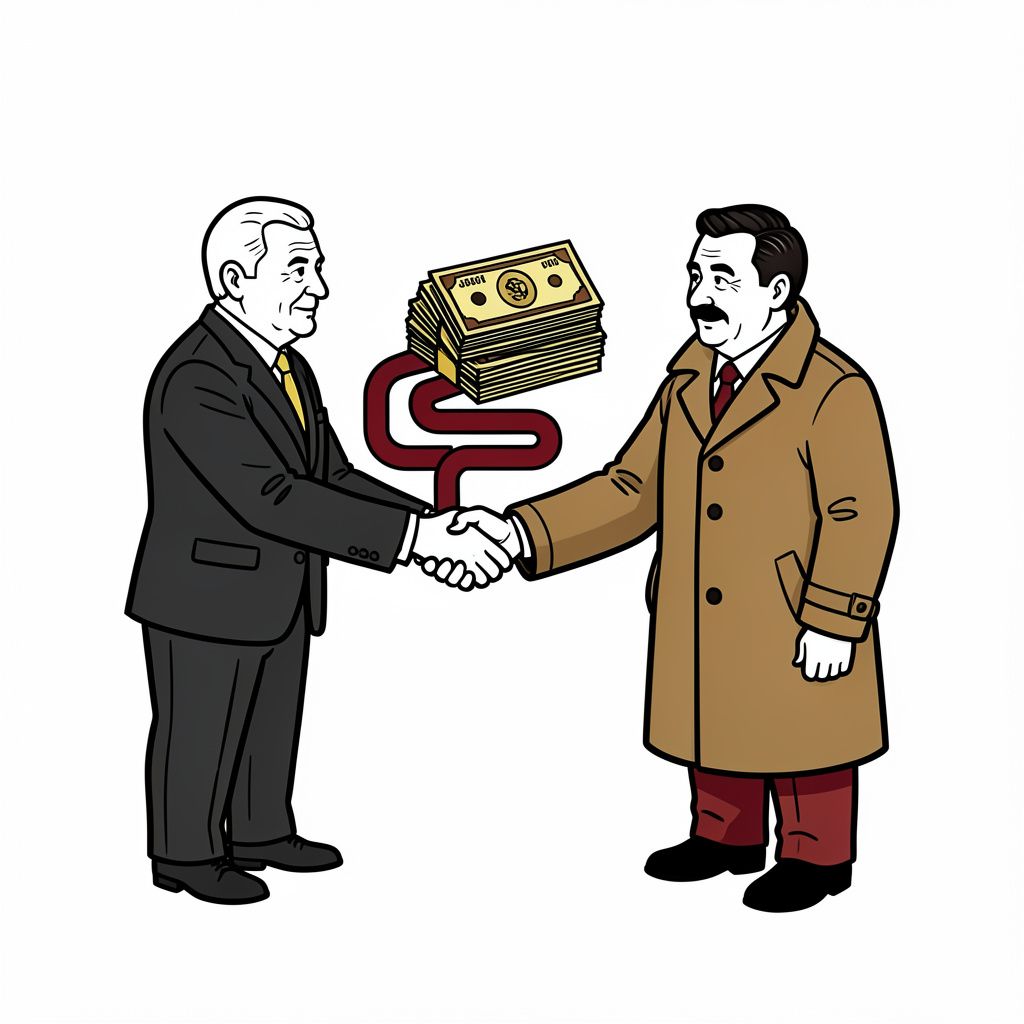
Kremlin economic envoy Kirill Dmitriev and leadership of the Alternative for Germany (AfD) party are preparing for high-level talks scheduled as early as March 2027 to discuss resuming Russian natural gas supplies [1][2]. The proposed meeting remains contingent upon the establishment of a preliminary peace framework between Ukraine and Russia [3][4]. Organizers are considering neutral host locations including the United Arab Emirates, India, or Israel for the summit [5][6]. While the AfD is currently in opposition, the party aims to demonstrate foreign policy credentials amidst high energy prices [4][5].
Energy Infrastructure and Historical Dependence
Before the 2022 full-scale invasion of Ukraine, Russia supplied over 50% of Germany’s natural gas and more than 33% of its crude oil imports [3][6]. The AfD platform advocates for the restoration of energy transit across the Baltic Sea, specifically targeting the Nord Stream pipelines [1][5]. Both Nord Stream 1 and 2 pipelines were damaged by explosions in September 2022, an incident German investigators attribute to sabotage [1][4]. Chancellor Friedrich Merz has previously ruled out a future restart of the Nord Stream pipelines [1][6].
Diplomatic Channels and US Involvement
Dmitriev attended a meeting in Moscow in September 2026 with US representatives Steve Witkoff and Jared Kushner [2][4]. However, a senior US official stated that Witkoff and Kushner were not informed about the proposed gas summit and had not received invitations [4][5]. Organizers had hoped the American diplomats would attend, but the US official confirmed they were unaware of any such meeting [1][5]. This disconnect highlights the complex diplomatic landscape surrounding potential energy negotiations [4][6].
Domestic Political Fallout
German lawmakers from the Christian Democratic Union and Alliance 90/The Greens have condemned the move as political betrayal [3][6]. Green Party member Michael Kellner noted the previous energy crisis cost Germany €50 billion, warning against repeating the mistake [3][6]. The announcement comes ahead of state elections in Mecklenburg-Vorpommern on 20 September 2026, where the AfD faces voters near the pipeline route [6]. CDU foreign policy lawmaker Roderich Kiesewetter warned that restoring Nord Stream would lead to Germany’s isolation [3][6].