Rising Festive Food Prices Squeeze Budgets Across Indian Households
New Delhi, Friday, 6 November 2026.
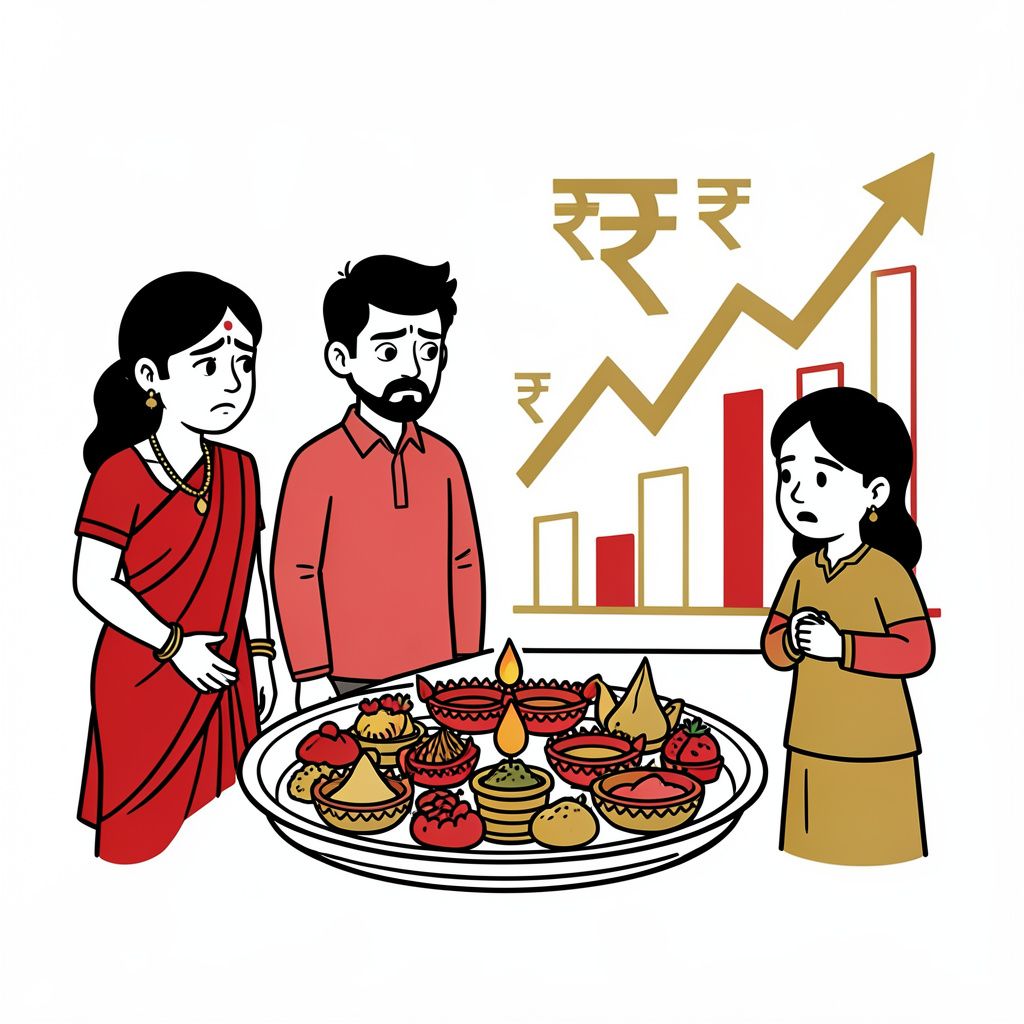
Despite buoyant retail activity this Diwali, food inflation surging to 7.74% is straining household budgets, forcing consumers to cut spending on festive treats and essential staples.
Diwali Festivities Amidst Inflation Headwinds
India’s November 2026 Diwali celebrations are unfolding against a backdrop of persistent food inflation, with consumer prices for essential staples climbing sharply during the peak retail period. Retail inflation in September 2026 reached 5.54%, while food inflation surged to 7.74% year-on-year, reflecting sustained pressure on household budgets [5]. Urban areas experienced inflation at 4.88%, while rural inflation climbed to 6.08%, indicating broader economic strain across both segments of the population [5]. Food inflation has particularly impacted dairy products, edible oils, and sugar, which are core components of festive purchases in Indian households.
Consumer Spending Patterns Reflect Economic Stress
The combination of elevated food prices and high inflation is reshaping consumer behavior during this year’s Diwali. While 72% of respondents planned to increase their festive spending compared to last year, the median budget rose only marginally to Rs 12,500 from Rs 12,200, suggesting that higher prices are eroding purchasing power despite intentions to spend more [5]. Notably, the proportion of households planning to spend over Rs 50,000 during the festival dropped significantly from 12% to 7%, signaling a shift toward more conservative expenditure patterns [5]. This trend is particularly pronounced in essential categories such as groceries and sweets, where families are prioritizing necessities over discretionary festive purchases.
Supply Chain and Policy Factors Driving Price Surge
Economists attribute the current food inflation spike to a confluence of factors, including uneven monsoon rainfall affecting agricultural output, persistent supply chain disruptions, and elevated global commodity prices for edible oils and dairy products [5]. The absence of last year’s additional GST stimulus, which provided a consumption boost in 2025, has further intensified demand-side pressures during the 2026 festive season [5]. Additionally, the Reserve Bank of India’s monetary policy stance, while aimed at controlling inflation, has contributed to higher borrowing costs for businesses and consumers alike [7].
Broader Economic Implications for India’s Growth Trajectory
The festive demand barometer serves as a critical indicator of underlying consumption trends in India, which accounts for approximately 60% of the country’s GDP [GPT]. This year’s subdued consumer sentiment during Diwali could signal broader headwinds for the Indian economy, particularly in the manufacturing and services sectors that rely heavily on domestic demand [5]. While online festive sales in September 2026 reached Rs 1.5-1.55 lakh crore, representing a 25-29% increase from 2025, the average basket size declined by 1.5%, reflecting a shift toward essential purchases [5]. Analysts warn that sustained high food inflation could dampen rural demand, which has already shown signs of weakness due to uneven agricultural performance and income disparities [5].
Market and Policy Responses to Inflationary Pressures
In response to the inflationary environment, financial institutions have rolled out extensive festive offers, including discounted credit card rates, zero-processing-fee loans, and promotional campaigns by e-commerce platforms such as Amazon and Flipkart [5]. The Reserve Bank of India’s recent monetary policy decisions have kept key policy rates elevated, with call rates ranging between 4.30% and 5.75% as of November 5, 2026, reflecting a cautious stance toward inflation control [7]. Government measures, such as the Rs 10,000 crore agricultural loan restructuring package for drought-hit states, aim to mitigate the impact on rural economies, though the full effects of these interventions may take time to materialize [5].
Sources
- bfsi.economictimes.indiatimes.com
- www.facebook.com
- www.instagram.com
- www.instagram.com
- www.facebook.com
- www.facebook.com
- www.instagram.com
- rbi.org.in