Clean Energy Storage Arrives in Remote Pacific Islands
Suva, Friday, 6 November 2026.
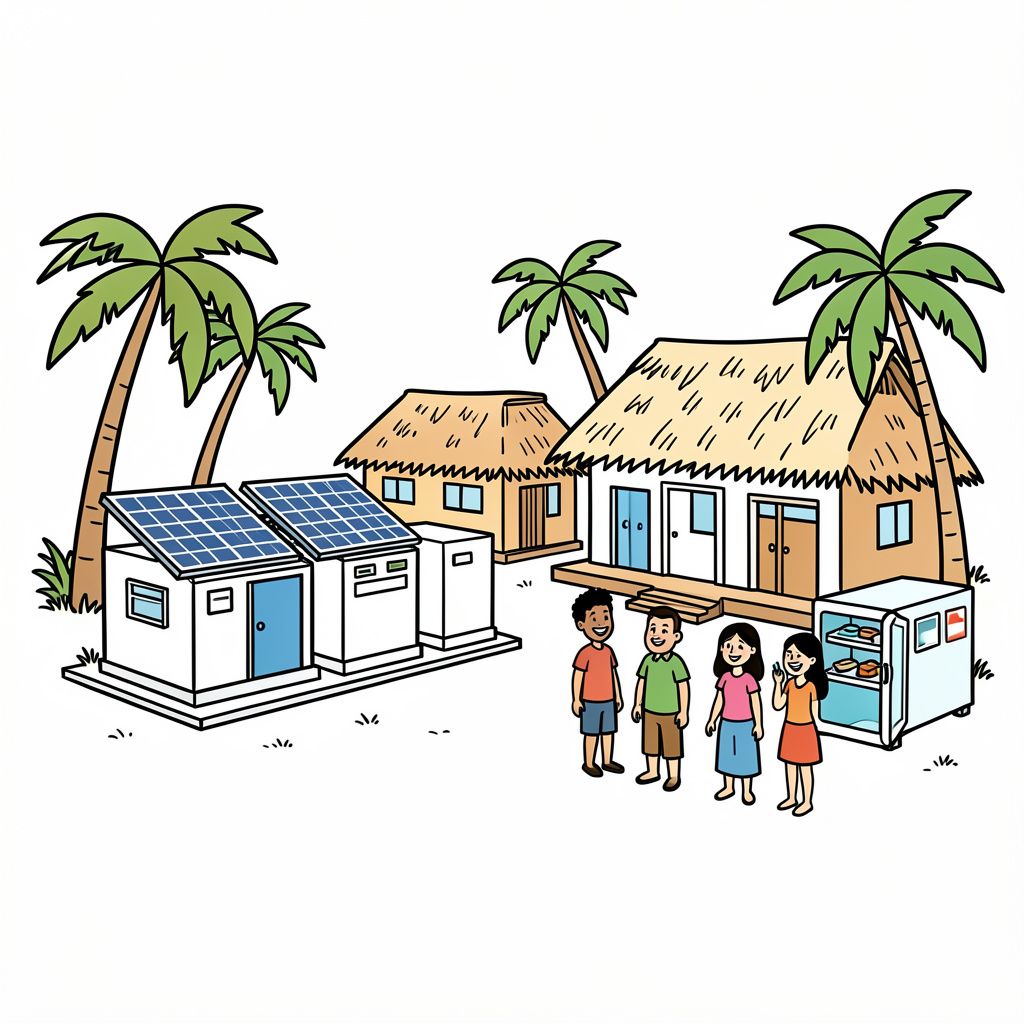
Lyten has deployed modular battery storage in a remote Fijian village, replacing costly diesel generators to deliver continuous electricity to homes, cold storage, and essential healthcare facilities.
A Landmark Deployment in Energy Independence
On Tuesday, 28 October 2026, Lyten’s Voltpack Mobile System (VMS) was officially energized in the remote Fijian village of Yasawa i Rara, marking a critical step toward energy independence for an off-grid community long reliant on diesel generation and intermittent solar power [1][2]. The deployment, a collaboration between Lyten, Energy Solutions Pacific Ltd., and Investment Fiji, was inaugurated by Marshall Islands Ambassador to Fiji Junior Aini, underscoring the geopolitical significance of scalable clean energy solutions in climate-vulnerable Pacific island nations [1][2].
Transforming Lives Through Reliable Power
The VMS now provides continuous 24/7 electricity to up to 64 households in Yasawa i Rara, alongside critical infrastructure including a fish cold storage facility, a maternity unit, and a mortuary, addressing long-standing energy gaps that have constrained healthcare, economic activity, and food preservation in the community [1][2]. Prior to this installation, the village experienced unreliable power due to its dependency on diesel generators and limited solar capacity, with outages disproportionately affecting nighttime operations at the healthcare facility [2]. ‘It’s been wonderful to see the impact reliable power can have on the families of Yasawa i Rara,’ said Dan Cook, Co-Founder and CEO of Lyten, highlighting the broader implications for rural and off-grid communities globally [2].
Technology Designed for Harsh Tropical Conditions
The VMS is a modular, plug-and-play battery energy storage system manufactured at Lyten’s facility in Gdańsk, Poland, with scalability ranging from 290 kilowatt-hours (kWh) to hundreds of megawatt-hours (MWh) [1][2]. Its design prioritizes resilience in tropical environments, with features that withstand high humidity and salt air while integrating seamlessly with existing solar panels and diesel generators to ensure uninterrupted power [1][2]. This flexibility positions the VMS as a viable alternative to diesel-dependent microgrids, which remain a costly and carbon-intensive solution for remote island communities [1][2].
A Model for Pacific-Wide Energy Transition
With over 3.7 million people across Pacific islands—including Fiji, Papua New Guinea, Vanuatu, and the Solomon Islands—lacking reliable electricity access, the Yasawa i Rara deployment serves as a blueprint for scalable clean energy adoption in the region [1][2]. Fiji has set an ambitious national target to achieve 90% renewable electricity by 2035, a goal that Lyten’s VMS could help accelerate by replacing diesel generation with modular, rapidly deployable storage solutions [1][2]. Anwa Khan, Director of Energy Solutions Pacific, emphasized the system’s immediate utility, stating, ‘It is something that is going to be very useful,’ reflecting the local community’s eagerness for sustainable energy independence [2].
Broader Implications for Off-Grid Markets
Lyten’s deployment in Fiji underscores the growing commercial momentum for specialized microgrid infrastructure in off-grid and climate-vulnerable markets, where diesel dependence has historically constrained economic and social development [1][2]. The company, founded in 2015 and headquartered in San Jose, California, has raised over $625 million in equity investment from industry leaders such as Stellantis, FedEx, Honeywell, Prime Movers Lab, and the European Investment Fund, positioning it as a key player in the transition to decentralized clean energy [2]. While Lyten has not disclosed specific timelines for regional expansion, the Yasawa i Rara project signals a strategic focus on Pacific island nations as critical testbeds for its Voltpack Mobile technology [1][2].
Voices from the Ground: Stakeholder Perspectives
The project’s implementation has been met with optimism from local and regional stakeholders. Lisala Dyer, Head of Regional and Trade Development at Investment Fiji, articulated the transformative potential of reliable energy, stating, ‘For too long, the growth of our rural communities, our health services, our schools and our hardworking local entrepreneurs has been capped by a single, fragile constraint: reliable energy’ [1][2]. She further emphasized the cascading benefits of stable power, noting that ‘when power flickers or fails or when it is absent altogether, our progress stalls’ [2]. This sentiment reflects broader regional challenges, where energy insecurity has historically impeded progress across healthcare, education, and economic sectors [2].