Americans Turn to Free Public Libraries as Living Costs Squeeze Household Budgets
Washington, Thursday, 5 November 2026.
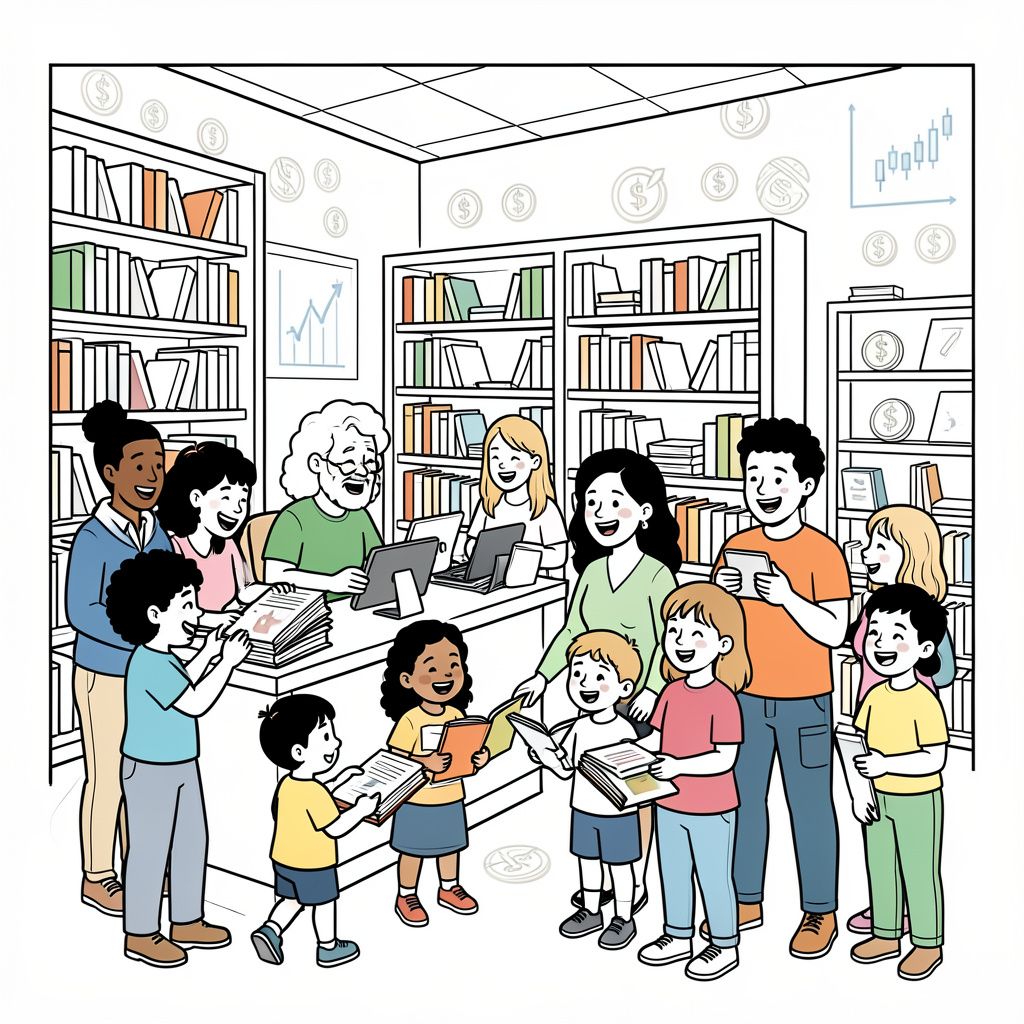
With 70% of adults slashing paid subscriptions amid persistent inflation, Americans are replacing retail purchases with free library services, driving up demand for digital media and shared equipment.
The Inflation-Driven Library Surge
As inflationary pressures persist into the final quarter of 2026, American households are increasingly leveraging public library systems as a cost-saving measure. A mid-October 2026 Pew Research Center survey found that 70% of adults reduced spending on non-essential items such as streaming subscriptions, with 44% reporting difficulty affording at least one basic necessity in the past year[1]. This economic strain has translated into a measurable shift in consumer behavior, with individuals substituting paid services for free library resources. Jeremy Reeder, director of the Maricopa County Library District in Arizona, noted a surge in patrons replacing paid audiobook services with free library alternatives, citing patient waiting periods as an acceptable trade-off for cost savings[1]. This trend aligns with broader patterns observed during economic downturns, where public libraries historically serve as community safety nets during periods of financial stress[alert! ‘trend extrapolation beyond cited data’].
Beyond Books: Libraries as Multi-Resource Hubs
The scope of library utilization has expanded dramatically beyond traditional print media. Large U.S. public library systems reported significant increases in usage across diverse categories, including a 37% growth in makerspace activities and over 20% rises in digital circulation and in-person visits at institutions such as the Los Angeles Public Library[1]. Patrons are now accessing high-value items such as musical instruments, sewing machines, and specialized tools—items that would typically represent substantial retail investments. For instance, the Free Library of Philadelphia’s Parkway Central Branch offers a biweekly crafting meetup called ‘Sew What?!’ and maintains a music department where patrons can use instruments like keyboards[1]. This diversification reflects a strategic adaptation by libraries to meet evolving community needs during economic hardship.
Economic Implications for Retail and Subscription Models
The redirection of consumer spending toward free library resources poses challenges for discretionary sectors, particularly subscription-based businesses and retailers of high-value goods. The substitution effect is particularly pronounced in digital media, where research indicates that increased e-book availability through libraries correlates with reduced commercial book sales[3]. A 2024 German study by Liliana Cuccu et al. found that e-borrowers who increased digital borrowing purchased 20% fewer books and spent 5% less on books overall[3]. Similarly, a 2026 study by Dr. Jéssica Dutra and Dr. Robert Stoner demonstrated substitution effects between library e-book borrowing and retail book purchases, highlighting potential revenue implications for publishers and booksellers[3]. State-level legislation aimed at expanding library e-book access—such as bills enacted in Maryland, Massachusetts, Missouri, Tennessee, and New York—further underscores the tension between library lending practices and commercial interests[3].
Library Funding Challenges Amid Rising Demand
While libraries are experiencing unprecedented demand, they face significant funding uncertainties. The Trump administration’s 2025 attempt to eliminate federal Institute of Museum and Library Services (IMLS) funding—later reinstated following a 21-state attorney general lawsuit—was followed by a 2026 White House budget proposal that again recommended zeroing out the agency’s funding[1]. The American Library Association (ALA) has emphasized the strain this uncertainty places on libraries’ ability to meet community needs, with Maria McCauley, ALA president and director of the Cambridge Public Library, noting that libraries must continually justify their funding despite delivering critical services[1]. The dual pressures of increased usage and funding instability highlight the precarious position of public libraries as essential yet under-resourced institutions in an inflationary economy. Additionally, 56% of U.S. libraries offered food security support services in 2025, coinciding with changes to the Supplemental Nutrition Assistance Program (SNAP) under recent federal legislation[1].
Consumer Testimonials: A Window into Cost-Cutting Strategies
Personal accounts from library patrons illustrate the tangible benefits of free library access during economic hardship. Izzy Rivera, a law school applicant in Topeka, Kansas, reported using the Libby app to borrow books and streaming movies via Kanopy, noting that the savings from avoiding monthly subscription fees are significant[1]. Rivera also highlighted the social and psychological value of libraries as spaces free from consumption expectations, contrasting them with commercial venues like coffee shops where spending is implied[1]. Similarly, Nathaniel Muns, a recent college graduate, emphasized the accessibility benefits of borrowing musical instruments like keyboards from libraries, particularly for individuals who cannot afford home equipment[1]. These testimonials underscore how libraries provide not only material savings but also psychological relief amid financial stress.
Sources
- www.npr.org
- www.facebook.com
- secretariat-intl.com
- www.facebook.com
- www.newamerica.org
- www.npr.org
- www.facebook.com
- www.instagram.com