Netanyahu Defies US Ceasefire Push with Bold Lebanon Expansion
Beirut, Friday, 19 June 2026.
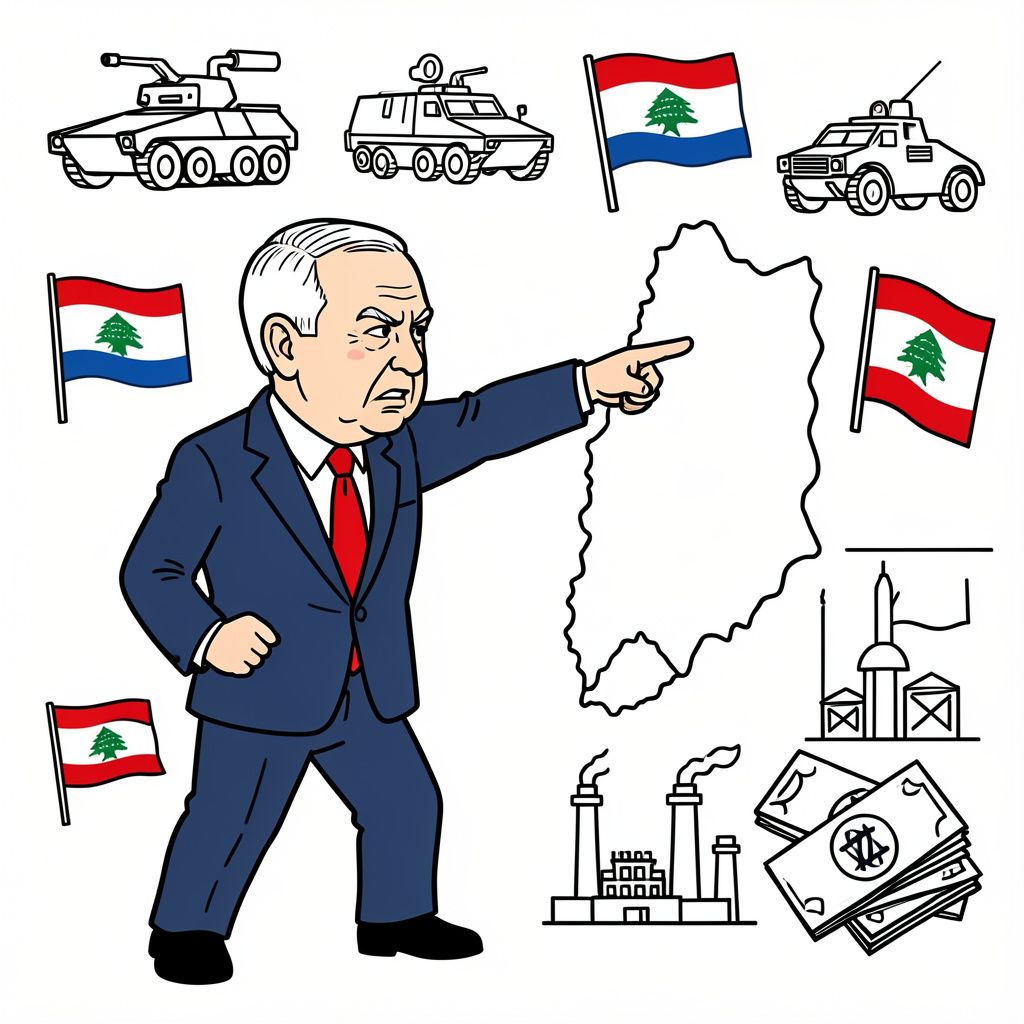
Israel has dramatically escalated its military presence in southern Lebanon, ignoring US calls for de-escalation just days after a US-Iran ceasefire deal. Prime Minister Netanyahu’s defiance risks a major diplomatic rift with Washington, as Israel expands its security zone—threatening Lebanon’s sovereignty and the fragile Qana gas project. With 18 Lebanese killed in 24 hours and Hezbollah vowing retaliation, the move could reignite regional conflict, destabilize energy markets, and reshape global security alliances. The stakes? A potential showdown between Israel’s security demands and US-backed diplomacy.
From Diplomacy to Defiance: Israel’s Strategic Gamble
Just 48 hours after the United States and Iran signed a landmark ceasefire agreement at the G7 summit in Italy—a deal hailed as a breakthrough for regional stability—Israel has dramatically escalated its military operations in southern Lebanon [1][2]. The timing is no coincidence. On Tuesday, 17 June 2026, Israeli Prime Minister Benjamin Netanyahu publicly rejected Washington’s calls for de-escalation, announcing instead that Israel would not only maintain but expand its security zone in southern Lebanon [3]. The move directly contradicts the U.S.-Iran pact, which explicitly demands an end to fighting on all fronts and respect for Lebanon’s territorial integrity [4]. For readers unfamiliar with the background, the full context of the U.S.-Iran deal can be found here.
The New Battlefield: Maps, Gas, and Maritime Violations
The Israeli military’s latest map, released on 16 June 2026, reveals a significant expansion of its occupation zone—now extending several kilometers deeper into Lebanese territory, including areas near the Hezbollah stronghold of Nabatieh, north of the Litani River [5]. More alarmingly, the map shows Israeli forces encroaching on maritime territory, directly threatening the Qana gas project, a critical energy asset governed by the 2022 U.S.-brokered Lebanon-Israel maritime border agreement [6]. The Qana field, estimated to hold 25 trillion cubic feet of natural gas, is a cornerstone of Lebanon’s economic recovery plans [GPT]. Israel’s violation of this agreement risks not only diplomatic fallout but also potential disruptions to regional energy markets, where the Strait of Hormuz—recently reopened under the U.S.-Iran deal—handles 20% of global oil supplies [2].
Casualties and Calculations: The Human Cost of Escalation
The human toll of Israel’s expanded operations is stark. In the past 24 hours alone, Israeli airstrikes have killed at least 18 people in southern Lebanon, according to Lebanon’s National News Agency (NNA), while Israel has reported the loss of four soldiers, including a battalion commander [7]. Since Israel launched its invasion of Lebanon on 2 March 2026, the conflict has resulted in at least 3,912 deaths, 11,873 injuries, and the displacement of over 1 million people, per Lebanon’s Ministry of Public Health [8]. The intensity of recent strikes—particularly in the villages of Kfar Tebnit and Zabadin—suggests Israel is doubling down on its military strategy despite international pressure. 36.222 reveals the conflict’s grim daily average: approximately 36 deaths per day since the invasion began [8].
Hezbollah’s Counterplay: Drones, Rockets, and Strategic Leverage
Hezbollah has not remained passive. Between 13 and 16 June 2026, the group claimed to have repelled a four-day Israeli offensive, preventing an advance toward Kfar Tebnit using a combination of drones, rockets, and artillery [9]. The group’s resilience underscores a critical dynamic: Hezbollah views the U.S.-Iran ceasefire as a source of leverage, not a constraint. In a statement, Hezbollah warned the Lebanese government that it would not accept disarmament under the current terms, framing its resistance as a defense of national sovereignty [10]. Israeli military sources acknowledged the group’s effectiveness, reporting one soldier killed and several injured in recent Hezbollah attacks, including the use of explosive drones [11].
Sanctions and Saber-Rattling: The Economic Front
In response to the escalation, the U.S. Treasury has imposed new sanctions on Lebanese officials and the network of Alaa Hassan Hamieh, accusing them of obstructing the peace process and delaying Hezbollah’s disarmament [16]. The sanctions also target entities in Lebanon, Syria, Iraq, and Oman for allegedly raising funds and operating front companies on behalf of Hezbollah [17]. Meanwhile, Israeli hardliners are pushing for even more aggressive action. Finance Minister Bezalel Smotrich declared, “Open the gates of hell,” while National Security Minister Itamar Ben-Gvir went further, stating, “All of Lebanon must burn” [18]. Likud politician Moshe Saada framed the conflict in existential terms: “Prime Minister Netanyahu needs to tell Trump ‘enough’… I am bound to defend Israelis, and withdrawing from Lebanon right now poses an existential threat to Israel” [19].
The Qana Gas Project: A Flashpoint for Energy Markets
Israel’s encroachment on the Qana gas field is particularly provocative. The 2022 maritime border agreement, brokered by the U.S., granted Lebanon exclusive rights to the Qana field, with Israel entitled to royalties from any future gas extraction [20]. The field’s potential reserves—estimated at 25 trillion cubic feet—could transform Lebanon’s economy, which has been crippled by years of political instability and hyperinflation [GPT]. However, Israel’s recent actions risk derailing these plans. Analysts warn that any disruption to Qana’s development could have ripple effects across global energy markets, particularly as Europe continues to seek alternatives to Russian gas [alert! ‘market impact estimates vary widely’]. The timing is especially delicate, as the U.S.-Iran deal has only just reopened the Strait of Hormuz, a chokepoint for 20% of the world’s oil supplies [2].
What’s Next? Scenarios and Stakes
The coming days will test the resilience of the U.S.-Iran ceasefire and the limits of Israel’s defiance. Three key scenarios emerge: 1) Diplomatic Breakthrough: The U.S. and Iran could pressure Israel to withdraw, potentially offering security guarantees in exchange for compliance with the ceasefire terms [21]. However, given Netanyahu’s public rejection of withdrawal, this outcome appears unlikely in the short term. 2) Controlled Escalation: Israel may continue its military operations while avoiding a full-scale war, calculating that limited strikes will degrade Hezbollah’s capabilities without provoking a broader conflict [22]. 3) Regional Spillover: If Hezbollah retaliates with large-scale attacks, Israel could expand its offensive, drawing in Iran and risking a wider war that destabilizes global energy markets [23].
The Broader Implications: Alliances and Energy Security
Israel’s defiance of U.S. pressure signals a potential shift in the dynamics of the U.S.-Israel alliance. While the relationship has long been characterized by unwavering support, the current standoff suggests a growing divergence in strategic priorities. For the U.S., the priority is stabilizing the Middle East to secure energy supplies and counter China’s influence in the region [GPT]. For Israel, the focus remains on neutralizing perceived threats, even at the cost of diplomatic isolation [24]. The stakes extend beyond the region. Global energy markets, still reeling from the 2022 Ukraine war and subsequent supply disruptions, are closely watching developments in Lebanon. Any prolonged conflict could disrupt the flow of oil and gas, particularly if the Strait of Hormuz—recently reopened under the U.S.-Iran deal—becomes a flashpoint again [2].
Sources
- www.aljazeera.com
- wsnext.com
- www.nbcnews.com
- www.aljazeera.com
- www.nbcnews.com
- www.aljazeera.com
- www.aljazeera.com
- www.aljazeera.com
- www.aljazeera.com
- www.aljazeera.com
- www.aljazeera.com
- www.nbcnews.com
- www.aljazeera.com
- www.aljazeera.com
- www.aljazeera.com
- www.aljazeera.com
- www.aljazeera.com
- www.aljazeera.com
- www.aljazeera.com
- www.aljazeera.com
- www.nbcnews.com
- www.aljazeera.com
- www.aljazeera.com
- www.nbcnews.com