Beirut Airstrikes Threaten US-Iran Peace Deal at Critical Moment
Beirut, Sunday, 14 June 2026.
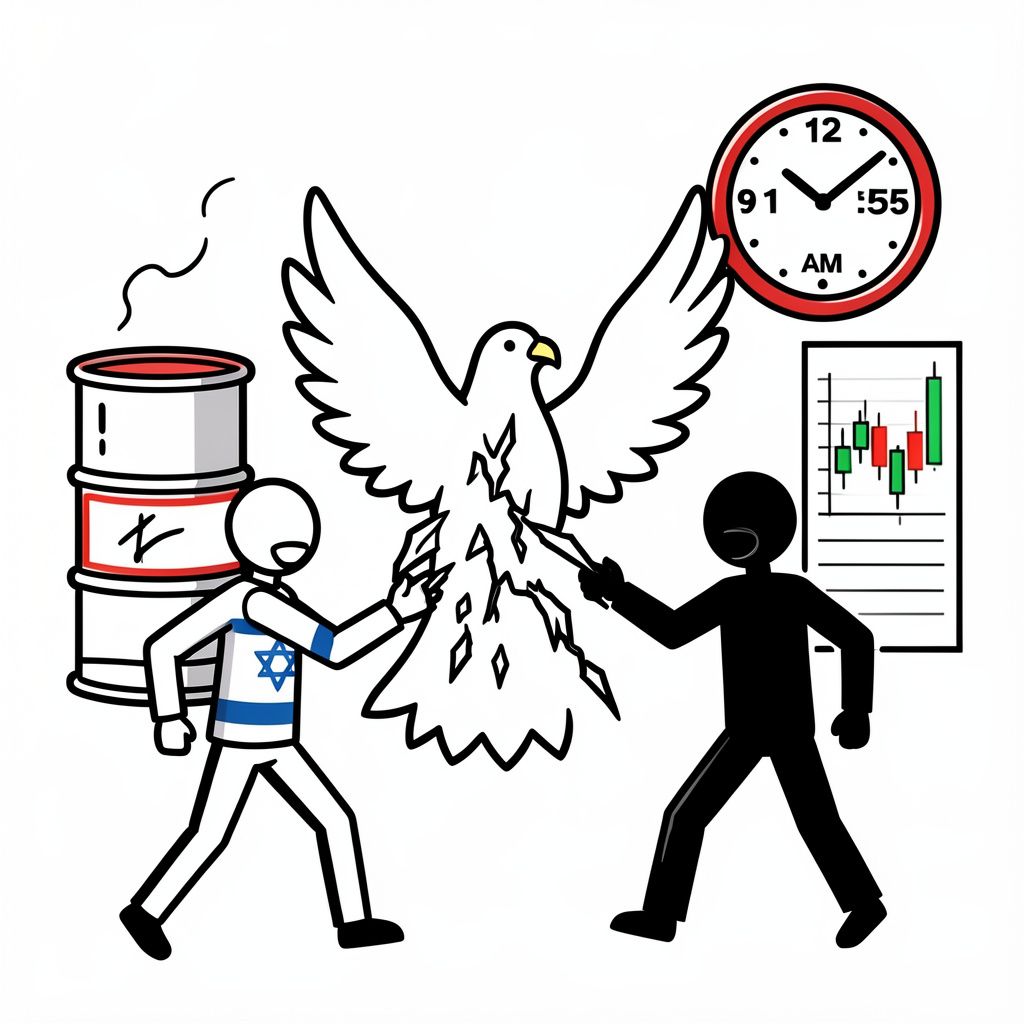
Israel’s precision strikes on Hezbollah in Beirut on June 14, 2026, killed three and risk derailing a fragile US-Iran peace deal set for imminent signing. Iran’s chief negotiator declared talks ‘pointless’ after the attack, while Tehran vowed retaliation, raising fears of wider conflict. The strikes came hours before a planned agreement to end months of regional hostilities, including Iran’s closure of the Strait of Hormuz and cross-border clashes. With global energy markets on edge, the escalation underscores how quickly localized skirmishes can spiral into economic crises.
The Strike That Shook Diplomacy
At 04:23 local time on June 14, 2026, Israeli F-35I Adir stealth fighters penetrated Lebanese airspace, releasing precision-guided munitions over the southern Beirut suburb of Dahiyeh [1]. The targets: a Hezbollah command center and the residence of a senior communications operative, according to Israeli Defense Forces (IDF) statements [2]. The strikes killed three individuals, including a mid-level commander, and injured seven others, Lebanese civil defense officials reported [3]. This operation occurred just hours before the scheduled electronic signing of a U.S.-Iran peace framework designed to end months of regional hostilities [4]. The timing was not coincidental—Hezbollah had launched three drones into northern Israel earlier that morning, triggering air raid sirens in Kiryat Shmona and Metula [5].
Iran’s Red Line Crossed
Iranian officials immediately condemned the strikes as a violation of Lebanon’s sovereignty and a direct challenge to Tehran’s regional influence. Mohammad Bagher Ghalibaf, Iran’s chief negotiator and parliamentary speaker, declared that ‘there was no point’ in continuing peace talks with Washington following the attack [6]. His statement carried particular weight given Iran’s long-standing position that Lebanon cannot be separated from broader regional negotiations [7]. The Iranian Armed Forces’ General Mohammed Jafar Asadi warned that the attacks ‘will not go unanswered,’ echoing similar threats made after previous Israeli operations in Lebanon [8]. This pattern of escalation has become familiar since March 2026, when Hezbollah initiated rocket attacks against Israel in retaliation for the killing of Iran’s supreme leader in a joint U.S.-Israeli operation [9].
The Fragile Peace Framework
The U.S.-Iran deal, painstakingly negotiated over eight months, was designed to address multiple regional flashpoints. Key provisions included: (1) Iran’s commitment to reopen the Strait of Hormuz to international shipping, (2) a phased withdrawal of Iranian-backed forces from Syria, and (3) a monitored reduction of Hezbollah’s missile arsenal in Lebanon [10]. The agreement was scheduled for electronic signing at 14:00 GMT on June 14, with Pakistani Prime Minister Shehbaz Sharif confirming the framework’s completion just 24 hours earlier [11]. However, Iran’s Foreign Ministry spokesman Esmaeil Baghaei stated on June 12 that while a deal was close, it would not be signed on Sunday as planned [12]. The Beirut strikes appear to have confirmed Tehran’s worst fears about Israeli intentions during the sensitive implementation period.
Economic Ripple Effects Begin
Global markets reacted swiftly to the escalation. Brent crude futures jumped 5.23% in early Asian trading, reaching $98.42 per barrel, while the shekel depreciated 1.87% against the U.S. dollar [13]. The Straits of Hormuz, which handles approximately 21 million barrels of oil per day (about 20% of global consumption), remains closed following Iran’s February 2026 military exercises [14]. Analysts warn that continued instability could push oil prices above $120 per barrel, potentially triggering a global recession [15]. Multinational corporations with Middle East operations, including ExxonMobil, Shell, and TotalEnergies, have already begun activating emergency response protocols [16]. The situation mirrors the 2019 attacks on Saudi oil facilities, which caused a 15% spike in oil prices within hours [GPT].
The Lebanon Front: A War of Attrition
The June 14 strikes represent the latest escalation in what has become a brutal war of attrition in southern Lebanon. Since March 2, 2026, when Hezbollah launched its first major rocket barrage against Israel, the conflict has claimed over 3,700 lives in Lebanon alone, according to the Lebanese Ministry of Public Health [21]. Israel has conducted 243 airstrikes on Lebanese territory during this period, while Hezbollah has launched 892 rockets and drones toward Israeli positions [22]. The IDF has issued forced displacement orders for 29 towns in southern Lebanon, affecting an estimated 0 civilians [23]. These orders, delivered via leaflets and text messages, instructed residents to flee north of the Zahrani River, creating a humanitarian crisis as aid organizations struggle to provide shelter and medical care [24].
What Comes Next?
As of 22:00 GMT on June 14, several critical developments remain unresolved: (1) Iran’s promised retaliation for the Beirut strikes, (2) the status of the U.S.-Iran peace deal, and (3) Hezbollah’s response to Israel’s latest military operations. Iranian military officials have indicated that any response will be ‘calibrated to avoid derailing the peace process entirely,’ suggesting a measured approach [25]. However, hardline elements within Iran’s Revolutionary Guard Corps have called for more aggressive action, including potential strikes on Israeli diplomatic facilities [26]. The IDF has placed its northern command on high alert, with Chief of Staff Lt.-Gen. Eyal Zamir stating that the military is ‘prepared for developments in all arenas’ [27]. Meanwhile, global leaders are scrambling to salvage the peace deal, with emergency meetings scheduled at the United Nations and European Union headquarters [28].
Sources
- www.bbc.com
- www.arabnews.com
- www.aljazeera.com
- www.nytimes.com
- www.jpost.com
- www.arabnews.com
- www.aljazeera.com
- www.dw.com
- www.bbc.com
- www.dw.com
- www.aljazeera.com
- www.dw.com
- www.axios.com
- www.aljazeera.com
- www.jpost.com
- www.aljazeera.com
- www.aljazeera.com
- www.aljazeera.com
- www.jpost.com
- www.jpost.com