U.S. Denies Israel Military Aid as Iran Demands Full Withdrawal from Occupied Lands
Washington, Wednesday, 17 June 2026.
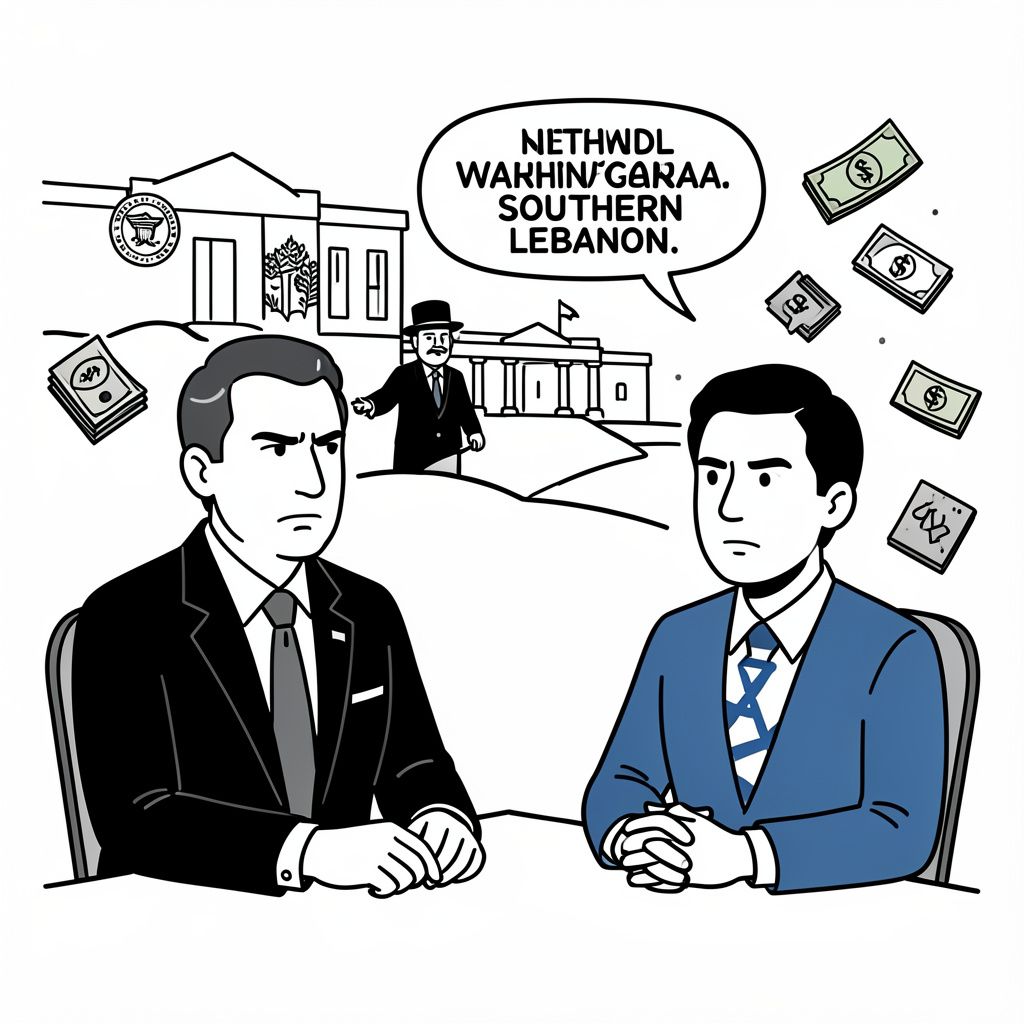
The White House has rejected Israel’s request for additional military support amid escalating tensions with Iran, marking a pivotal shift in U.S. policy. Iran insists the conflict remains unresolved until Israeli forces withdraw from captured territories, including strategic areas in Gaza and southern Lebanon. This standoff highlights deepening rifts between Washington and Tel Aviv, as the Biden administration prioritizes regional stability over unconditional backing. Analysts warn the decision could reshape Middle East alliances and impact global energy markets, with Iran’s control over the Strait of Hormuz threatening oil supplies. The move comes as Iran secures $150 billion in reconstruction pledges, defying earlier U.S. denials of financial involvement.
White House Rejection Signals Strategic Shift in U.S.-Israel Relations
On Wednesday, 17 June 2026, the White House formally declined Israel’s request for additional military support in its ongoing conflict with Iran, marking a significant departure from Washington’s traditional stance of unconditional backing for Tel Aviv [1]. This decision comes as the Biden administration seeks to prioritize regional de-escalation over direct military intervention, reflecting growing concerns about the broader implications of the conflict for Middle East stability [2]. The move follows months of escalating tensions between Israel and Iran, which have seen repeated clashes along the Gaza border and in southern Lebanon, as well as Iranian drone attacks on commercial vessels in the Strait of Hormuz [3].
Iran’s Demands and the Question of Occupied Territories
Iranian Foreign Minister Abbas Araghchi has stated that the conflict cannot be considered resolved while Israeli forces remain in territories captured during recent hostilities, including strategic areas along the Gaza border and parts of southern Lebanon [4]. Araghchi described the situation as a confrontation between ‘America and Israel’ on one side and ‘Iran and Hezbollah’ on the other, emphasizing that ending the war in Lebanon is the ‘most important issue’ in the ongoing negotiations [5]. Iran’s demands for a complete Israeli withdrawal have been met with resistance from Tel Aviv, which has rejected such conditions as part of the U.S.-Iran memorandum of understanding (MoU) framework [6]. The MoU, expected to be formally signed on 19 June 2026 in Switzerland, remains intentionally vague on key issues, including nuclear proliferation, sanctions relief, and territorial disputes [7].
Economic and Geopolitical Implications of the U.S. Decision
Analysts warn that the White House’s rejection of Israel’s military aid request could have far-reaching consequences for global energy markets and regional trade routes [8]. Iran’s control over the Strait of Hormuz, through which approximately 14 million barrels of oil per day transit, poses a significant threat to global energy supplies [9]. The International Energy Agency (IEA) has cautioned that while the reopening of the Strait could restore critical oil flows, the process may take time due to mine clearance operations and supply chain normalization [10]. Meanwhile, Iran has secured over $150 billion in reconstruction pledges, contradicting earlier statements by U.S. President Donald Trump that the U.S. would not contribute to a $300 billion investment fund tied to the deal [11][12].
Sources
- timesofindia.indiatimes.com
- www.aljazeera.com
- www.instagram.com
- timesofindia.indiatimes.com
- timesofindia.indiatimes.com
- timesofindia.indiatimes.com
- timesofindia.indiatimes.com
- timesofindia.indiatimes.com
- timesofindia.indiatimes.com
- timesofindia.indiatimes.com
- timesofindia.indiatimes.com
- timesofindia.indiatimes.com
- timesofindia.indiatimes.com
- timesofindia.indiatimes.com
- www.instagram.com
- www.instagram.com